


8th Aug 2025. 10.29am

Weekly Briefing – Friday 8th August
| Market | Movement this week (%)* |
|---|---|
| FTSE 100 | +0.26% |
| FTSE 250 | +1.01% |
| FTSE All-Share | +0.35% |
| AIM 100 | +0.55% |
| AIM All-Share | +0.56% |
* Price movement from Monday's open at 8am
Regency View:
Weekly Briefing – Friday 8th August
Market Overview
Dear Investor,
This week, the Bank of England made its move, cutting interest rates by a quarter point to 4%. It was a tight call, with the Monetary Policy Committee voting twice to reach a decision, underscoring the uncertainty surrounding the UK’s economic trajectory. Governor Andrew Bailey described the decision as “finely balanced,” reflecting concerns about persistent inflation against a backdrop of slower growth. While the move aligns with market expectations, the close nature of the vote has led investors to rethink the pace of future rate cuts.
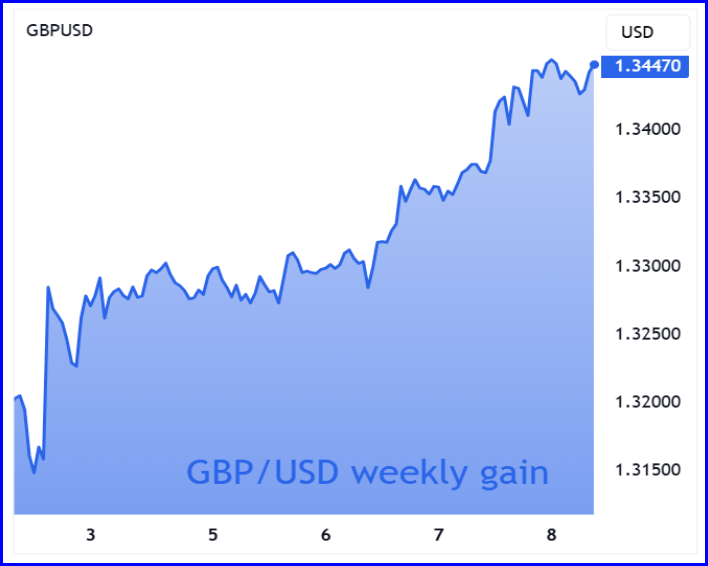
The immediate reaction in the currency markets was telling, with sterling gaining ground against both the dollar and the euro. The pound rose by 0.6% as traders recalibrated their expectations for further loosening. This uptick in the pound suggests that the market sees the rate cut as a sign that the Bank may be nearing the end of its tightening cycle, although with inflation still above target, the future remains uncertain.
On the stock side, the FTSE 100 saw a slight dip, drifting lower in contrast to the pound’s strength. Despite the rate cut, which would typically be seen as a positive for equities, concerns about the UK’s economic health continue to weigh on investor sentiment. Inflation remains stubbornly high, with the Bank of England predicting it will peak at 4% in September, more than double its target. This leaves the broader market caught between the hope of lower borrowing costs and the reality of persistent price pressures.
Higher food prices, driven by labour costs and global factors like tariffs, are likely to keep inflation elevated for the time being. Businesses have already flagged that the increased National Insurance Contributions and higher wages are pushing food prices higher, a trend that’s unlikely to reverse soon. With the global economy still navigating its own set of challenges, from supply chain disruptions to shifting trade policies, the road ahead for UK businesses remains rocky.
Wishing you a fantastic weekend,
Tom
Thomas Light – Chartered FCSI
Director of Research

Market Movers
On the rise: Fresnillo (LSE:FRES) +21.1% on the week
Fresnillo was one of the FTSE’s highest risers this week after reporting impressive half-year results for the first half of 2025. Total revenues increased by 30.1% to US$1,936.2 million, driven by higher gold and silver prices along with increased volumes of gold sold. This growth, paired with a 20.2% reduction in adjusted production costs, led to a remarkable 297.3% increase in profit for the period, reaching US$467.6 million. The company’s strong operational performance, despite challenges in silver production, reflects its efficient cost discipline and robust financial position, with US$1,823 million in liquid funds.
A major highlight of Fresnillo’s results was the significant rise in free cash flow, which reached US$1,026.1 million, up from US$187.4 million in 1H24. This surge allowed the company to announce an interim dividend of US$20.8 cents per share, a 225% increase from the previous year. With strong cash generation and a solid balance sheet, Fresnillo is well-positioned to continue rewarding shareholders while maintaining flexibility for future investments. Although silver production declined by 11.7% due to the closure of San Julián DOB, the company saw a 15.9% boost in gold production from optimised operations at Herradura.

Looking ahead, Fresnillo raised its gold production guidance for 2025, reflecting continued strong performance at Herradura. Silver production expectations were adjusted following the buyback of the Silverstream contract, which will no longer contribute from 2H25. Despite this, the overall silver production guidance remains unchanged. Fresnillo’s focus on operational efficiency, cost control, and resource optimisation should continue to drive growth through the second half of the year.
REGENCY VIEW:
Fresnillo is delivering with revenue rising and a remarkable jump in profit, driven by higher gold prices and efficient operations. With robust cash flow, a solid balance sheet, and a commitment to shareholder returns, it’s a company that continues to shine in the precious metals sector.
Shares in Hikma Pharmaceuticals dropped sharply this week following an underwhelming set of half-year results, despite solid revenue growth across its core segments. Group revenue rose by 6%, driven by strong performances in Injectables and Branded businesses, but core operating profit fell by 7%, largely due to a tough comparison to the prior year and a change in product mix. The company’s operating cash flow also dropped by 19%, further dampening investor sentiment.
Despite these challenges, CEO Riad Mishlawi maintained an optimistic outlook, reaffirming the company’s full-year growth expectations. Hikma is focused on strategic investments, including a 20% increase in R&D spend and strengthening its manufacturing capabilities. The company has also made significant strides with product approvals and launches, which should support long-term growth. Key partnerships, such as the exclusive licensing deal for an oral oncology therapy, signal continued progress in broadening its portfolio.

Looking ahead, Hikma has reiterated its 2025 revenue growth target of 4% to 6% and expects core operating profit to reach between $730 million and $770 million. While the short-term results were weaker than anticipated, the company’s strategic investments in R&D, manufacturing, and partnerships position it well for sustained growth, despite ongoing challenges from external factors like tariffs and inflation.
REGENCY VIEW:
Despite recent setbacks, Hikma remains high on our watchlist, offering solid value with a low P/E ratio of 10.2 and a strong dividend yield of 3.49%. Its strategic focus on R&D and expanding partnerships positions the company for potential growth as it navigates through current challenges.
Sector Snapshot
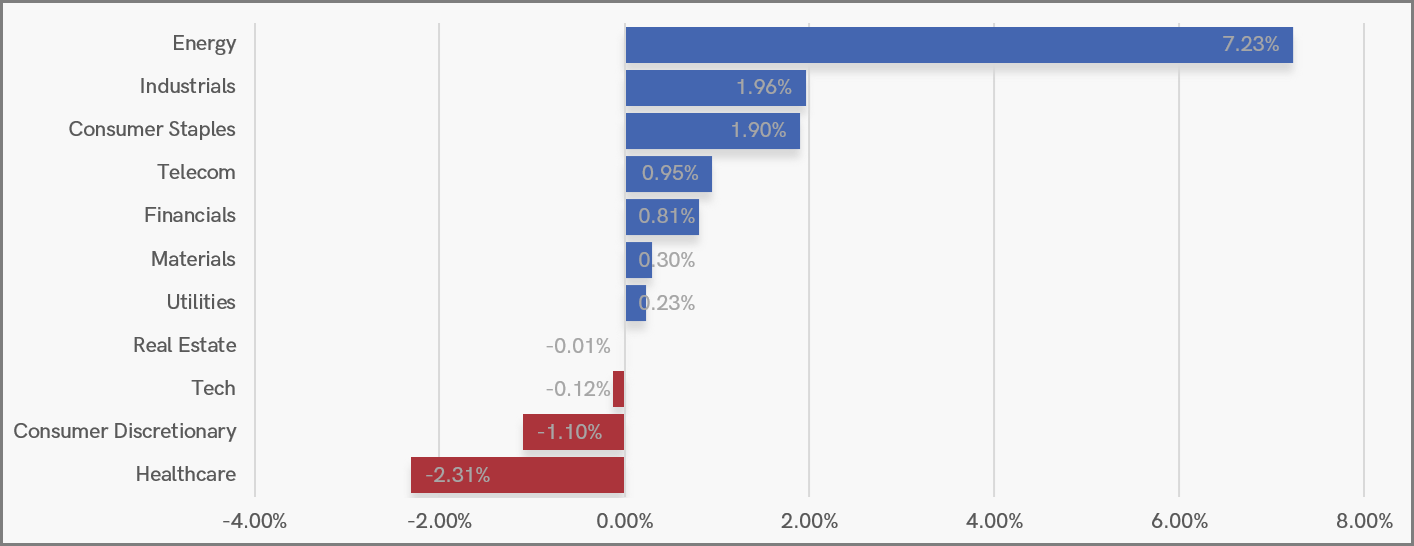
Energy roared ahead this week, topping the sector rankings with strong gains from BP and Harbour Energy. Consumer Staples and Telecom also advanced, while Financials edged higher alongside modest gains in Materials and Utilities, reflecting a measured appetite for defensives and resource plays.
On the downside, Healthcare, Industrials, and Consumer Discretionary were the weakest performers, with Tech and Real Estate slipping slightly. The split highlights a preference for sectors tied to cash flow and pricing power, while growth and cyclical names took a breather.
UK Sector Performance (7-Days)
UK Price Action
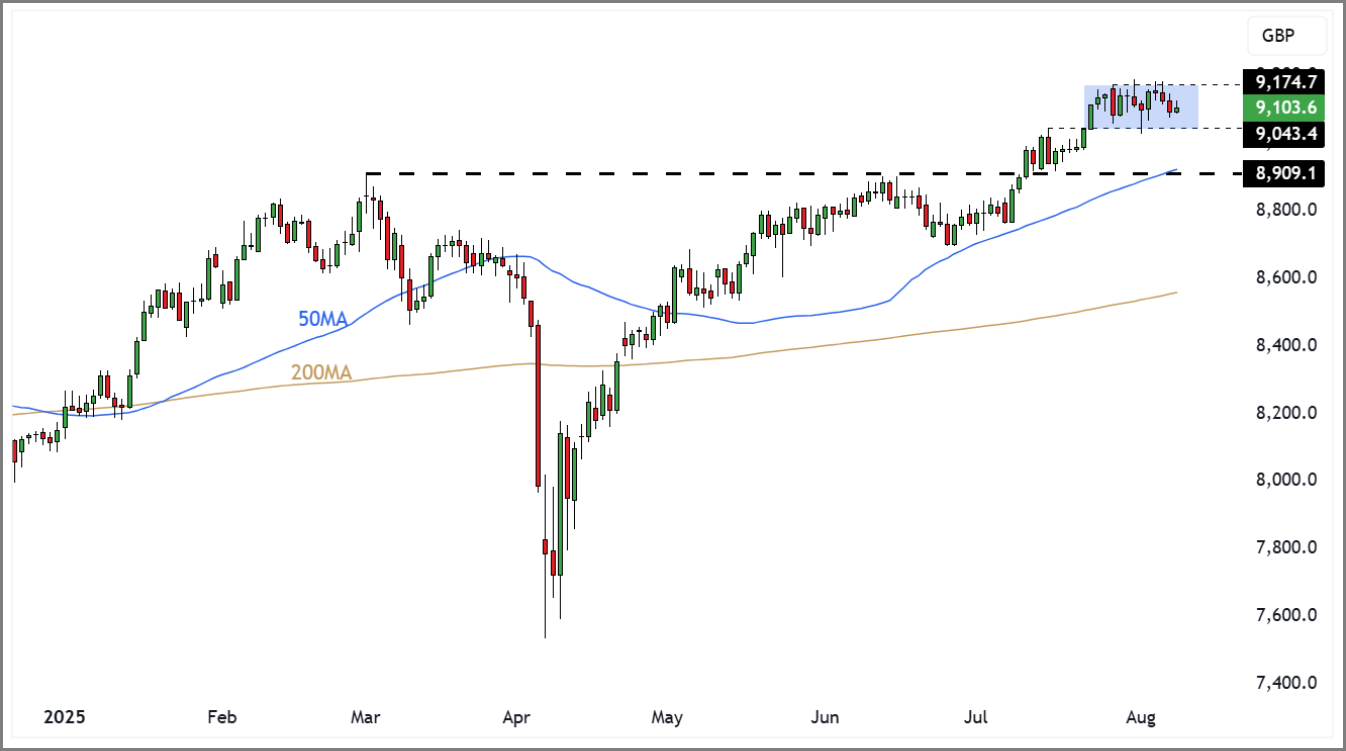
The FTSE 100 index has formed a well-defined range, with prices oscillating between resistance at 9,174 and support at 9,040. Given the strength of the long-term trend, this range appears asymmetric, with trades at support offering a greater potential for upside.
FTSE 100 Rolling Futures (Daily Candle Chart)
Disclaimer:
All content is provided for general information only and should not be construed as any form of advice or personal recommendation. The provision of this content is not regulated by the Financial Conduct Authority.