


30th Oct 2026. 10.34am
Weekly Briefing Friday 30th October
| Market | Movement this week (%)* |
|---|---|
| FTSE 100 | +0.39% |
| FTSE 250 | +1.14% |
| FTSE All-Share | +0.43% |
| AIM 100 | +1.50% |
| AIM All-Share | +1.28% |
* Price movement from Monday's open at 8am

Regency View:
Weekly Briefing Friday 30th October
Market Overview
Dear Investor,
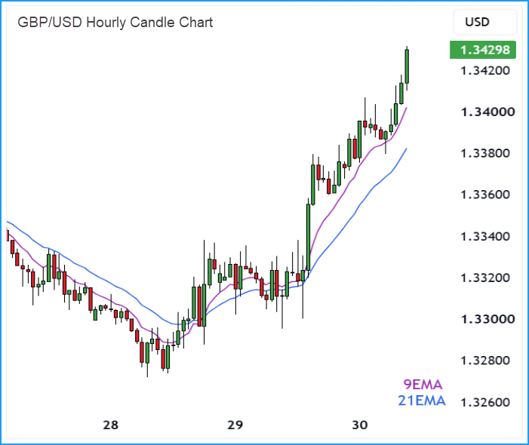
Given the pressure on UK borrowing costs this year, a Budget that managed to bore the bond market was probably no bad thing. Gilt prices held on to their recent recovery, while sterling continued to strengthen against the dollar, and UK stocks held firm.
The economic forecasts, however, were less reassuring. The Office for Budget Responsibility now expects UK growth of just 1% next year, down from 1.6%, while inflation is forecast to average 3.4%. Higher energy prices are squeezing household incomes and complicating the Bank of England’s job, while the Chancellor’s £15 billion of fiscal headroom leaves little room for error. Avoiding a market wobble is one thing, but getting the economy growing again will be considerably harder.
Beneath the relatively calm market reaction, there were some sharp differences in how individual sectors responded. Banks and gambling stocks rallied as tax changes proved less severe than feared, while housebuilders fell sharply after the government’s new housing support scheme disappointed investors. With mortgage costs already weighing on affordability and the OBR cutting its forecasts for housebuilding, it’s not difficult to see why the sector struggled. The FTSE 100, meanwhile, has spent much of the week moving sideways, holding on to its October recovery without making much further progress.
The bigger concern is what happens to interest rates. Earlier expectations of gradually falling borrowing costs have been turned on their head by rising energy prices and renewed inflation pressures. Markets are now weighing up the prospect of further Bank of England rate increases, potentially adding to the strain on households and businesses. With economic growth already looking rather subdued, it’s an uncomfortable combination.
For UK investors, the challenge now is separating companies that can cope with higher borrowing costs and weaker demand from those whose earnings are likely to come under pressure. The market has already shown how quickly expectations can shift, particularly among domestically focused stocks. That should create opportunities, but being selective will matter more than ever.
Wishing you a great weekend,
Tom
Thomas Light – Chartered FCSI
Director of Research

Market Movers
On the rise: Standard Chartered (LSE: STAN) 7.4% on the week
Standard Chartered shares jumped following Wednesday’s third-quarter results, as the bank delivered another strong performance and raised its full-year guidance. Operating income increased 14% to $5.8 billion, while pre-tax profit climbed 29% to $2.3 billion. Earnings per share rose 55%, helped by stronger profitability and ongoing share buybacks. Management now expects full-year income growth to exceed its previous 5–7% guidance range.
Wealth management was a standout performer, with Wealth Solutions income rising 26% to deliver a third consecutive record quarter. Global Markets also performed well, with income up 21%, while net interest income increased 9%. Credit impairment charges fell by more than half to $90 million, suggesting the bank’s loan portfolio is holding up well despite geopolitical and economic uncertainty.

The results reinforce the progress Standard Chartered has made in improving profitability, with return on tangible equity reaching 15.7% during the quarter. The bank also remains well capitalised, supporting its ongoing $1 billion share buyback programme. With the shares trading on around 10 times forecast earnings, the valuation remains reasonable, although the stock has experienced considerable volatility in recent weeks.
Regency View: Standard Chartered’s latest results are encouraging, with strong wealth management growth and improving profitability supporting the outlook. The recent share price recovery is welcome, although we’d like to see further evidence of sustained buying interest before becoming more positive.
Haleon shares plunged around 15% on Thursday after the consumer healthcare group disappointed investors with weaker third-quarter sales and a cut to its full-year revenue guidance. Organic revenue grew just 2.6%, below management’s expectations, with the company now forecasting growth of around 2.5% for 2026. Previously, investors had been expecting stronger growth from the business behind household brands including Sensodyne, Centrum and Panadol.
The slowdown was driven partly by weaker demand for cough, cold and flu products, with Respiratory Health sales declining 2%. A regulatory classification change also disrupted imports of certain Centrum products into China, while changes to Haleon’s distribution model in Brazil are expected to reduce fourth-quarter revenue by £15 million to £20 million. There were brighter spots, particularly Oral Health, where sales grew 8.8%, supported by continued strength in Sensodyne.

Despite the revenue disappointment, Haleon maintained its expectation for high-single-digit adjusted operating profit growth this year, helped by cost efficiencies and improving productivity. Management also announced a further £500 million allocation to share buybacks. However, with much of the quarter’s revenue growth coming from price increases rather than higher sales volumes, investors are questioning how quickly the company can restore stronger underlying demand.
Regency View: Haleon still has a portfolio of strong consumer brands, but the latest update raises questions about its ability to deliver consistent sales growth. Maintaining profit guidance is reassuring, although we’d want to see a meaningful improvement in volumes before becoming more positive on the outlook.
Sector Snapshot
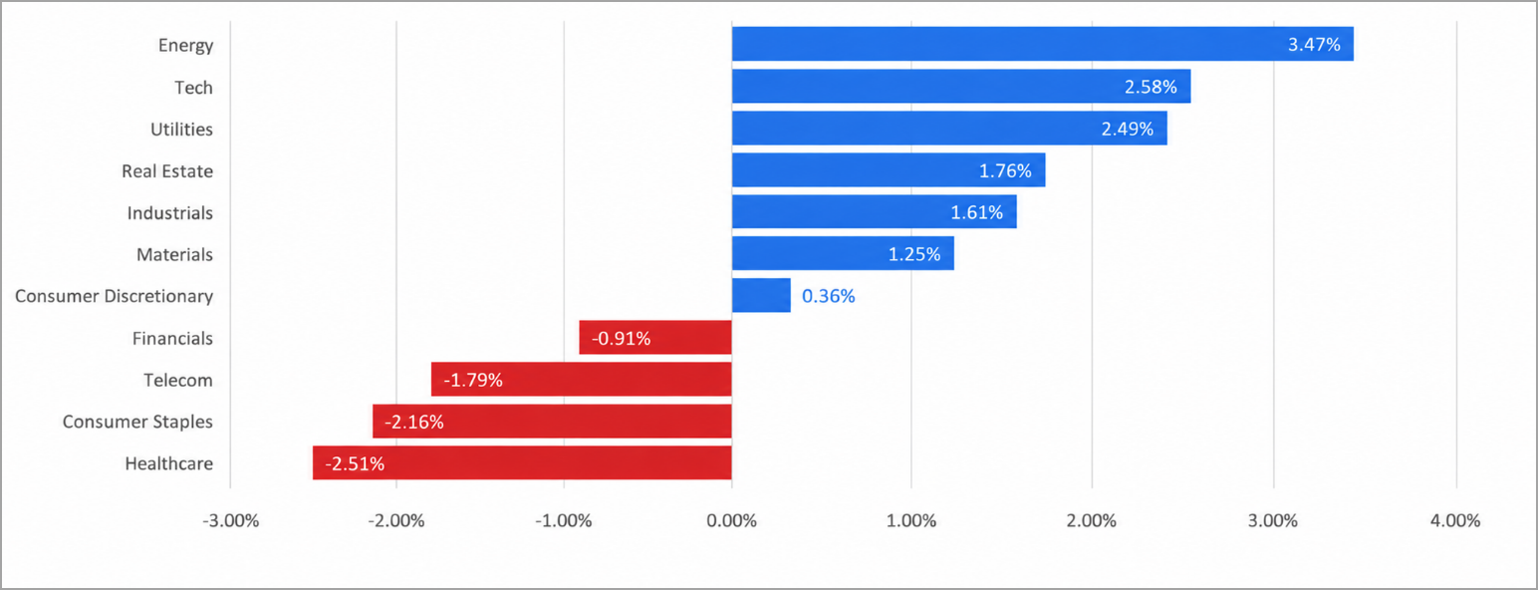
Energy led the way this week, with Tech and Utilities also delivering solid gains as seven of the eleven sectors finished in positive territory. Real Estate and Industrials enjoyed a stronger week, while Materials recovered some of the ground lost during the previous week’s sharp sell-off. The mix of sectors performing well suggests a broader improvement in sentiment, although the gains were far from uniform across the market.
Healthcare and Consumer Staples found themselves at the bottom of the table, reversing some of their recent strength after several weeks of outperformance. Telecom and Financials also struggled, highlighting a shift in sector leadership rather than a straightforward move into defensive stocks. The rotation is particularly noticeable in Tech and Materials, which have recently lagged the wider market, suggesting investors are becoming more willing to revisit areas that have been under pressure.
UK Sector Performance (7-Days)
UK Price Action
MEMBERS ONLY
The key levels are set. Members can read our full analysis and view this week’s annotated FTSE chart.
UNLOCK THE FULL WEEKLY BRIEFING
Disclaimer:
All content is provided for general information only and should not be construed as any form of advice or personal recommendation. The provision of this content is not regulated by the Financial Conduct Authority.