


27th Mar 2026. 10.46am

Weekly Briefing – Friday 27th March
| Market | Movement this week (%)* |
|---|---|
| FTSE 100 | +0.18% |
| FTSE 250 | -0.99% |
| FTSE All-Share | +0.03% |
| AIM 100 | -0.13% |
| AIM All-Share | -0.33% |
* Price movement from Monday's open at 8am
Regency View:
Weekly Briefing – Friday 27th March
Market Overview
Dear Investor,
Gold is typically seen as a safe port in a storm, a store of value away from the turmoil of the market. It offers no income, but it plays a key role as a hedge when risk begins to rise. Yet as the conflict in the Middle East has unfolded, gold has been doing anything but that, with prices falling sharply at a time when many would expect it to rally.
The reality is more nuanced. In periods of acute stress, gold often behaves less like a defensive asset and more like a source of liquidity. As equity and bond markets come under pressure, investors are forced to raise cash, and that often means selling what has been working. After a strong two-year run, gold has become one of the most profitable positions to unwind, and that dynamic is now playing out.
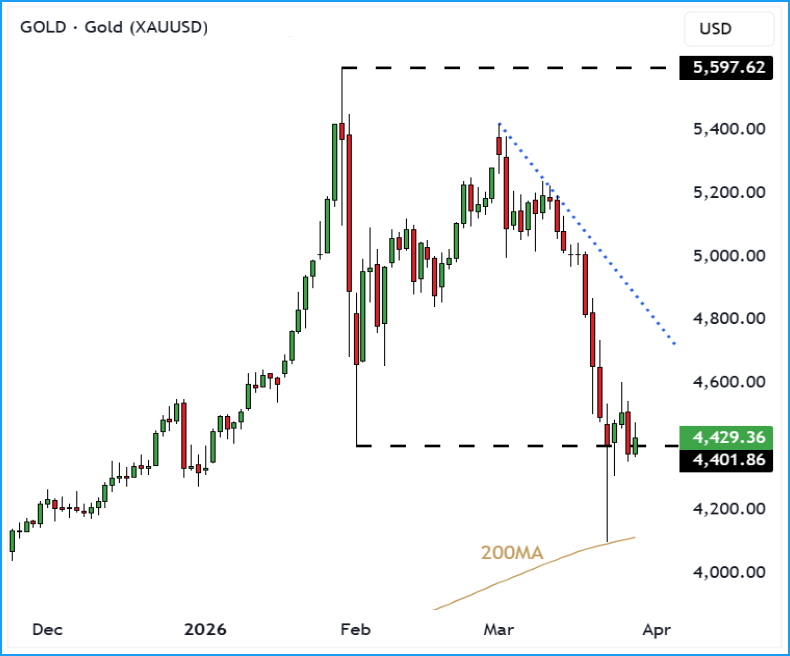
At the same time, the macro backdrop has shifted. The recent move in gold is not about a reduction in risk, but how that risk is being interpreted. What initially drove a safe-haven response has now evolved into an inflation story, with rising energy prices feeding into expectations that central banks may need to keep policy tighter for longer.
That shift has supported both real yields and the US dollar, two of the most consistent headwinds for gold in the short term. In that environment, the precious metal tends to struggle, not because its role changes, but because the opportunity cost of holding it rises. Alongside this, positioning has also begun to unwind, with the steady formation of lower highs reflecting a market moving from accumulation to distribution.
Stepping back, this is not the first time gold has behaved this way. In the early stages of previous market shocks, it has often sold off before regaining its footing once conditions stabilise. The recent move has brought price back into a key area of prior support rather than breaking the broader trend, which remains intact above the long-term 200 day moving average. The recent weakness does not undermine gold’s longer-term role as a diversifier, but it does highlight an important reality: in the short term, liquidity and interest rate expectations tend to take priority over everything else.
Wishing you a great weekend,
Tom
Thomas Light – Chartered FCSI
Director of Research

Market Movers
On the rise: PZ Cussons (LSE:PZC) +10.5% on the week
PZ Cussons rallied this week after delivering a solid third quarter trading update, with continued momentum across the business and full year profit expectations upgraded towards the upper end of guidance. The group reported 6.3% like for like revenue growth in Q3, extending the strong performance seen in the first half and reinforcing confidence that the turnaround is gaining traction.
The upgrade to guidance is the key driver here. Management now expects adjusted operating profit to come in towards the top end of the £53m to £57m range, supported by a combination of stable trading and disciplined cost control. There was also a notable improvement in currency stability, particularly in Nigeria, which has been a major overhang on the investment case in recent years.

What the market is reacting to is not just the numbers, but the reduction in uncertainty. PZ Cussons has spent the past few years dealing with volatility across both operations and currency, and this update suggests that those pressures are beginning to ease. With management actively reducing exposure to future currency swings, investors are starting to price in a more stable earnings profile, which opens the door to a re-rating from depressed levels.
Regency View: Momentum is beginning to turn with improving earnings visibility supported by a forward PE of 10.9 and a well covered 4.5% yield. If management can continue to stabilise margins and reduce currency risk, this starts to look like a recovery story with both income and upside.
Goodwin moved sharply lower this week after warning that it may cut its dividend as geopolitical tensions in the Middle East begin to impact operations. The group confirmed that while trading remains in line with expectations, delays to valve dispatches on key contracts in the region could affect the timing of revenues, prompting a more cautious stance on capital allocation.
The board is now considering whether to revert to its previous dividend policy, limiting payouts to 38% of post-tax profit or potentially lower. That shift in tone has unsettled investors, particularly given that income has been an important part of the investment case. While no contracts have been cancelled, the fact that deliveries are being delayed highlights how quickly geopolitical risk is feeding through into operational execution.

Elsewhere, the update also flagged disappointment in the Mechanical Engineering Division after the loss of two significant tenders, alongside continued softness in jewellery casting markets. While the group’s £288m orderbook provides a degree of support, the combination of delayed revenues, missed opportunities and a more cautious capital return outlook has led investors to reassess near-term expectations.
Regency View: This remains a high-quality engineering business, with returns on capital above 30% and strong margins, but the investment case has shifted as income support comes into question. With the shares still trading on 25.9x earnings and momentum turning sharply lower, the market is now demanding greater visibility before stepping back in.
Sector Snapshot
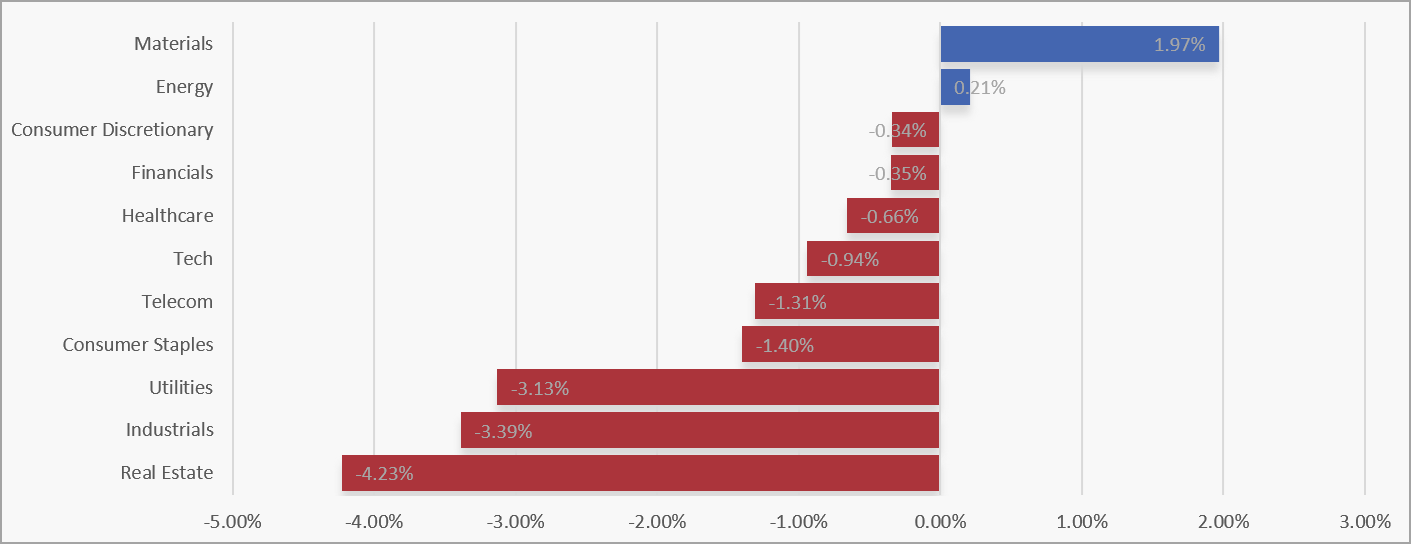
Materials led the market this week with a modest gain, joined by a small move higher in Energy, but that was largely where the strength ended. The leadership feels thin, with only a couple of sectors managing to hold positive ground while the rest of the market drifted lower.
Real Estate and Industrials were the weakest areas, with Utilities also seeing notable selling, pointing to pressure across both cyclical and defensive parts of the market. Tech and Consumer names continued to edge lower, while Financials and Healthcare offered little support. The overall tone suggests a market lacking conviction, where isolated pockets of strength are struggling to outweigh a broader softening in sentiment.
UK Sector Performance (7-Days)
UK Price Action
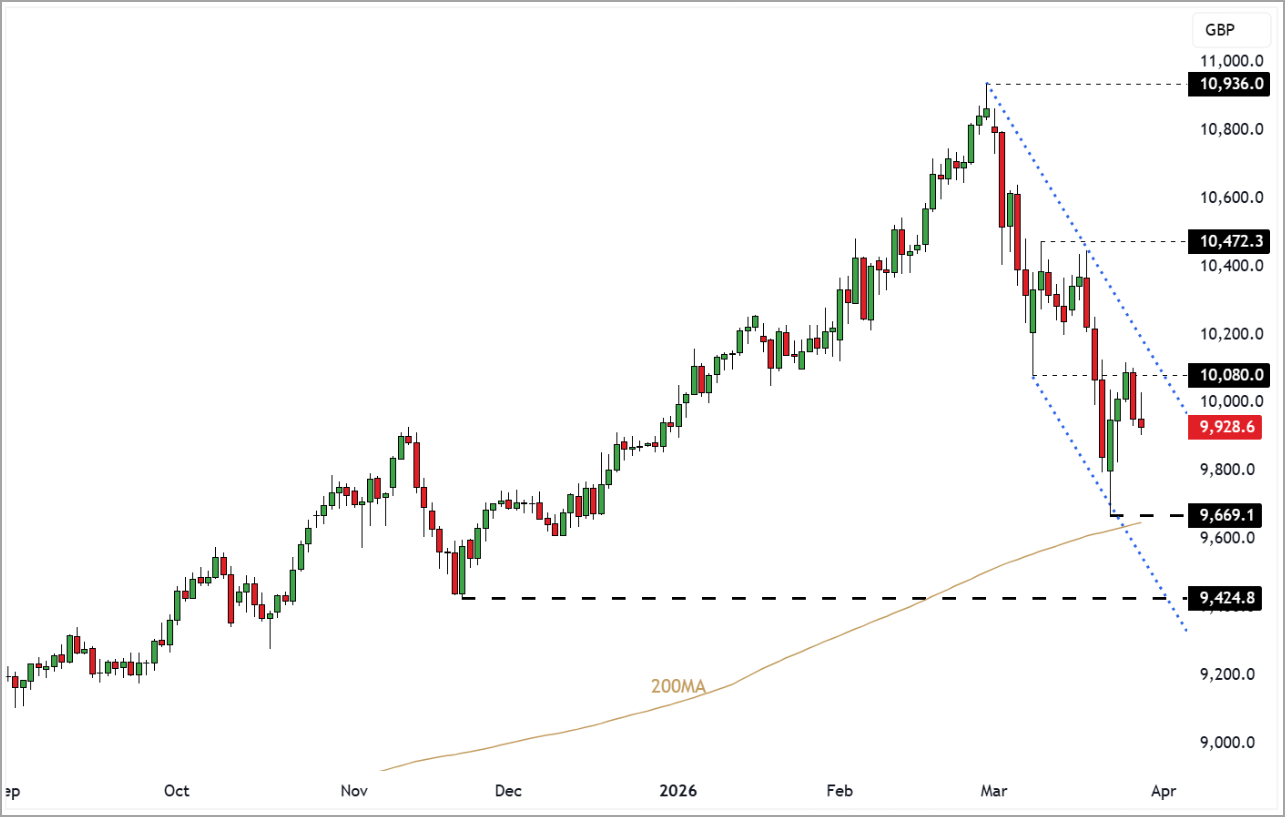
In a weakening market subject to big macro headlines, there is a real temptation to overcomplicate the technical picture. Keeping things simple, price is now moving within a clear descending retracement channel against the broader long term trend. The widely watched 200 day moving average is fast approaching, and this is typically the area where longer term buyers begin to take a closer look and assess whether value is starting to re emerge.
FTSE 100 Rolling Futures (Daily Candle Chart)
Disclaimer:
All content is provided for general information only and should not be construed as any form of advice or personal recommendation. The provision of this content is not regulated by the Financial Conduct Authority.