


23rd Oct 2026. 10.52am
Weekly Briefing Friday 23rd October
| Market | Movement this week (%)* |
|---|---|
| FTSE 100 | -1.93% |
| FTSE 250 | -1.28% |
| FTSE All-Share | -1.86% |
| AIM 100 | -3.75% |
| AIM All-Share | -3.04% |
* Price movement from Monday's open at 8am

Regency View:
Weekly Briefing Friday 23rd October
Market Overview
Dear Investor,
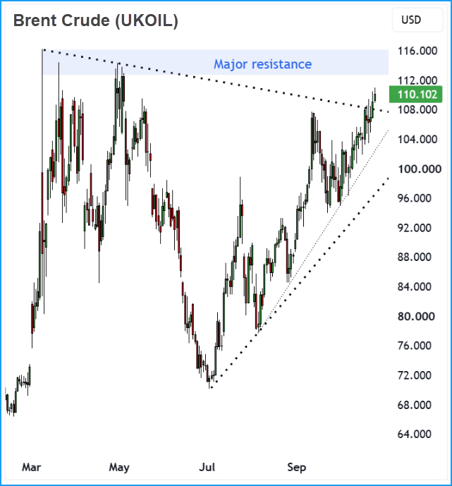
Oil is turning the screw once again. A sentence we’ve used rather a lot this year, but one that seems to grow more pointed with each passing week. With Brent crude climbing to levels not seen since May, central bankers will be feeling the pressure. Keeping inflation under control without choking off economic growth is difficult enough, and another sustained rise in oil prices makes that balancing act considerably harder.
There’s also the small matter of the US midterms approaching. With Trump, it’s never entirely clear what might come next, particularly when the political stakes are rising. Add the ongoing tensions in the Middle East and growing doubts over AI spending, and there’s a sense of unease creeping into global markets. The MSCI World Index has already pulled back almost 3% from its October highs, suggesting some of the earlier optimism is beginning to fade.
The chart shows just how far oil has recovered since the summer, with Brent now approaching a major resistance area that has proved difficult to overcome in the past. Whether prices can break through remains to be seen, but another sustained move higher would hardly be welcome. Higher energy costs have a habit of finding their way into almost every corner of the economy, and the longer prices remain elevated, the harder they become to ignore.
Our leading index, meanwhile, has been holding up rather well. The FTSE’s exposure to energy and defence has proved useful in the current environment, while its relatively limited exposure to the AI investment boom has helped it avoid some of the selling seen elsewhere. It’s a reminder that the UK market’s rather unfashionable mix of businesses can occasionally work in our favour.
Despite the growing list of concerns, there’s no need to assume the worst. Markets have absorbed plenty of difficult news this year, and there are still areas where earnings look well supported. The challenge is being selective rather than treating every market setback as a reason to retreat. For now, oil remains one of the most important things to watch, particularly if its latest rally has further to run.
Wishing you a great weekend,
Tom
Thomas Light – Chartered FCSI
Director of Research

Market Movers
On the rise: Ocado (LSE: OCDO) +16.4% on the week
Ocado shares received a welcome boost on Tuesday after JPMorgan raised its price target from 290p to 460p, helping the stock climb 5% on the day. The broker has become more optimistic about the company’s technology business, removing its previous assumption of further Customer Fulfilment Centre (CFC) closures. It also sees potential for stronger demand, with a pipeline of new automated warehouses scheduled to open between 2027 and 2029.
The renewed optimism reflects growing confidence that Ocado’s substantial investment in automation could begin delivering more meaningful returns. JPMorgan expects EBITDA to grow at an average annual rate of 21% between 2025 and 2028, supported by the rollout of new CFCs. Meanwhile, Ocado Retail, its joint venture with Marks & Spencer, has emerged as the UK’s fastest-growing retailer according to the broker. The combination of improving retail performance and a more encouraging technology pipeline is helping to rebuild confidence after several difficult years.
There are still some important questions surrounding profitability. Ocado remains loss-making, with a trailing net loss of around £249 million and net debt approaching £1 billion. The shares have rallied more than 40% over the past month, suggesting expectations are already moving higher. JPMorgan’s new target is also well above the wider analyst consensus of around 300p, highlighting how divided opinion remains over the company’s prospects.
Regency View: Ocado has promised plenty over the years, so it’s encouraging to see renewed confidence in its technology pipeline and the potential for stronger earnings growth. The recent share price recovery has been impressive, but we’d still like to see clearer evidence that the business can turn its technological advantages into sustainable profits and cash flow.
Hochschild Mining has endured another difficult week, despite a third-quarter production update that offered some encouraging signs. The gold and silver miner reported attributable production of 74,004 gold equivalent ounces, taking the nine-month total to 225,835 ounces. Management maintained its full-year production guidance of 300,000–328,000 ounces, although output remains below last year’s levels. The shares have now lost almost a quarter of their value over the past month, suggesting confidence remains fragile.
There was better news from Mara Rosa, the company’s Brazilian gold mine, where efforts to improve operations are beginning to pay off. Production increased during Q3, with September delivering more than 8,000 ounces following the successful introduction of a new mining contractor. However, extreme winter weather disrupted operations at San Jose in Argentina, while inflation continues to put pressure on costs. Hochschild maintained its revised all-in sustaining cost guidance of $2,380–$2,500 per gold equivalent ounce.

The financial picture is considerably stronger than the share price might suggest. Hochschild finished September with approximately $91 million in net cash, up from $51 million at the end of June, reflecting continued strong cash generation. The shares now trade on around 7.4 times forecast earnings, with a return on capital of almost 37%. However, earnings forecasts have been revised lower in recent months, and the market appears reluctant to give the company much credit until the operational recovery becomes more consistent.
Regency View: There’s a rather striking contrast between Hochschild’s improving finances and the punishment its shares have taken recently. Mara Rosa’s recovery is encouraging, but with production still below last year’s levels, we’d like to see a stronger final quarter before becoming too enthusiastic about the apparent bargain valuation.
Sector Snapshot
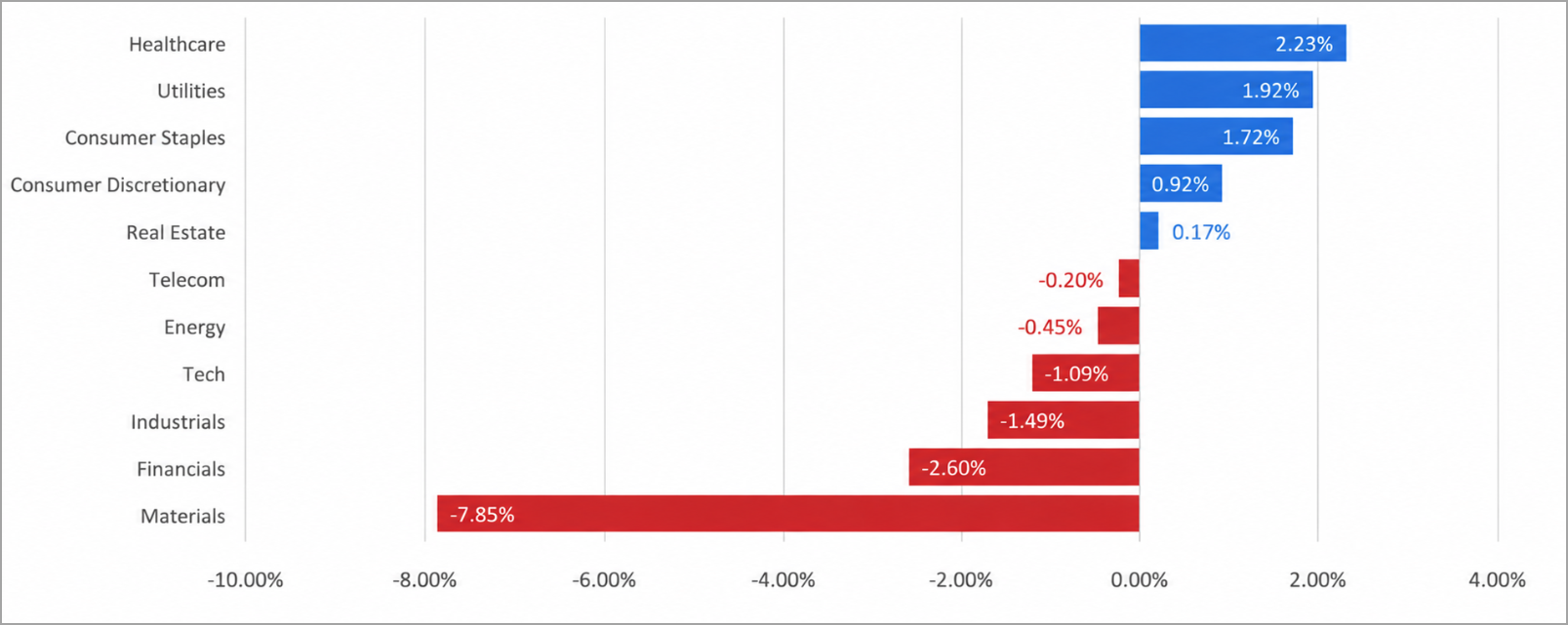
This week has been dominated by weakness in Materials, which suffered a particularly sharp sell-off and finished comfortably at the bottom of the sector table. Financials and Industrials also came under pressure, while Tech continued to struggle. The selling was not universal, however, with Healthcare, Utilities and Consumer Staples all making solid gains as investors showed a clear preference for more defensive areas of the market.
The contrast with last week’s broad rally is quite striking. Healthcare and Consumer Staples have maintained their recent strength, but the weakness across several economically sensitive sectors suggests investors are becoming more cautious. Rather than a wholesale retreat from UK equities, the sector picture points towards a rotation into businesses with more dependable earnings and less exposure to the wider economic cycle.
UK Sector Performance (7-Days)
UK Price Action
MEMBERS ONLY
Members can read our full analysis and view this week’s annotated FTSE chart, including the key technical levels that could prove important for the next directional move.
UNLOCK THE FULL WEEKLY BRIEFINGDisclaimer:
All content is provided for general information only and should not be construed as any form of advice or personal recommendation. The provision of this content is not regulated by the Financial Conduct Authority.