


20th Mar 2026. 10.39am

Weekly Briefing – Friday 20th March
| Market | Movement this week (%)* |
|---|---|
| FTSE 100 | -2.20% |
| FTSE 250 | -2.30% |
| FTSE All-Share | -2.18% |
| AIM 100 | -4.59% |
| AIM All-Share | -4.23% |
* Price movement from Monday's open at 8am
Regency View:
Weekly Briefing – Friday 20th March
Market Overview
Dear Investor,
This week offered the first real look at how policymakers are responding to the war in Iran, with oil and gas prices still very much in the driving seat. Energy markets continue to set the tone, and as prices push higher, that pressure is beginning to ripple across inflation expectations and broader asset markets.
What has shifted is the response from central banks. The Federal Reserve, Bank of England and ECB all held rates steady, but the message underneath was consistent. Policymakers are becoming increasingly cautious, recognising that higher energy prices risk feeding through into inflation at a time when progress had only just started to build.
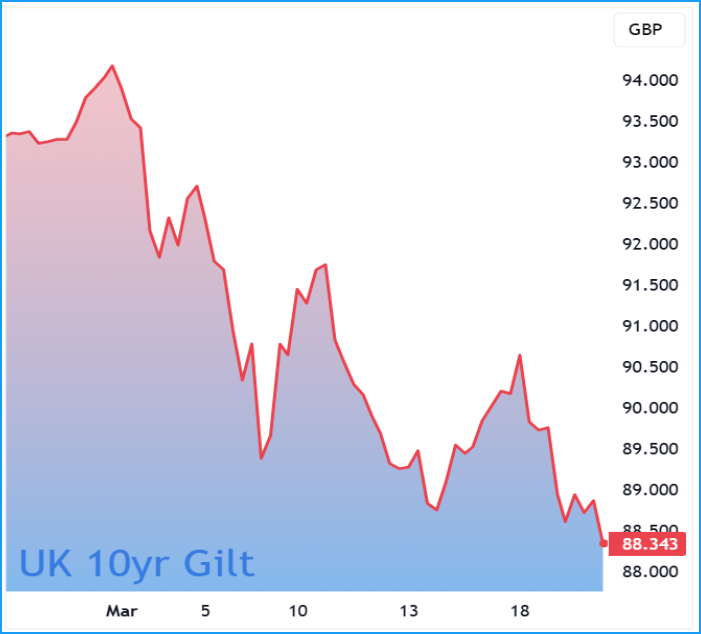
You can see that change in real time through bond markets. Yields have pushed higher, particularly in the UK where gilts have seen a notable sell-off, as expectations for rate cuts are pushed further out. Just a few weeks ago, the conversation was centred around easing. Now, it is much more about how long rates may need to stay higher for.
That shift matters. While oil remains the dominant headline, markets are starting to trade the consequences rather than the cause. Energy prices may be setting the direction, but it is the central bank reaction that is now shaping how that move feeds through into equities, bonds and currencies.
From here, the focus remains simple. If energy prices stabilise, policymakers may be able to look through the shock. If they don’t, the risk is that inflation proves stickier than expected, and that is where this starts to become more than just a short-term disruption.
Wishing you a great weekend,
Tom
Thomas Light – Chartered FCSI
Director of Research

Market Movers
On the rise: Trustpilot (LSE:TRST) +36.3% on the week
Trustpilot moved higher this week after delivering a strong set of full-year results, with growth and profitability both coming in ahead of expectations. Revenue increased 24% to $261.1 million, while adjusted EBITDA rose 69% to $40.7 million, driving a meaningful improvement in margins as the benefits of scale begin to come through.
Cash generation was a clear highlight, with adjusted free cash flow rising 173%, underlining the strength of the underlying model. This is a business that has always promised operating leverage, and we are now starting to see that translate into tangible financial performance rather than just narrative.

Alongside the numbers, positioning remains key. Trustpilot is becoming increasingly embedded in the AI ecosystem, with a sharp rise in visibility across large language models and strong bookings growth driven by enterprise customers. The combination of improving fundamentals and a clear role in how consumers interact with AI-driven search is helping to rebuild momentum in the shares.
Regency View: Trustpilot is clearly moving in the right direction, and this set of results goes a long way in backing up the story. However, with the shares already trading on a full valuation, continued delivery will be key from here.
Croda drifted lower this week in the absence of any company-specific news, with the weakness more likely reflecting broader market concerns rather than a change in the underlying story. In the current environment, that in itself is telling, as higher-quality names are not being spared from the recent shift in sentiment.
The pressure appears to be coming from the macro backdrop, particularly the sharp move higher in energy prices. While Croda has made a clear strategic shift towards bio-based and renewable inputs, it still has exposure to global petrochemical pricing and energy-intensive production processes. With oil and gas prices rising, that naturally raises concerns around input costs and margin pressure across the chemicals sector.

There are mitigating factors. Croda’s diversified manufacturing footprint and increasing use of renewable feedstocks reduce direct reliance on Middle Eastern supply chains, and the business is not exposed to the region in the same way as some of its peers. However, in a market that is becoming more sensitive to inflation risk and cost pressures, those distinctions can get lost in the short term.
Regency View: Croda is being caught in a broader sector move rather than anything stock-specific. However, in an environment where energy costs are back in focus, the market is likely to remain cautious until there is greater clarity on input cost pressures.
Sector Snapshot
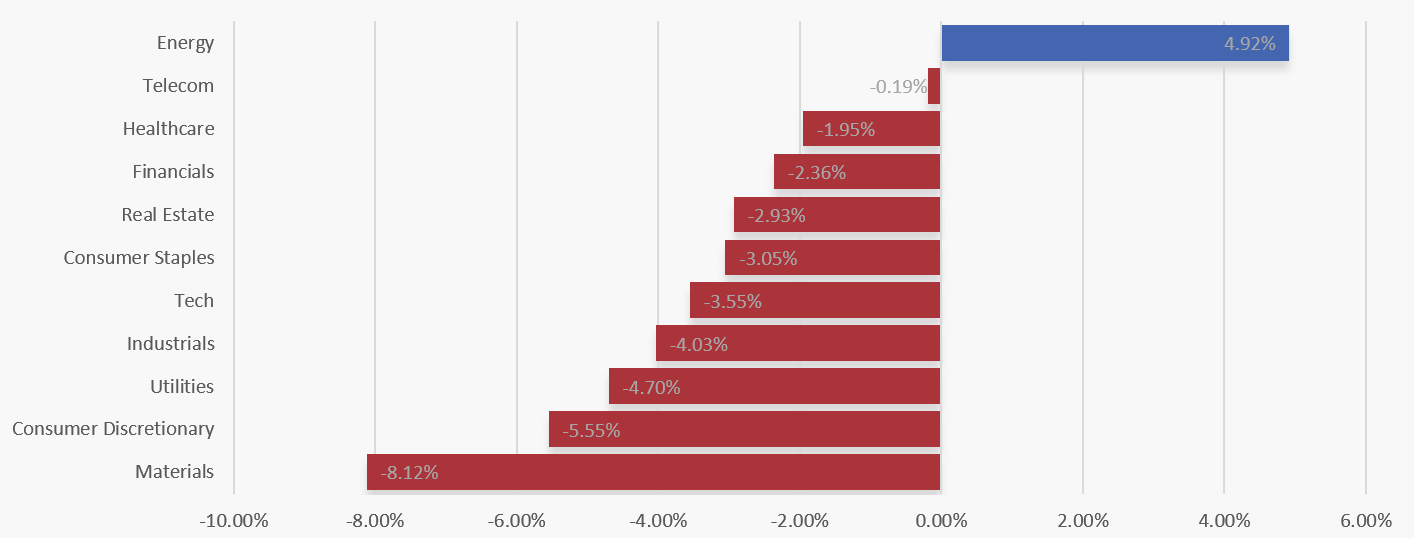
Energy once again stood apart this week as the only sector to post gains, extending its run as the clear beneficiary of the current backdrop. Telecoms were broadly flat, but beyond that, the picture was one of widespread selling, with very little in the way of defensive shelter.
Materials led the declines by a wide margin, followed by sharp losses in Consumer Discretionary and Utilities. Industrials and Tech were also firmly lower, while even traditionally defensive areas like Consumer Staples and Healthcare failed to offer protection. The breadth of the move suggests risk appetite remains firmly under pressure, with capital continuing to concentrate in just a handful of resilient areas.
UK Sector Performance (7-Days)
UK Price Action
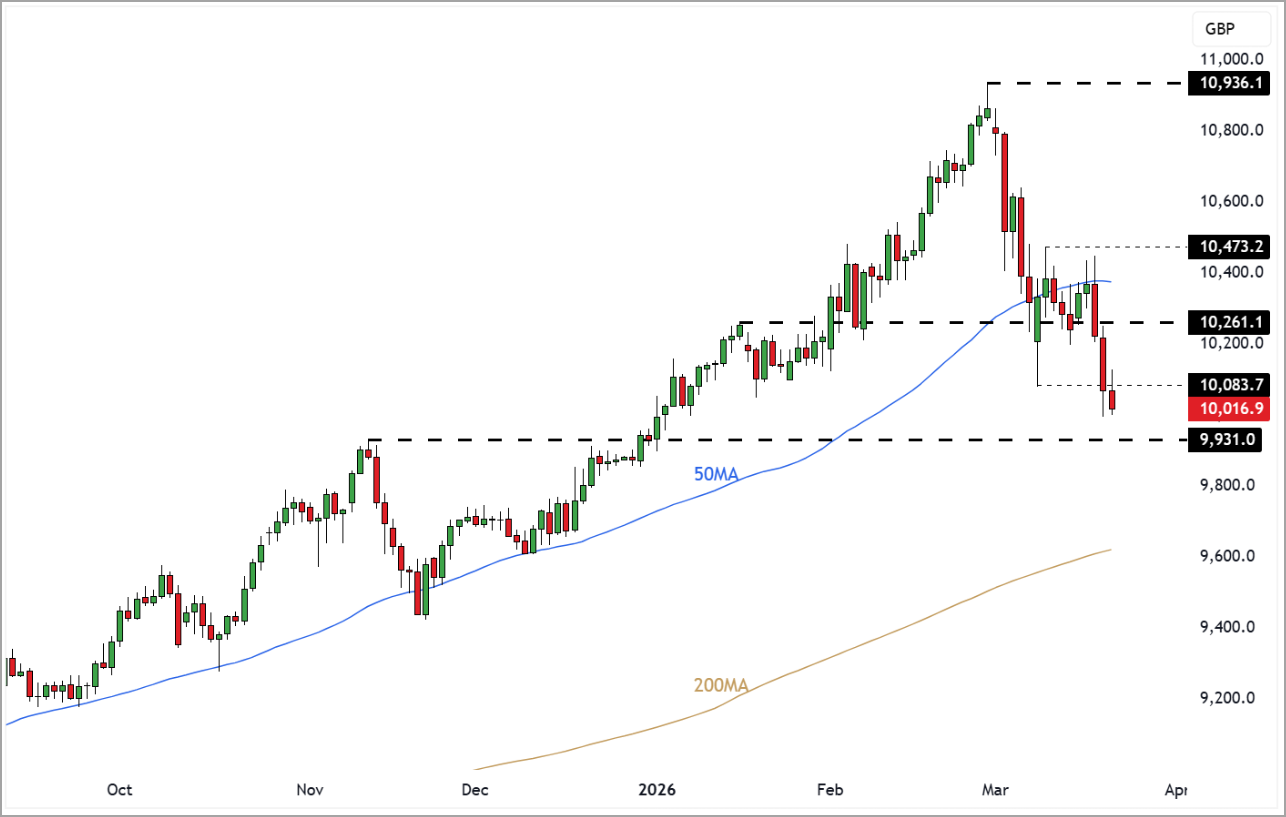
It has been another heavy week for the FTSE, with the market extending its pullback and starting to lean more decisively on the downside. Price has now broken below the recent consolidation area and is beginning to probe deeper into prior support, with the 50 day moving average no longer acting as a reliable floor. From a technical perspective, the shift in behaviour is worth noting, as what initially looked like a routine shakeout is starting to evolve into a more meaningful correction. Unless buyers can quickly reclaim lost ground and stabilise price back above recent support, the risk is that this move develops into a deeper retracement within the broader uptrend.
FTSE 100 Rolling Futures (Daily Candle Chart)
Disclaimer:
All content is provided for general information only and should not be construed as any form of advice or personal recommendation. The provision of this content is not regulated by the Financial Conduct Authority.