


16th Jan 2026. 10.43am

Weekly Briefing – Friday 16th January
| Market | Movement this week (%)* |
|---|---|
| FTSE 100 | +1.26% |
| FTSE 250 | +1.31% |
| FTSE All-Share | +1.26% |
| AIM 100 | +2.15% |
| AIM All-Share | +2.17% |
* Price movement from Monday's open at 8am
Regency View:
Weekly Briefing – Friday 16th January
Market Overview
Dear Investor,
Wall Street may have delivered its first wobble of the year, but the story closer to home has been very different. UK equities have continued to grind higher, quietly outperforming many global peers as investors reassess where value, income and real assets still matter.
The metals rally has been central to that strength. Gold pushing to new highs has grabbed attention, but copper has arguably been more important for the UK market. Prices have surged on rising demand from electrification, defence spending and the data-centre build-out behind AI. With heavyweight miners playing such a large role in the FTSE, that tailwind has translated directly into index leadership.
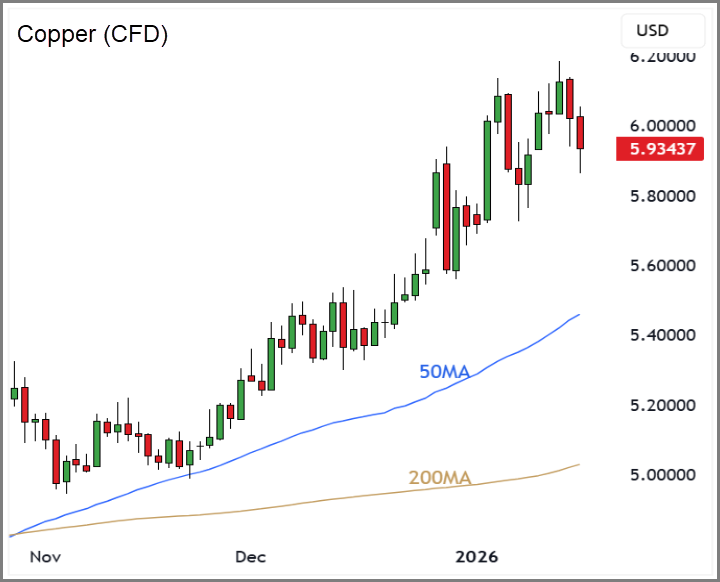
Deal speculation has added another layer of momentum. Talk of a potential mega-merger between Glencore and Rio Tinto has underlined how strategic copper has become. The industry is clearly shifting away from yesterday’s steel-heavy growth model towards future-facing materials, and scale is once again a competitive advantage. More consolidation across the sector would not come as a surprise.
By contrast, US markets have looked more fragile. Bank earnings failed to set the usual upbeat tone, while renewed political pressure on the Federal Reserve has unsettled sentiment and pushed investors towards hard assets. That divergence has only sharpened the appeal of markets, like the UK, where sector mix and valuation still offer support. UK equities are benefiting from themes that are structural rather than speculative, and that distinction is starting to show up in relative performance.
Wishing you a fantastic weekend,
Tom
Thomas Light – Chartered FCSI
Director of Research

Market Movers
On the rise: Whitbread (LSE:WTB) +6.8% on the week
Whitbread kicked off 2026 with a confident trading update, showing that momentum is building across both of its core markets. In the UK, Premier Inn delivered positive RevPAR growth as the hotel market continued its gradual recovery, with Whitbread maintaining a clear pricing premium versus the wider midscale and economy segment. That premium matters, because it underlines brand strength rather than reliance on discounting.
Germany continues to do a lot of the heavy lifting on the growth side. Accommodation sales were up strongly, RevPAR outpaced the market, and management reiterated confidence in reaching profitability this year. With the estate maturing and demand improving around key events, Germany is moving from investment phase to earnings contributor, which has been a long-standing milestone for the story.

What also stood out was discipline. Cost efficiencies for FY26 have been upgraded again, capital recycling through sale-and-leasebacks remains on track, and the £250m share buyback is close to completion. At the same time, Whitbread has lowered its expected exposure to UK business rate changes, giving investors a little more clarity around the cost base heading into FY27.
Regency View: Whitbread remains a key name for our FTSE Investor product, combining improving operational momentum with self-help on costs and capital allocation. With UK trading firm and Germany approaching profitability, the risk-reward looks more balanced than the share price suggests.
Pearson’s share price dropped this week following its full-year trading update, despite the numbers broadly landing where the market expected. Underlying group sales grew 4% for 2025, with momentum picking up into Q4 where growth accelerated to 8%. Adjusted operating profit came in at £610–615m, up around 6% on an underlying basis, while cash generation remained strong with free cash flow conversion above 95%.
Operationally, there was plenty going right. Assessment and Qualifications delivered 4% growth for the year, Virtual Learning grew 8%, and Enterprise Learning and Skills continued to build momentum with 6% full-year growth and a strong finish to the year. Pearson also leaned further into partnerships and product innovation, including the launch of an AI-powered Communication Coach integrated into Microsoft 365, alongside new enterprise relationships with IBM and Google Cloud certifications.

The pressure point came from the detail rather than the headline numbers. Pearson confirmed the loss of its US Student Assessment contract in New Jersey, which management flagged as a headwind for the first half of 2026. In a market that has become increasingly unforgiving around visibility and contract durability, that single line item was enough to overshadow an otherwise steady update and knock confidence in near-term momentum.
Regency View: Pearson is doing a lot of sensible things and the strategy clearly has traction, but this is a reminder that contract-based businesses rarely move in straight lines. When expectations are set for smooth execution, even a modest stumble can leave the shares treading water for longer than investors would like.
Sector Snapshot
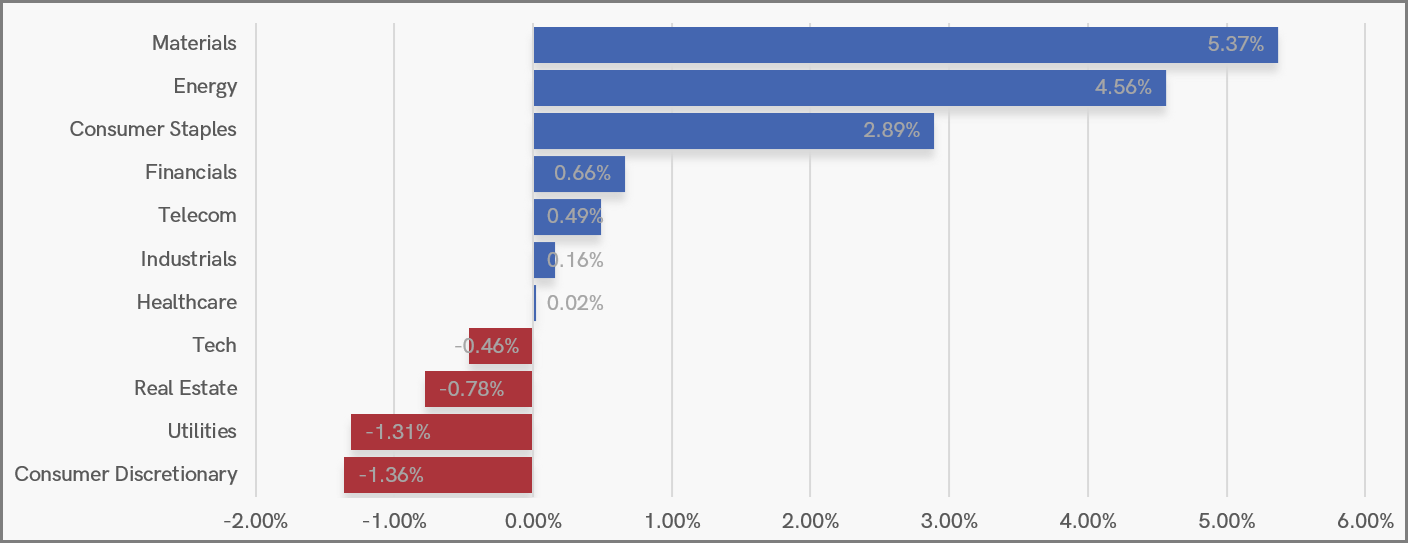
Materials and Energy sat at the top of the table this week, reinforcing the renewed focus on commodity-linked sectors. Consumer Staples also performed well, while Financials and Telecom edged higher, suggesting investors continued to favour areas offering a degree of earnings resilience. Industrials and Healthcare were broadly flat, reflecting a more selective tone beneath the surface.
At the weaker end, Consumer Discretionary and Utilities slipped back, with Real Estate also under pressure. Tech was modestly lower, highlighting a pause in appetite for growth as capital continued to rotate towards sectors with more tangible drivers and pricing power.
UK Sector Performance (7-Days)
UK Price Action
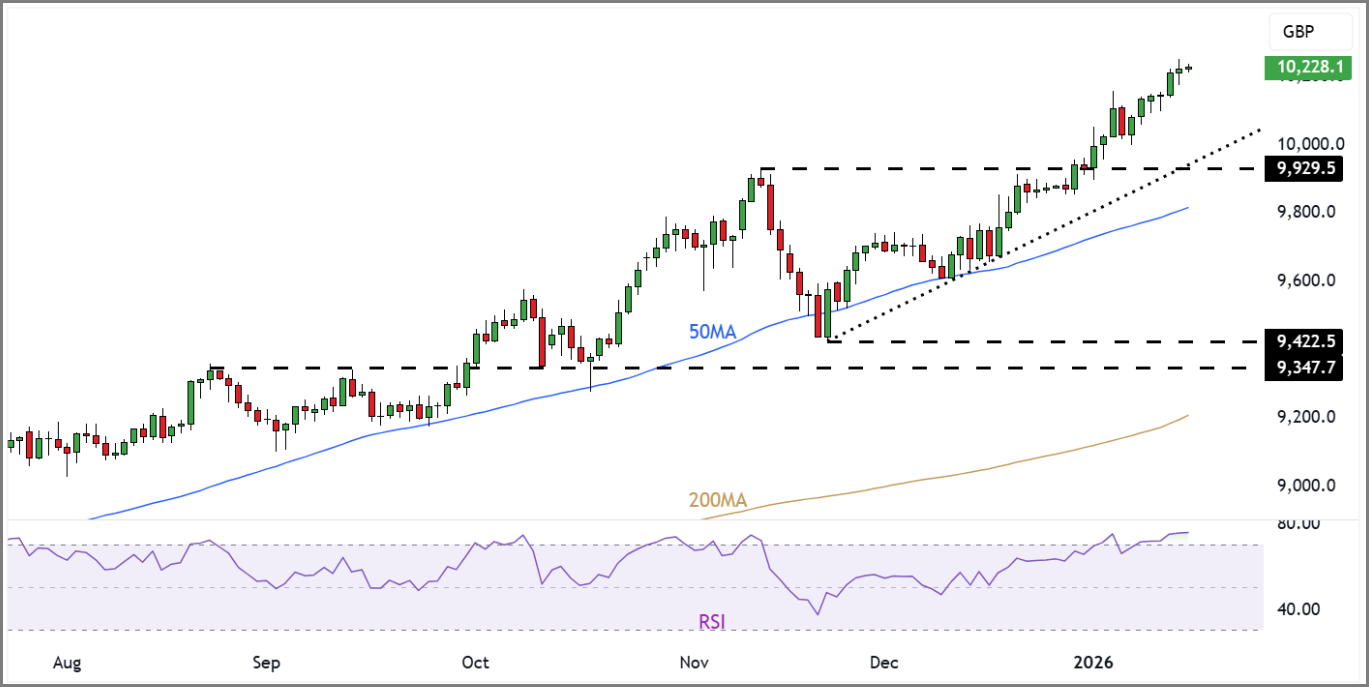
The FTSE has continued to push into fresh highs this week, extending its strong uptrend. When trends start to stretch in this way, it’s useful to keep an eye on momentum indicators such as the RSI. While RSI has moved into overbought territory above 70, there are currently no signs of negative divergence, suggesting momentum remains supportive rather than exhausted.
From here, the focus shifts to how the market behaves on any pullback. The first area to watch sits along the rising trendline, which has guided price higher since December. As long as pullbacks remain contained above this structure, the broader trend remains firmly in control, with buyers likely to view any near-term weakness as an opportunity rather than a warning sign.
FTSE 100 Rolling Futures (Daily Candle Chart)
Disclaimer:
All content is provided for general information only and should not be construed as any form of advice or personal recommendation. The provision of this content is not regulated by the Financial Conduct Authority.