


29th Oct 2026. 9.01am

Regency View:
Update
Regency View:
Update
It’s been a busy fortnight for AIM Investor, with eight companies releasing share price moving updates. There have been some notable earnings upgrades, particularly from TPXimpact and James Cropper, while IXICO’s accelerating growth has attracted buyers. Elsewhere, production setbacks, regulatory delays and weaker trading expectations have weighed on sentiment. The contrast is a useful reminder that while the wider market provides the backdrop, company-specific developments remain the main driver of performance on AIM.
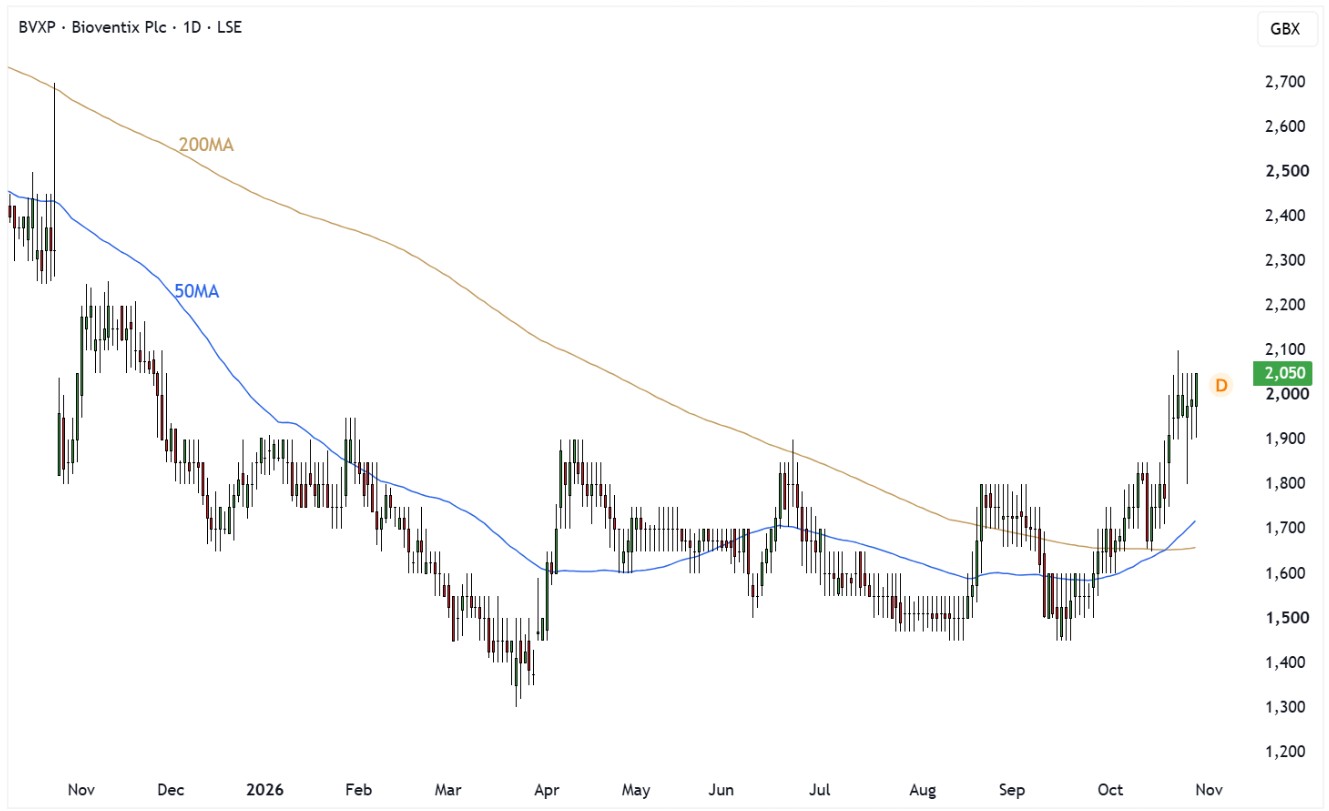
Bioventix: Alzheimer’s Diagnostics Begin to Deliver
Bioventix’s full-year results, released on 26 October, received a positive response from investors despite relatively modest headline growth. Revenue for the year to June 2026 slipped 0.8% to £13.0m, while pre-tax profit edged 1% higher to £10.2m. Both figures were ahead of market expectations, and the company maintained its total dividend at 150p per share.
The more significant development came from Bioventix’s neurological diagnostics business, where Tau-related royalty revenue increased from £75,000 to £257,000. Although still a small part of overall revenue, this growth reflects increasing commercial use of the company’s antibodies in Alzheimer’s blood tests. Five Tau antibodies are now being produced at scale, with two additional antibodies expected to enter production during the final quarter of 2026.

The challenge is that parts of the established business remain under pressure. Vitamin D antibody revenue declined 4%, while the expiry of a progesterone antibody contract will remove approximately £400,000 of annual revenue. Nevertheless, the early contribution from neurological diagnostics is encouraging, particularly as more diagnostic companies bring their tests to market. The opportunity is becoming more tangible, although the pace of commercial adoption remains difficult to predict.
What we are watching next: Growth in Tau antibody royalties, further commercial diagnostic launches and the performance of the established antibody portfolio.
Themes: Medical Diagnostics | Alzheimer’s Disease | Royalty Growth
BVXP Daily Candle Chart
James Cropper: Earnings Recovery Gathers Pace
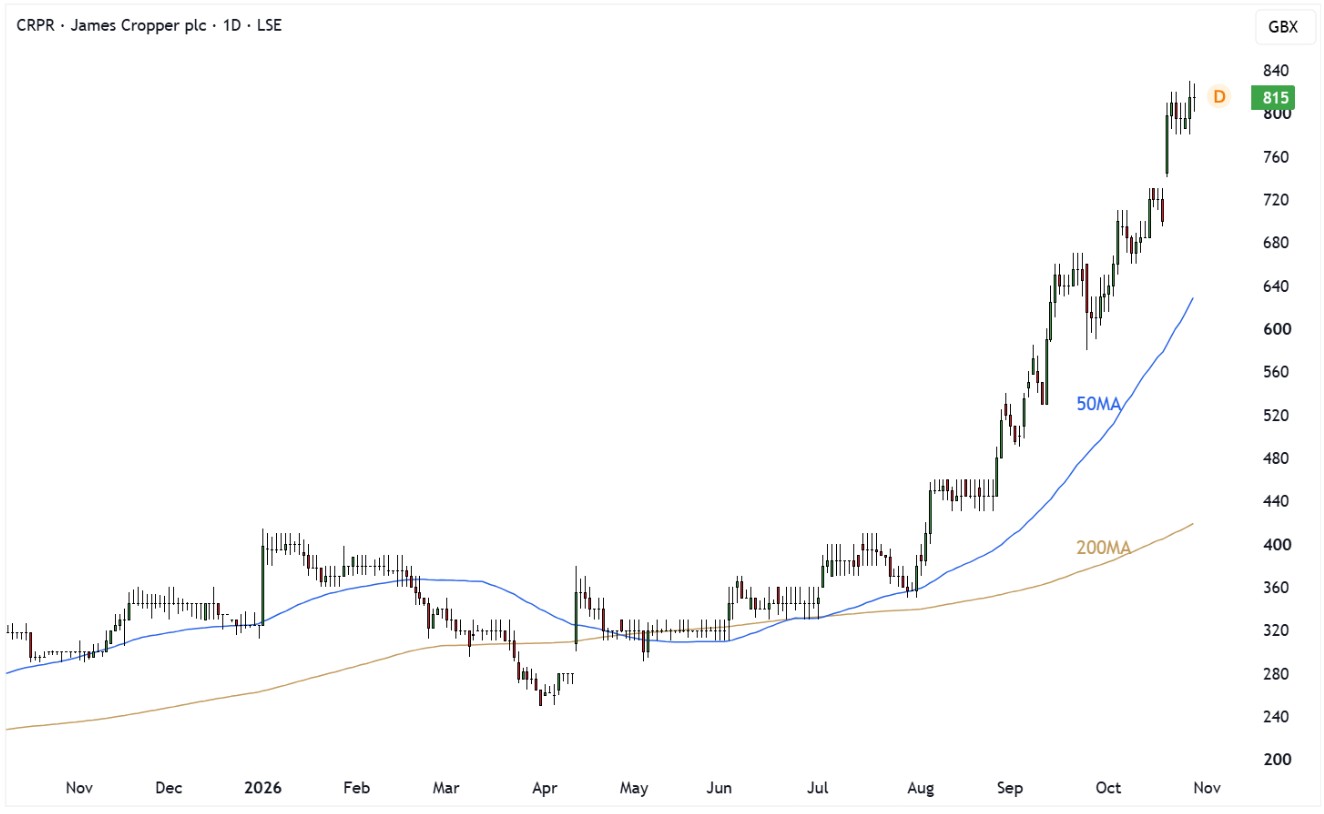
James Cropper has continued its strong share price recovery following an encouraging trading update on 20 October. The company reported that first-half trading had exceeded expectations, supported by stronger revenue and tighter cost management within its Paper & Packaging division. Management now expects full-year adjusted EBITDA to finish between £10.3m and £11.3m, representing a 10% to 20% improvement on the previous market consensus of £9.4m.
This is another sign that the operational changes made across the business are beginning to translate into improved financial performance. Paper & Packaging has been particularly important to the latest upgrade, suggesting that the benefits of cost reductions and better operating efficiency are becoming more visible. However, we should not assume that the same improvement is occurring across every division until the company provides a fuller breakdown.
With two open tranches in James Cropper, the recent recovery has been welcome. The stronger earnings outlook supports our positive house view, although the speed of the share price advance means expectations are also rising. November’s interim results will be important in establishing how much of the improvement is sustainable and whether stronger earnings are being accompanied by better cash generation.
What we are watching next: November’s interim results, divisional profitability, cash conversion and progress towards the upgraded EBITDA guidance.
Themes: Earnings Recovery | Operational Efficiency | Paper & Packaging
CRPR Daily Candle Chart
Duke Capital: Portfolio Pressures Overshadow Dividend Reassurance
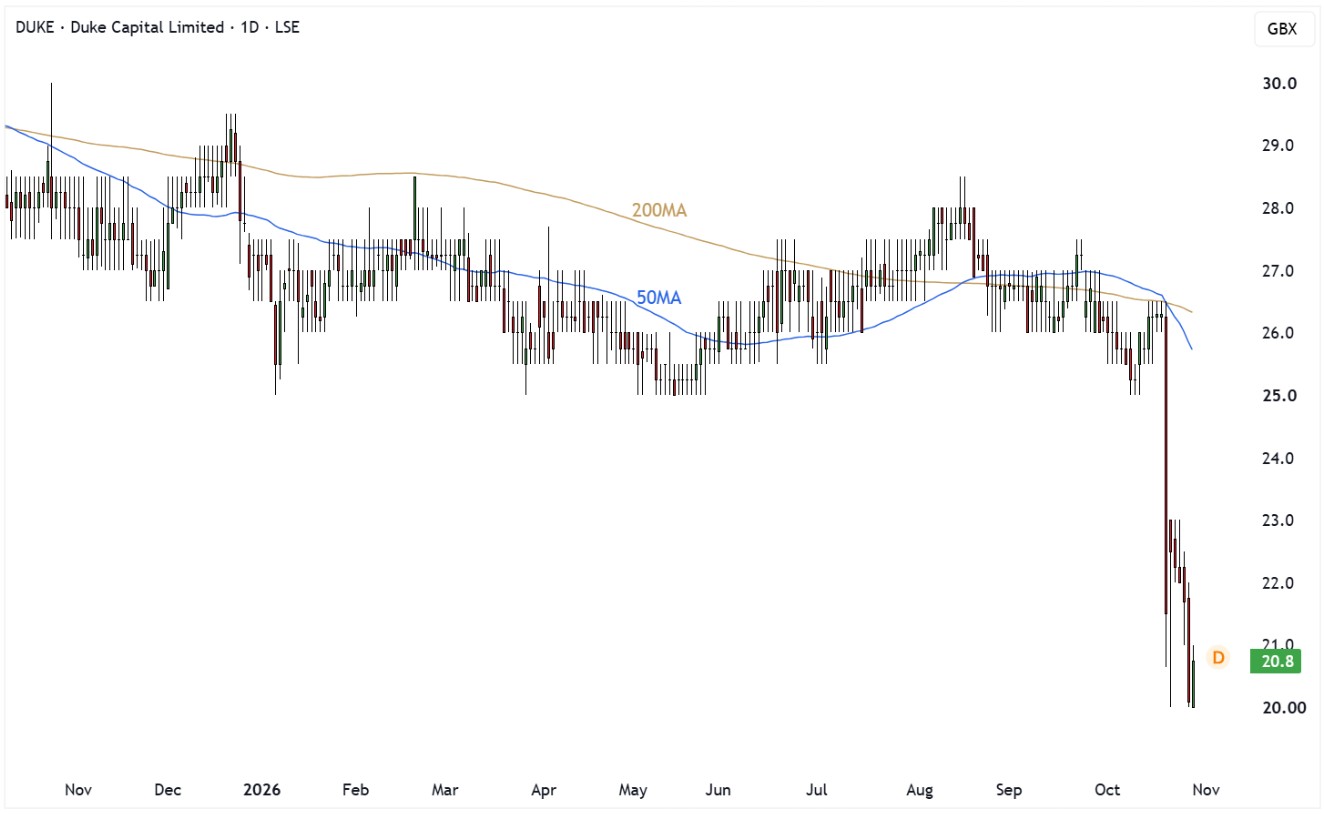
Duke Capital’s operational update on 21 October failed to reassure the market, with the shares reacting negatively. Quarterly cash revenue remained stable at £7m, while management confirmed that the first-half dividend of 1.4p per share was covered by free cash flow. However, the more concerning development was an expectation of lower recurring revenue from its UK investment portfolio during the second half.
The company has made progress restructuring two investments, including exiting divisions that had been generating material losses. These changes should improve the quality of the portfolio over time, but they also highlight the difficulties some underlying businesses are facing. Duke has indicated that improving the performance of its UK investments is now a priority, with the benefits more likely to emerge next year.

There are potential positives, including two capital partners progressing towards exits that could materially improve FY27 cash revenue. However, these transactions remain uncertain, and any proceeds would need to be considered separately from the recurring income supporting Duke’s dividend. Management also believes the shares trade at a substantial discount to net asset value, although the market may remain cautious until there is clearer evidence of improving portfolio performance.
What we are watching next: The interim results on 3 December, recurring cash revenue, progress restructuring the UK portfolio and the outcome of the two potential exits.
Themes: Alternative Finance | Portfolio Restructuring | Dividend Sustainability
DUKE Daily Candle Chart
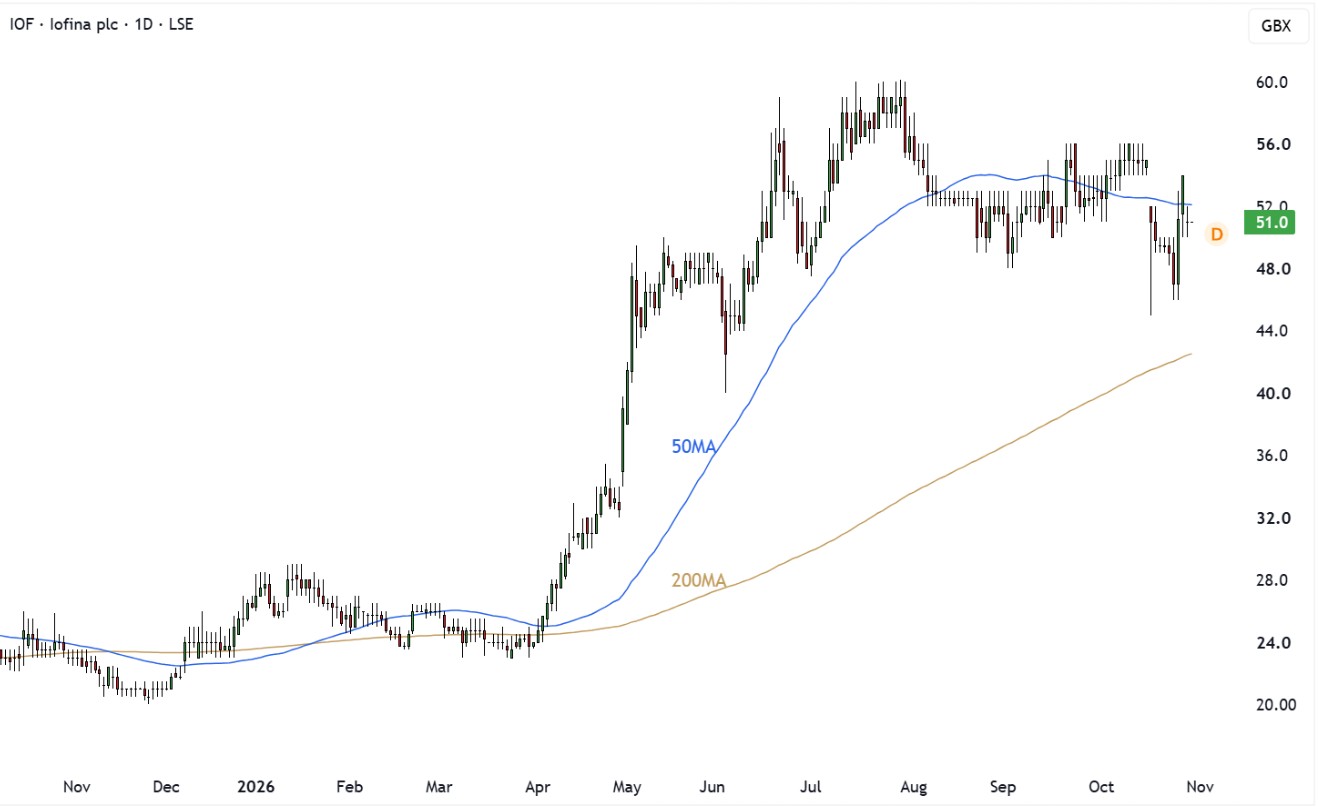
Iofina: Expansion Progress Meets Production Frustrations
Iofina’s third-quarter update highlighted further progress expanding its iodine production capacity, although operational difficulties have delayed the expected increase in output. Production during the quarter reached 205.2 tonnes, compared with 215.8 tonnes a year earlier. Lower brine volumes, plant maintenance and delays involving IO#11 and IO#12 contributed to the shortfall, with management now expecting second-half production of approximately 440 to 455 tonnes.
The expansion programme itself continues to advance. The additional brine pipeline at IO#11 has been completed, IO#12 has been handed over to the operations team, and agreements are in place to begin construction of IO#13 and IO#14. These developments should provide a larger production base over time, but the immediate priority is restoring consistent brine supplies and bringing the additional capacity into operation.

Iodine prices remain favourable, trading in the mid-$70s per kilogram and above, which continues to support the earnings outlook. Nevertheless, strong pricing is only part of the equation if production volumes are falling short of expectations. Our longer-term view remains positive on the expansion opportunity, although the next few months will be an important test of Iofina’s ability to turn its investment in new facilities into higher output.
What we are watching next: Production from IO#12, recovery in brine supplies, second-half output and construction progress at IO#13 and IO#14.
Themes: Iodine | Production Expansion | Operational Execution
IOF Daily Candle Chart
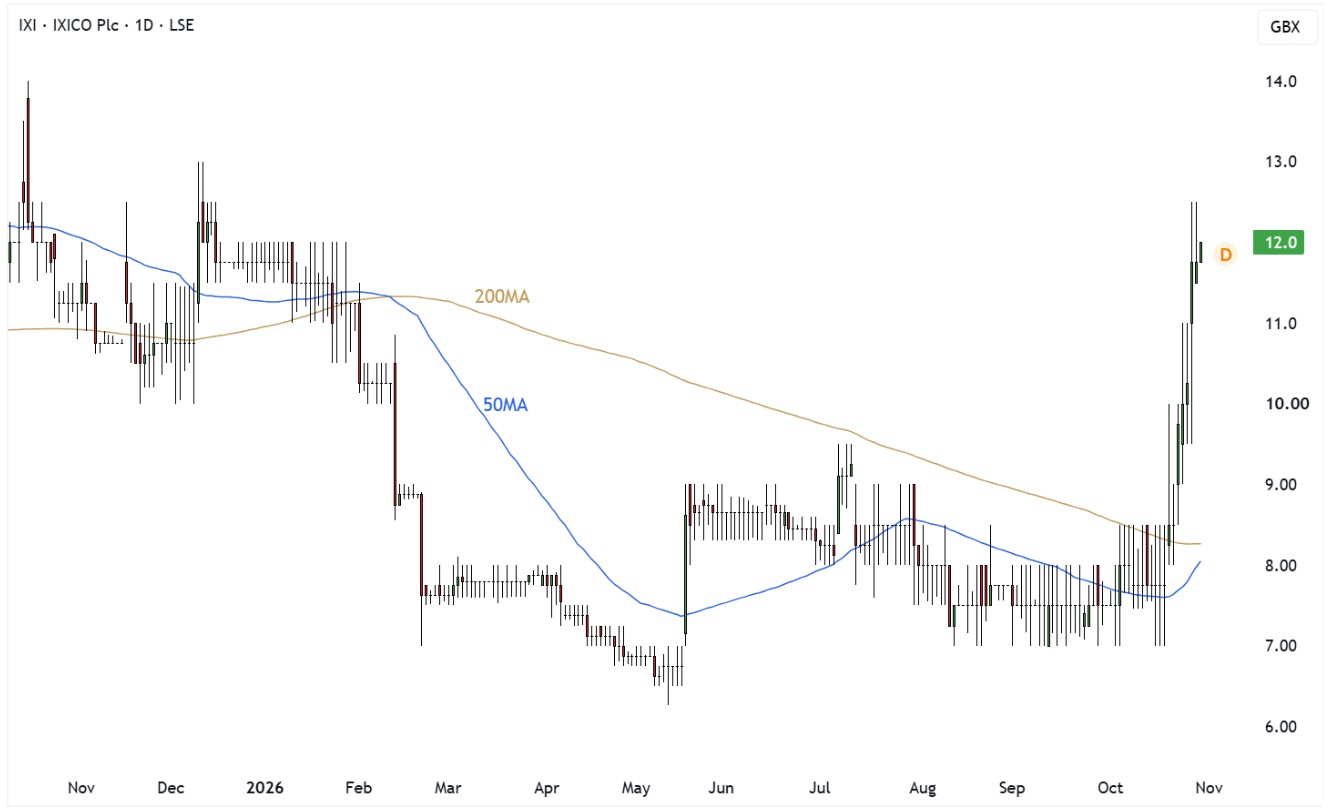
IXICO: Growth Accelerates as Alzheimer’s Contracts Build
IXICO has enjoyed a positive share price reaction following two encouraging announcements within the space of 48 hours. Its trading update on 20 October revealed that revenue for the year to September 2026 is expected to increase 28% to £8.3m, exceeding the company’s recently upgraded guidance of £8m. The year-end order book also increased to £16m, while the EBITDA loss is expected to be smaller than previously forecast.
The momentum continued on 22 October, when IXICO announced two Alzheimer’s disease contracts worth approximately £1.5m. One involves neuroimaging analysis for a Phase 2b clinical trial, while the other extends an existing relationship supporting the validation and regulatory approval of a blood-based Alzheimer’s diagnostic test. Together, these contracts demonstrate how IXICO’s technology is finding applications across both drug development and the emerging diagnostics market.

The company finished the year with £10.4m in cash, although much of the improvement reflects April’s fundraising rather than internally generated cash. IXICO therefore still has work to do before reaching sustainable profitability. Nevertheless, the combination of accelerating revenue, a larger order book and further contract wins provides encouraging evidence that its commercial strategy is delivering. It also reinforces the growing opportunity in Alzheimer’s diagnostics, a theme we are seeing develop at Bioventix.
What we are watching next: December’s audited results, further contract wins, order book conversion and progress towards profitability.
Themes: Neuroscience | Alzheimer’s Disease | Contract Growth
IXI Daily Candle Chart
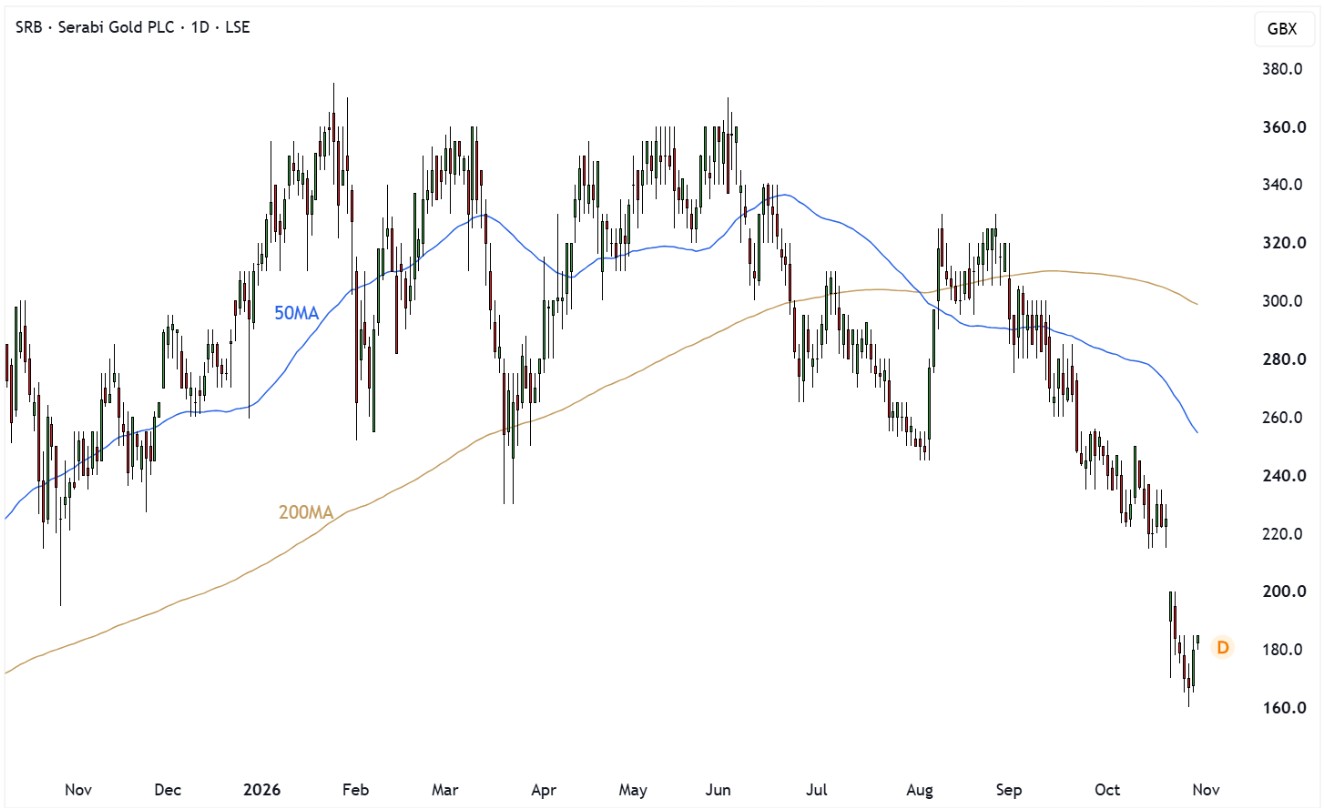
Serabi Gold (SRB): Permitting Delays Derail Production Targets
Serabi Gold’s latest operational update prompted a negative share price reaction, with softer underlying gold prices adding to the pressure. Third-quarter production fell 9% year on year to 11,008 ounces, while management reduced its full-year outlook. Production is now expected to be similar to the 44,169 ounces delivered in 2025, rather than exceeding the previously guided 53,000 ounces.
The main difficulty is at Coringa, where regulatory delays are preventing Serabi from fully exploiting the mine’s growing production capacity. Coringa itself continues to perform well, producing 8,101 ounces during the quarter, but restrictions under its existing trial mining licence limit the amount of ore that can be transported for processing. Meanwhile, lower grades at Palito contributed to weaker output, despite the completion of a fourth ball mill that should increase processing capacity in 2027.

Serabi’s financial position remains healthy, with $63.2m in cash and no debt at September’s end. Management also expects capital expenditure to fall next year following substantial investment in Coringa. However, the immediate focus has shifted from production growth to securing the necessary approvals, particularly with the current Coringa trial mining licence due to expire on 29 January 2027. Until there is greater clarity on permitting, the company’s expansion potential is likely to remain overshadowed by uncertainty.
What we are watching next: Coringa’s licence renewal, progress towards full operating approval, Palito grades and updated production guidance in November.
Themes: Gold Mining | Production Guidance | Permitting Risk
SRB Daily Candle Chart
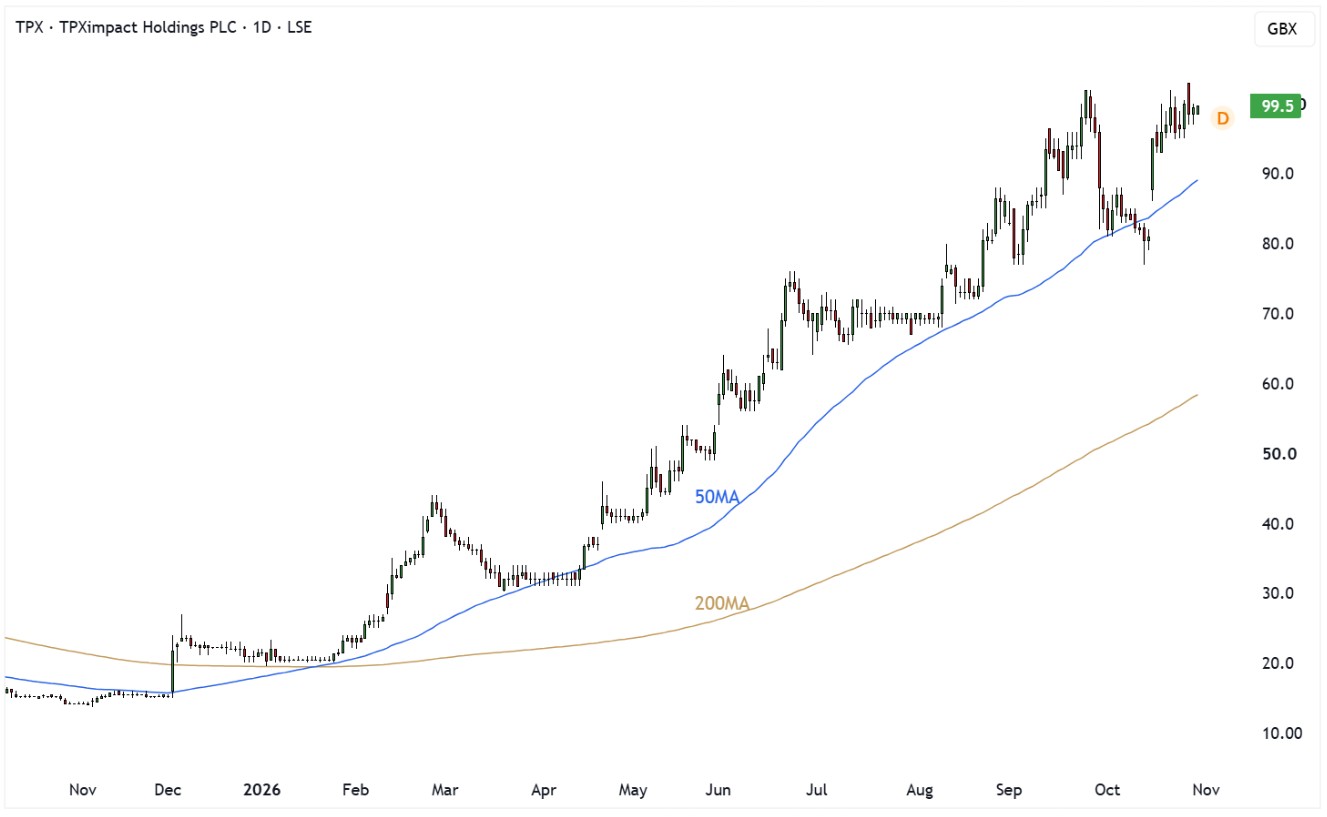
TPXimpact: Turnaround Delivers a Major Earnings Upgrade
TPXimpact has delivered one of the strongest updates of the fortnight, prompting a positive response from investors. First-half revenue is expected to reach at least £57m, an increase of 57%, while adjusted EBITDA is forecast to rise 134% to at least £7.5m. The adjusted EBITDA margin has also improved from 8.8% to approximately 13%, suggesting the business is benefiting from a more efficient operating structure.
The improvement follows the completion of TPXimpact’s three-year transformation programme, with stronger client relationships and demand for its digital services helping to drive growth. Perhaps equally encouraging is the balance sheet, which moved from £4.2m of net debt at the beginning of the financial year to £1m of net cash by the end of September. Management had previously expected to eliminate net debt only by the end of FY27, so this represents a considerable acceleration.

Reflecting the stronger performance, the company has upgraded full-year guidance to revenue of at least £105m and adjusted EBITDA of at least £14m, compared with its previous EBITDA expectation of at least £12m. The scale of the improvement is encouraging, particularly as profitability is growing considerably faster than revenue. The next challenge will be sustaining that momentum through the second half and demonstrating that the improvement in adjusted earnings is also reflected in statutory profits and cash generation.
What we are watching next: Interim results on 10 November, margin sustainability, cash conversion and delivery against upgraded full-year guidance.
Themes: Digital Transformation | Earnings Growth | Balance Sheet
TPX Daily Candle Chart
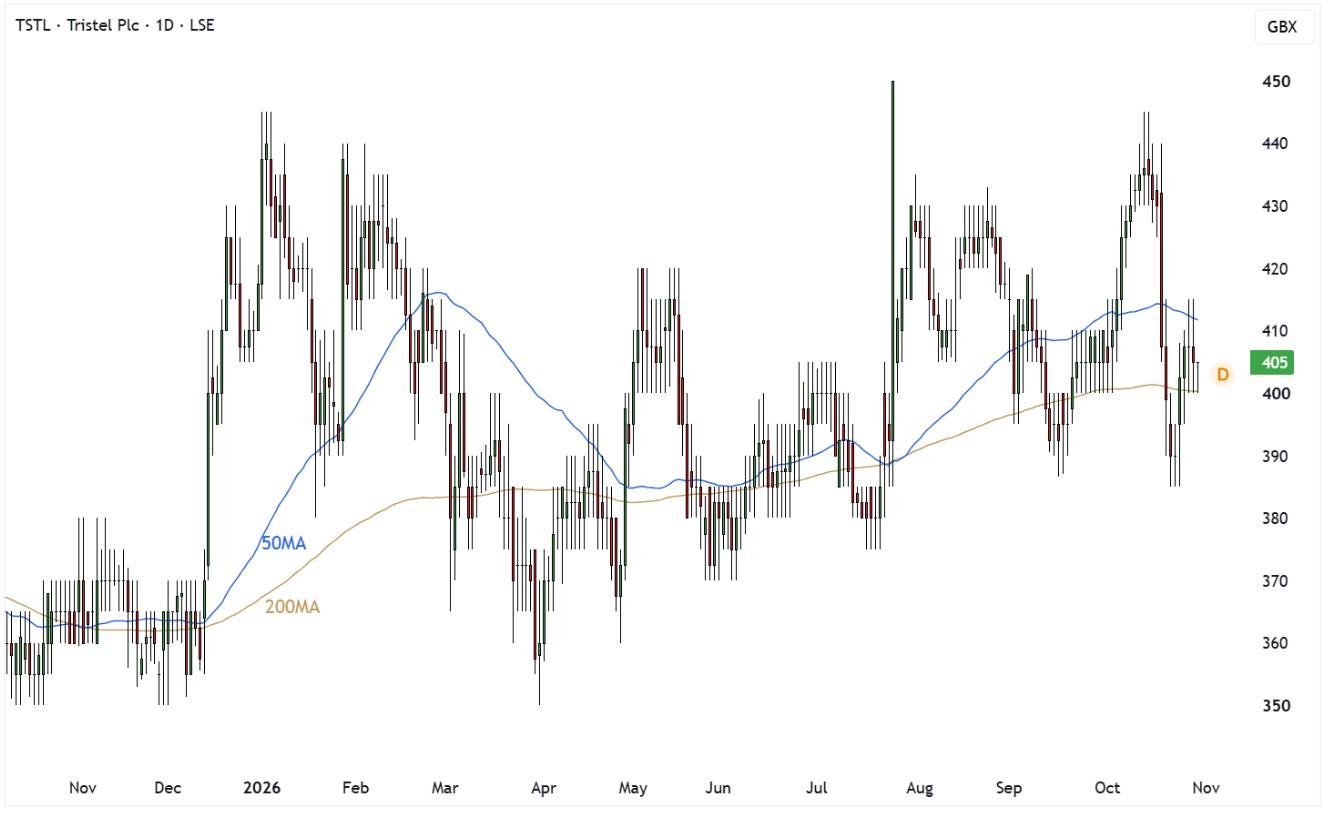
Tristel: Profitable Growth Builds on a Strong Foundation
Tristel’s full-year results, released on 19 October, showed another year of steady progress for the infection prevention specialist. Revenue increased 10% to £51.1m, while adjusted pre-tax profit rose 15% to £11.7m. Reported pre-tax profit grew 30% to £11.0m, and the company finished June with £16.0m in cash and short-term investments, alongside no bank debt. The full-year dividend was increased 5% to 14.91p per share.
The most important longer-term development remains Tristel’s expansion in the United States. Its ULT and OPH disinfectants are now both FDA-cleared, and growing recognition of chlorine dioxide within American clinical guidelines should help support adoption. US revenues are increasing, although from a relatively small base, and converting hospital interest into regular consumable orders will take time. The company has also completed its transition to in-house wipe manufacturing, which should support margins as volumes increase.

There are additional growth opportunities beyond the core disinfectant range. Tristel has launched VISICLEAN, expanded its surface disinfection offering and introduced a paid version of its 3T digital compliance platform, creating the potential for recurring software revenue alongside consumables. With Chris Lee taking over as chief executive in August, the focus now turns to commercial execution. The underlying business remains highly profitable and cash-generative, but the pace of US adoption will be an important measure of how quickly Tristel can build on its established European position.
What we are watching next: US sales growth, adoption of ULT and OPH, manufacturing efficiencies and early commercial progress with 3T Pro.
Themes: Infection Prevention | US Expansion | Recurring Revenue
TSTL Daily Candle Chart
Disclaimer:
All content is provided for general information only and should not be construed as any form of advice or personal recommendation. The provision of this content is not regulated by the Financial Conduct Authority.