


1st Oct 2026. 9.09am

Regency View:
Update
Regency View:
Update
There has been no shortage of results to digest across the AIM Investor portfolio over the past fortnight, and the market’s reaction has not always followed the headline numbers. Billington continues to benefit from strong demand in some of its key end markets, while Bango and Accesso are beginning to show better operational leverage from the investments made in their platforms. At the other end of the spectrum, Ingenta and tinyBuild both demonstrate why expectations matter just as much as results when it comes to the immediate share price reaction.
Accesso: Better Margins Beneath a Flat Revenue Line
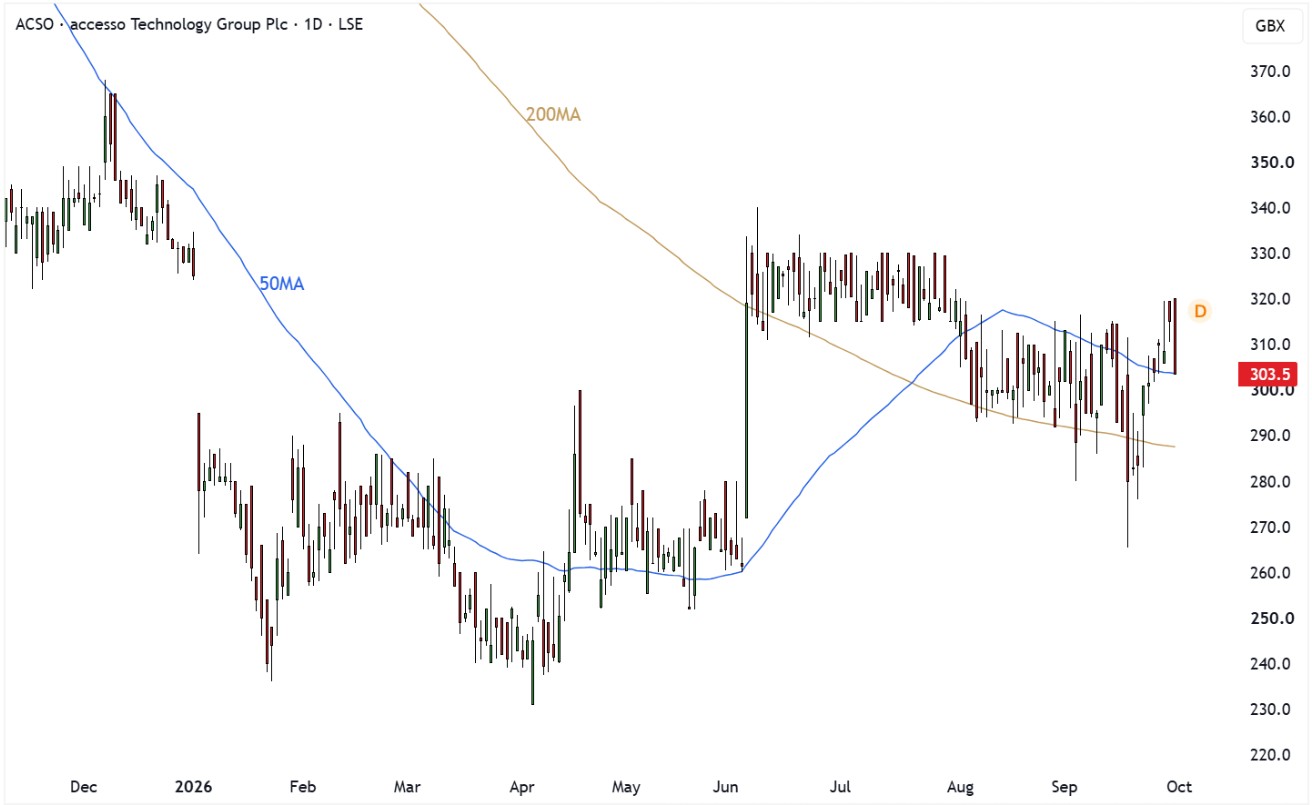
Accesso Technology (ACSO) reported broadly flat first-half revenue of $67.8m, but that headline number disguises a rather better underlying performance. Ticketing and Distribution revenue increased 8.6% to $57.7m, while the expected impact of two previously announced virtual queuing contract changes weighed heavily on Guest Experience. Excluding virtual queuing, group revenue increased 7.1%, while cost efficiencies helped Cash EBITDA jump 49.7% to $7.6m and lifted the Cash EBITDA margin from 7.5% to 11.2%.
More interesting for us is the direction in which new chief executive Lee Cowie is taking the business. Accesso is moving away from selling largely separate products towards a more connected platform built around ticketing, payments, data and AI. There are some encouraging early signs that customers are responding, with 17 new venues signed during the half, the proportion of pipeline value attached to multi-product opportunities roughly doubling and five customers already signed to the new Accesso Intelligence offering following the acquisition of Dexibit. The pipeline for Intelligence has also grown to around 100 opportunities, while AccessoPay has begun going live with customers.

There is still plenty to prove. Full-year guidance remains unchanged at around $146m of revenue and $20m of Cash EBITDA, rather than being upgraded, and the second half remains important because of the group’s normal seasonality and the timing of Middle East project milestones. Customer decision-making is also taking longer, so we would not get carried away with the early platform progress just yet. Nevertheless, the combination of improving margins and a clearer strategy around AI, data and payments gives us more to watch than the flat headline revenue figure initially suggests.
What we are watching next: Whether Accesso Intelligence converts its growing pipeline into meaningful revenue, the pace of AccessoPay adoption and delivery against the $20m Cash EBITDA target.
Themes: Software | AI | Margins
ACSO Daily Candle Chart
Bango: Subscription Economics Start to Show Through
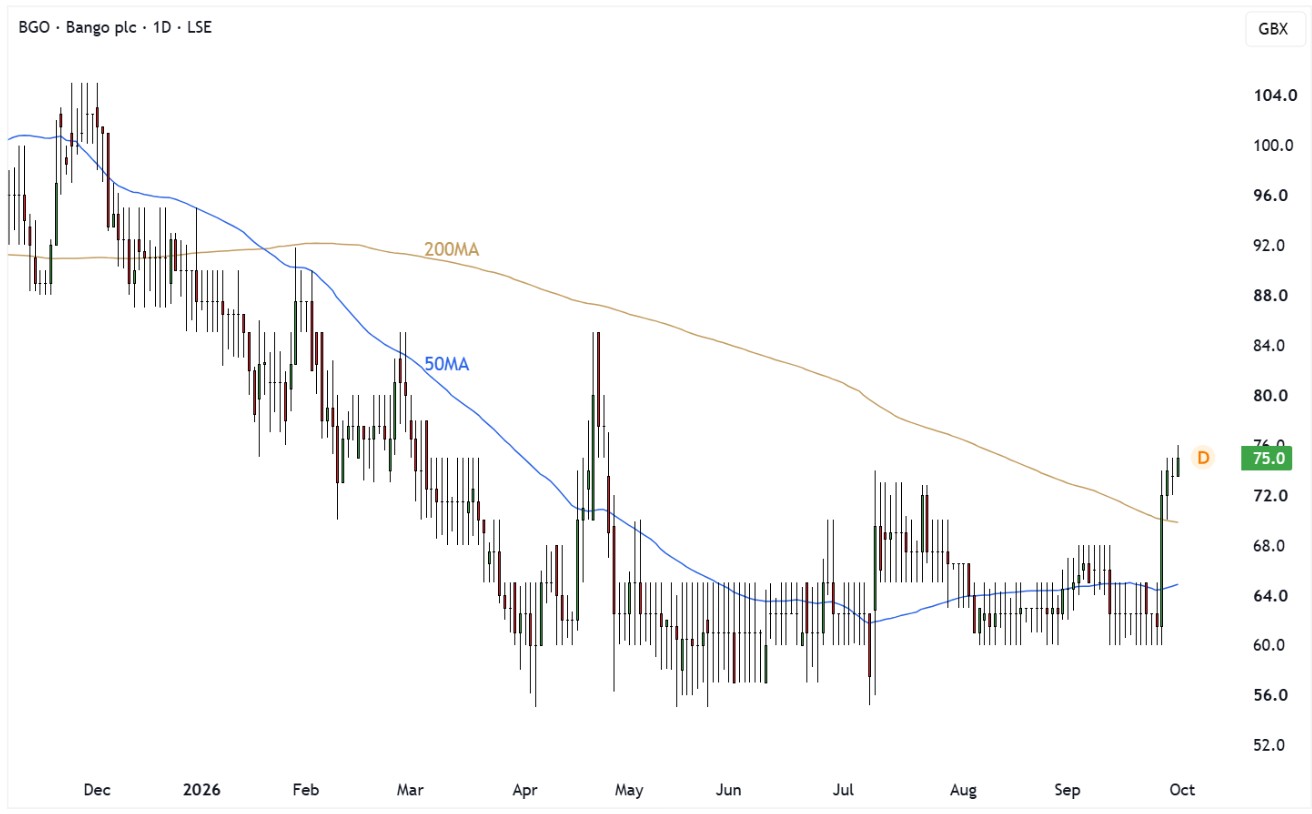
Bango (BGO) delivered another useful step forward in the first half, with the numbers increasingly showing why the subscription side of the business has become so important. Total revenue increased 3% to $25.9m, but within that Subscription revenue rose 13% to $12.3m while Payments revenue slipped 5% to $13.6m. More importantly, adjusted EBITDA increased 34% to $9m and Cash EBITDA moved from a $0.7m loss last year to a positive $3.7m.
The recurring revenue metrics are particularly encouraging. Annual Recurring Revenue increased 31% to $20.4m, while Net Revenue Retention reached 119%, meaning Bango is not simply adding customers but is generating more revenue from its existing base. That matters because the investment required to build the Digital Vending Machine platform has been substantial, and the investment case has always depended on demonstrating that additional subscription revenue can increasingly fall through into profit and cash generation. The 224% increase in Subscription adjusted EBITDA to $3.2m suggests that operating leverage is now becoming much more visible.

There is still work to do, particularly with net debt standing at $8.7m at the half year, but the direction of travel is encouraging and full-year expectations remain unchanged. For us, the key development is that Bango is beginning to look less like a business continually investing ahead of an opportunity and more like one starting to harvest some of the economics from that investment. Sustained ARR growth alongside further improvement in cash generation would strengthen that argument considerably.
What we are watching next: Continued ARR growth, further operating leverage from the subscription business and whether improving Cash EBITDA begins to translate into a meaningful reduction in net debt.
Themes: Subscriptions | Recurring Revenue | Cash Flow
BGO Daily Candle Chart
Billington: Record Workload Provides Plenty of Visibility
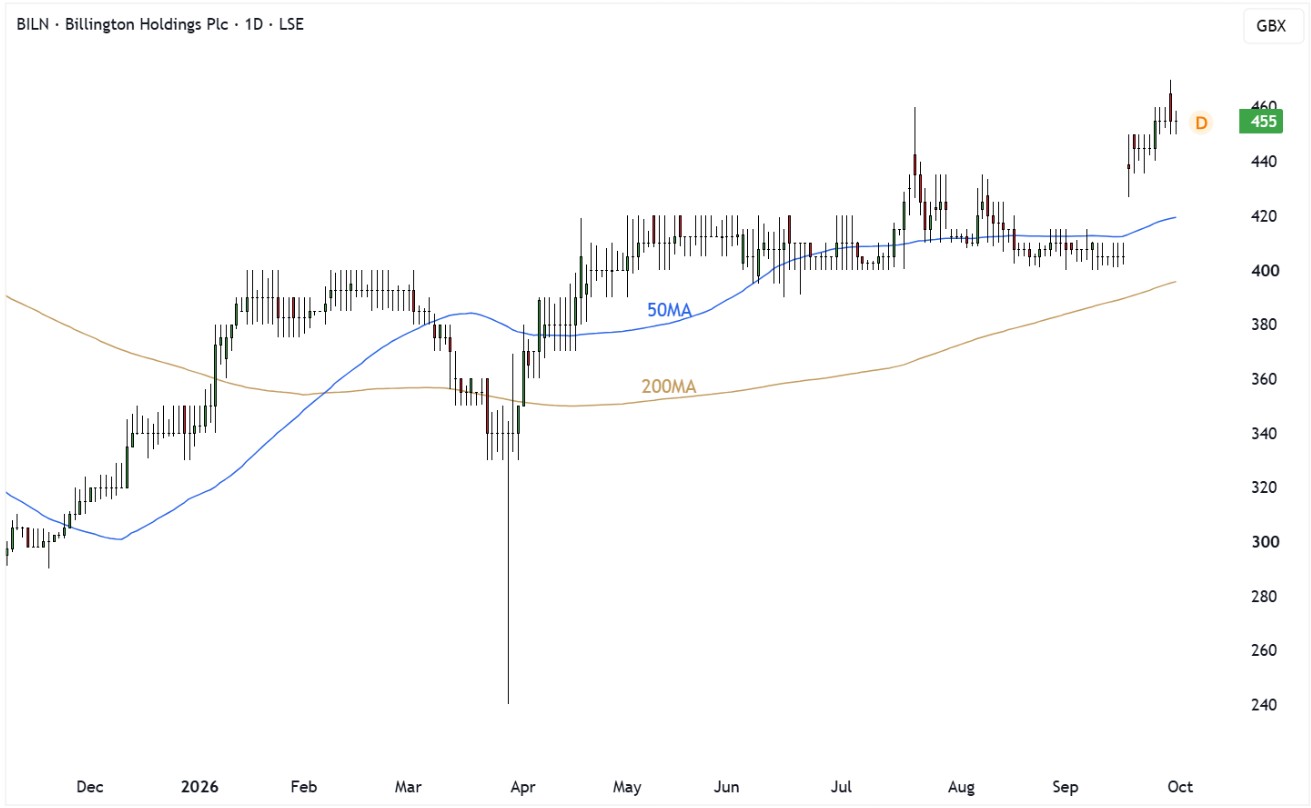
Billington Holdings (BILN) produced a particularly strong first half, with revenue increasing 29.1% to £53.95m and profit before tax rising 70.1% to £2.84m. The improvement was driven principally by a return to projects containing more steel, alongside the benefits of Billington’s focus on larger and more complex work. Structural Steelwork was the standout contributor, where revenue increased 31.6% to £47.76m and underlying operating profit rose from £0.57m to £2.84m.
Just as important is what has happened to the order book. Billington entered the second half with a record secured workload providing visibility through 2027 and, for some projects, into 2028, with energy, data centres and infrastructure among the areas generating demand. That provides a useful degree of visibility at a time when the wider structural steel market remains competitive and pricing pressure has not disappeared. Cash fell from £20.53m at the end of 2025 to £12.62m, although management attributes this to working capital requirements and the timing of contract delivery rather than any deterioration in trading.

There is also a change coming at the top. Mark Smith will retire as chief executive at the end of the year after more than a decade leading the business, with current chief operating officer Trevor Taylor taking over from 1 January. Internal succession reduces some of the uncertainty that can accompany a long-serving chief executive leaving, particularly as Smith will remain involved in an advisory capacity for at least a year. With full-year expectations unchanged, the focus now shifts towards converting that record order book into profitable growth while maintaining discipline in what remains a competitive industry.
What we are watching next: Execution against the record order book, cash conversion as working capital normalises and the transition from Mark Smith to Trevor Taylor.
Themes: Infrastructure | Order Book | Succession
BILN Daily Candle Chart
Ingenta: New Wins Meet the Legacy Drag
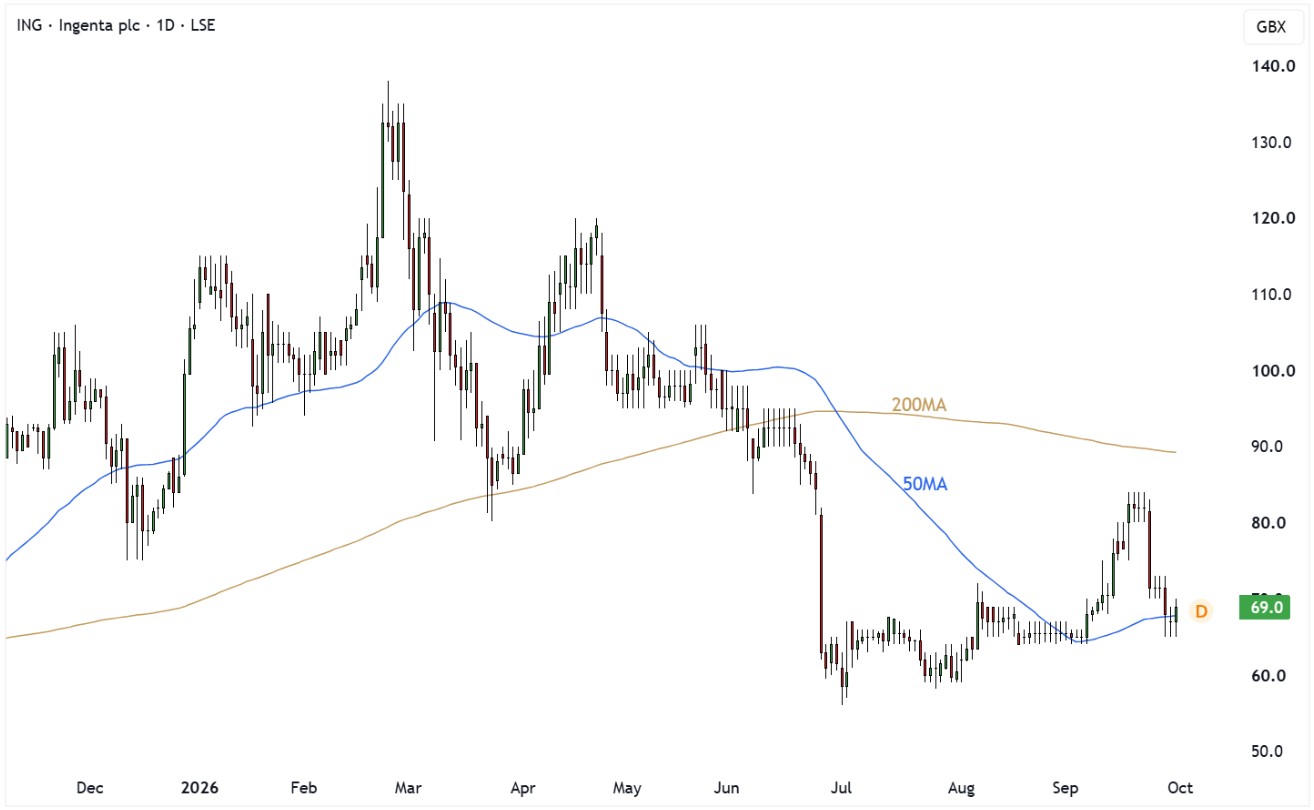
Ingenta (ING) had a more difficult first half, with the results bringing into focus some of the competing forces currently at work within the business. Revenue edged down from £5.16m to £5.12m, gross profit fell from £2.64m to £2.46m and adjusted EBITDA, excluding foreign exchange effects, declined from £0.9m to £0.7m. Part of that reflects the continuing transition away from legacy software, while the investment being made to strengthen the business for future growth means that new revenue is not yet translating directly into higher profits.
There are still some encouraging signs beneath those numbers. Recurring revenue now accounts for 92% of the total and Ingenta secured more than £2m of new contract revenue during the first half, spread across its major product lines and due to be delivered over three years. The balance sheet also remains in good shape, with £4.6m of cash and no debt, while the acquisition of FirstAida gives Ingenta an opportunity to add AI capabilities to its existing intellectual property and rights management offering. We continue to see that as an interesting additional opportunity rather than something on which to base the investment case at this stage.

The negative share price reaction therefore makes some sense. The key question is whether these new contract wins and the wider pipeline can grow quickly enough to offset the gradual loss of some larger customers from Ingenta’s older platforms, particularly as we look towards 2027. Recruitment into the sales team has also taken longer than management expected, although the Board remains confident of meeting FY26 adjusted EBITDA expectations of £1.4m. There is still plenty to work with here, but after these results we want to see clearer evidence that the new business being won can begin to outweigh the legacy drag and ultimately return the group to stronger revenue and profit growth.
What we are watching next: Conversion of the new-business pipeline, progress rebuilding the sales team and whether new contract revenues begin to outweigh the decline from legacy platforms.
Themes: Recurring Revenue | Growth | AI
ING Daily Candle Chart
tinyBuild: Better Than Expected Wasn’t Enough
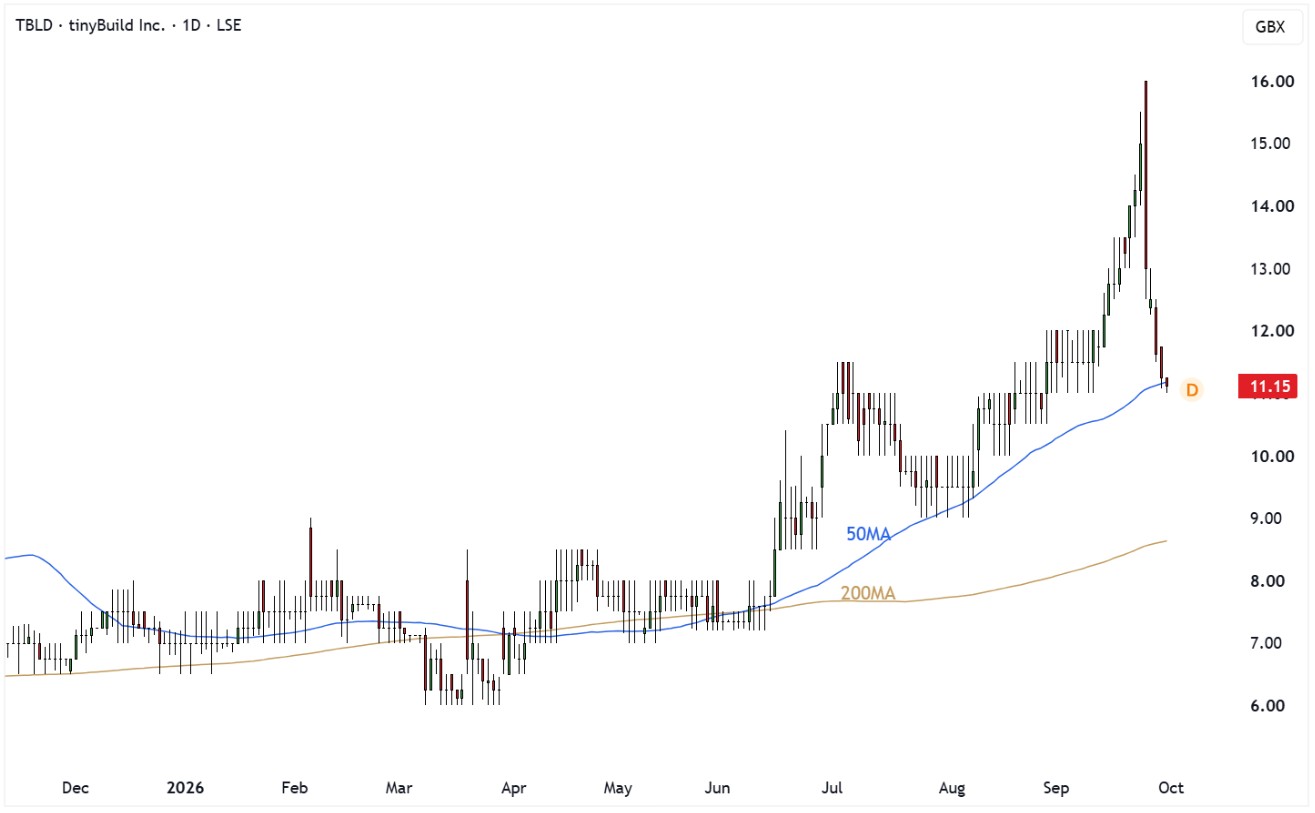
tinyBuild (TBLD) delivered first-half results ahead of expectations, with revenue from continuing operations increasing 18% to $20m as both the existing catalogue and new releases performed well. There was also a healthier contribution from recently launched games, with back-catalogue titles falling from 100% to 68% of gaming revenue. The trade-off was visible further down the income statement, where gross profit fell from $10.4m to $9.8m and adjusted EBITDA declined from $4.2m to $3.2m, reflecting higher royalties on successful second-party titles and increased marketing expenditure.
Those lower profit numbers need some context. tinyBuild has spent the past few years repairing its finances and becoming more disciplined about how capital is allocated, so seeing new releases such as SAND, Hozy and ALL WILL FALL contributing meaningfully to revenue is encouraging. Operating cash flow remained broadly steady at $6.4m and period-end cash was $4.7m, little changed from December, while management believes it has reached a healthier balance between investing in development and generating cash. The pipeline also contains several larger-budget titles alongside continued investment in existing franchises.

Despite management saying the company is on course to deliver full-year results ahead of expectations, the shares reacted negatively. Our interpretation is that expectations had risen considerably following the recovery in the shares and recent trading momentum, meaning an earnings beat on its own was no longer enough. The results themselves do not suggest the recovery has gone off course, but they do raise the bar for the second half: tinyBuild now needs its stronger release pipeline to demonstrate that revenue growth can increasingly translate into profit as well.
What we are watching next: Performance of the new release pipeline, the mix between first and second-party titles and whether revenue growth begins to feed through more clearly into gross profit and EBITDA.
Themes: Gaming | Recovery | New Releases
TBLD Daily Candle Chart
Yü: Growth Continues, but Investment Holds Back Profit Leverage
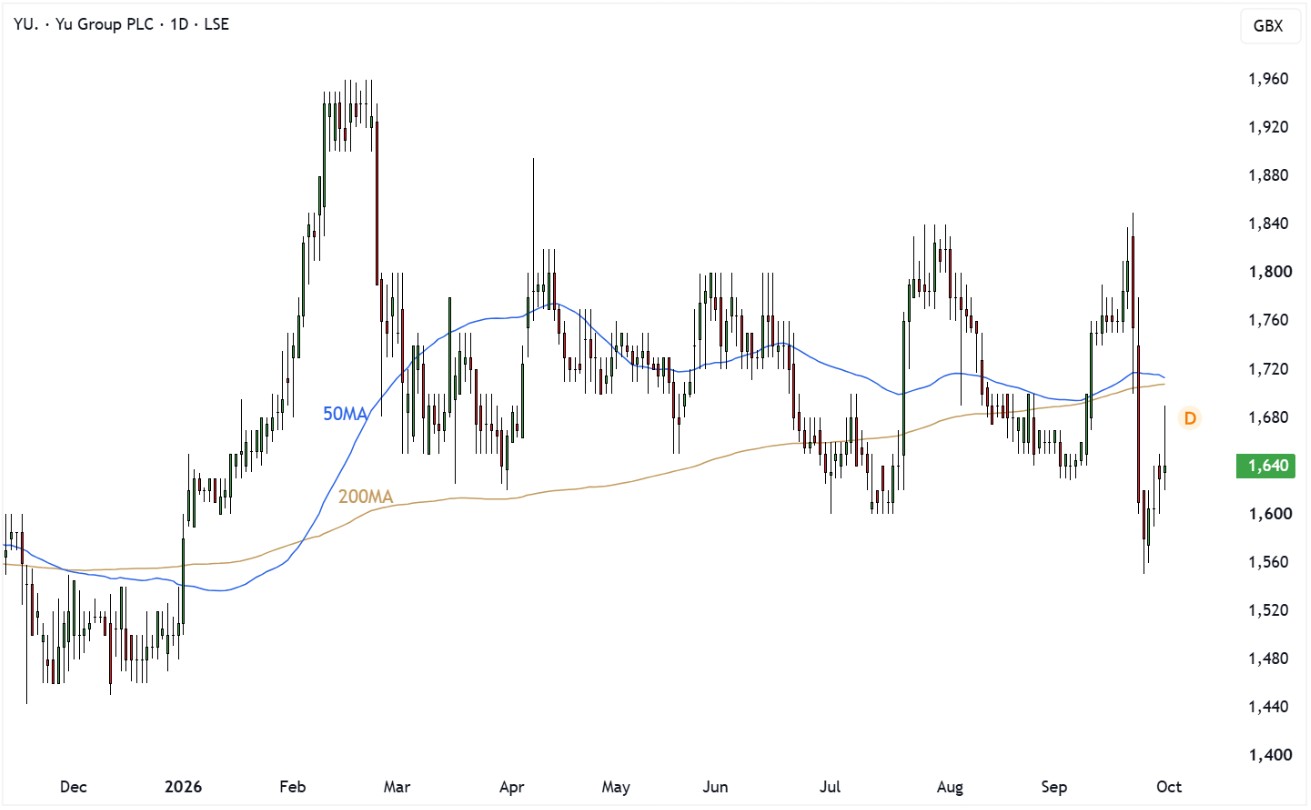
Yü Group (YU.) continued to grow at an impressive rate during the first half, with revenue rising 19% to £405m and meter points supplied increasing 43% to 153,000. Energy volumes increased 25%, average monthly bookings rose 24% to £51m and market share reached 4.2%, while aggregate contracted revenue climbed 42% to £1.7bn. The profit progression was more modest, with adjusted EBITDA increasing 4% to £24m as the group continued investing in the people and systems required to support its medium-term growth plans.
There are two parts of the story we continue to find particularly noteworthy. Yü Energy is still taking share, helped by the commodity hedging arrangement with Shell Energy that has now been extended to 2032, while Yü Smart is beginning to build a separate stream of long-duration recurring income. The number of smart meters owned increased 51% to 56,000 and index-linked annualised recurring revenue from those assets rose 67% to £3m. At the same time, the balance sheet remains substantial, with £129m of cash at the period end, although part of that cash relates to the timing of Renewable Obligation Certificate liabilities.

Management continues to expect FY26 revenue, adjusted EBITDA and adjusted EPS to meet market expectations, but the forward indicators arguably tell us more about where the business could be heading. The contract book is performing ahead of previous expectations and is now expected to exceed £2bn by the end of 2026, while the interim dividend has been increased 9% to 24p. The question from here is how much operating leverage begins to emerge once the current investment phase matures. If Yü can continue taking market share while allowing profit growth to catch up with the operational growth already being delivered, that would represent the next important stage of the story.
What we are watching next: Progress towards a £2bn-plus contract book, further market share gains, growth in Yü Smart’s recurring income and whether the current investment begins to produce stronger EBITDA growth.
Themes: Energy | Market Share | Smart Metering
YU. Daily Candle Chart
Disclaimer:
All content is provided for general information only and should not be construed as any form of advice or personal recommendation. The provision of this content is not regulated by the Financial Conduct Authority.