


17th Sep 2026. 9.06am

Regency View:
Update
Regency View:
Update
There has been no shortage of news across the portfolio over the past fortnight, and the market has been equally busy passing judgement on it. Several holdings delivered strong results and improving outlooks, while Cerillion and GlobalData showed how quickly sentiment can turn when expectations need to be reset. We have also taken a 149.5% profit in Eleco following its accepted takeover offer.
Cerillion: Expectations Reset
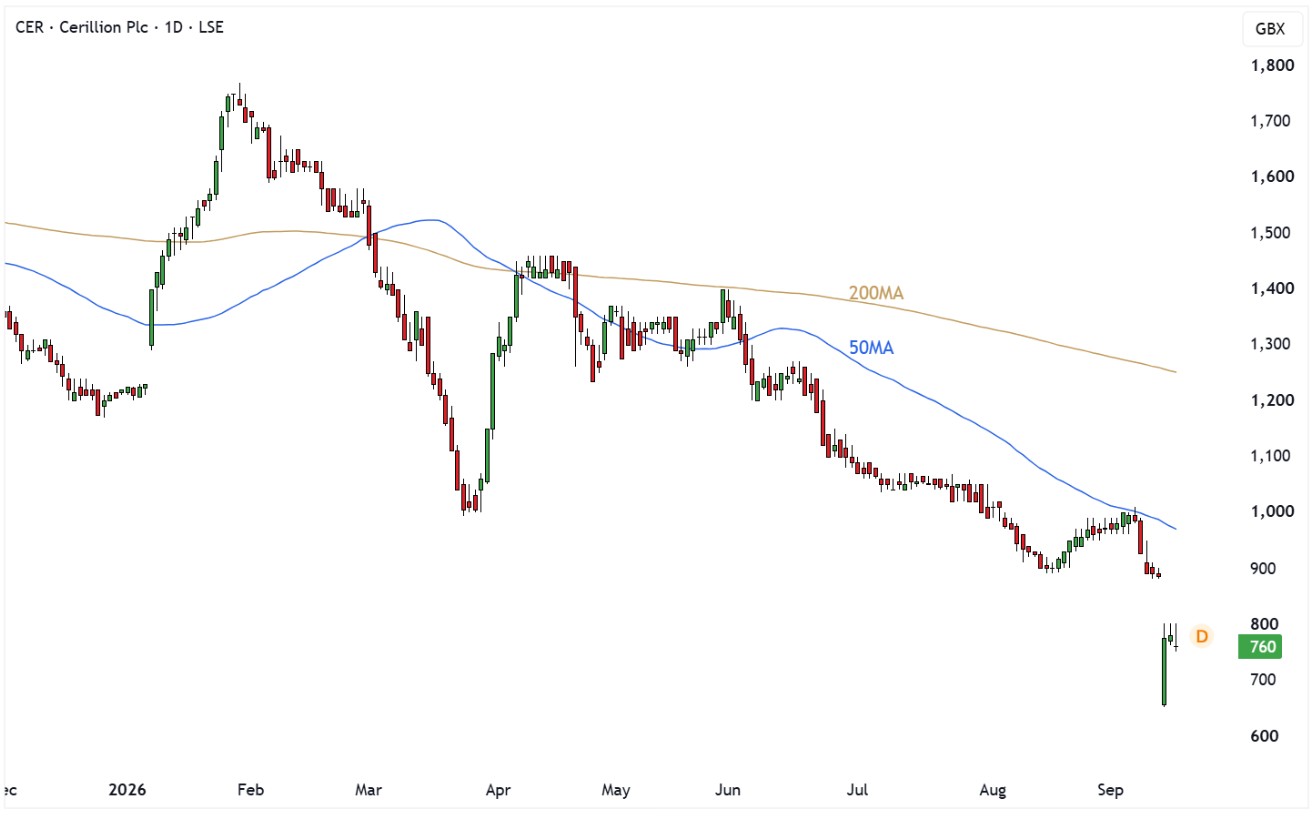
Cerillion (CER) has warned that full-year results will fall short of market expectations after several anticipated orders were delayed or deferred. Revenue for the year ending September is now expected to come in between £46m and £48m, compared with previous consensus of £52.8m, while the adjusted EBITDA margin is expected to be between 43% and 45%. The shares reacted sharply lower to the announcement.
The cause of the shortfall is important. Cerillion has not reported the loss of major customers or deterioration in its competitive position, but delays to new and existing customer orders, including software licence expansions and upgrades. Major implementations at UCom and Omantel are continuing to progress, while management says the back-order book remains strong and the new customer pipeline healthy. That provides some reassurance, but it does not make the missed expectations disappear.

For a business such as Cerillion, where a relatively small number of large contracts can influence the timing of revenue and where the valuation has historically reflected strong growth expectations, visibility matters. If the delayed work converts, this could ultimately prove to be more of a timing issue than a deterioration in the underlying business. For now, however, the burden of proof has shifted back towards the company, and November’s full-year results will need to provide evidence that those deferred orders are beginning to move again.
What we are watching next: Evidence that delayed orders are converting, alongside the full-year results and updated outlook in November.
Themes: Software | Order Timing | Earnings Expectations
CER Daily Candle Chart
Concurrent Technologies: Orders Take Centre Stage
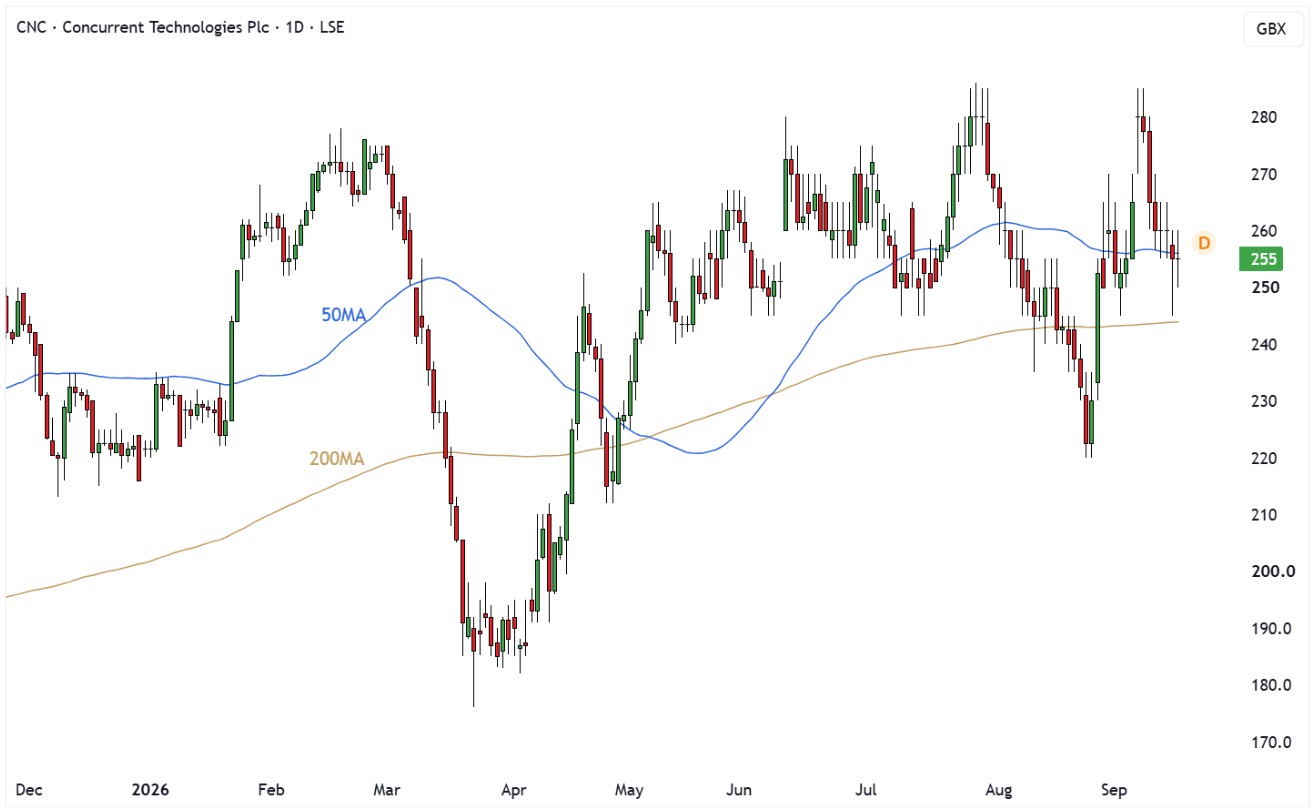
Concurrent Technologies (CNC) delivered another record first half, with revenue rising 10% to £23.2m and profit before tax increasing 19% to £3.2m. Those are respectable numbers, but the standout figure was order intake, which more than doubled to £46.9m and had already matched the total achieved during the whole of FY25. Year-to-date orders have since moved beyond £68m, giving the business considerably more visibility over future revenues.
There are encouraging signs beneath the headline numbers too. The Systems business delivered a profitable first half and its gross margin increased from 13.3% to 26.3% as the mix shifts from lower-margin design work towards production. Meanwhile, further design wins secured during the period represent an estimated lifetime value of around £129m. The expanded Colchester facility should also double production capacity just as more of those programmes begin moving into manufacture.

That combination has given management enough confidence to raise expectations again. FY26 revenue is now expected to be materially ahead of the previous £52m market forecast, with profit also expected to exceed the £8m consensus figure, partly reflecting the phasing of profit recognition on a record contract win. There is plenty to execute in what management expects to be an exceptionally busy fourth quarter, but the investment case is increasingly moving from winning designs to converting them into larger production revenues.
What we are watching next: Conversion of the record order book into production revenue and continued margin improvement within Systems.
Themes: Defence Tech | Record Orders | Production Ramp-Up
CNC Daily Candle Chart
Frontier Developments: Disney Joins the Cast
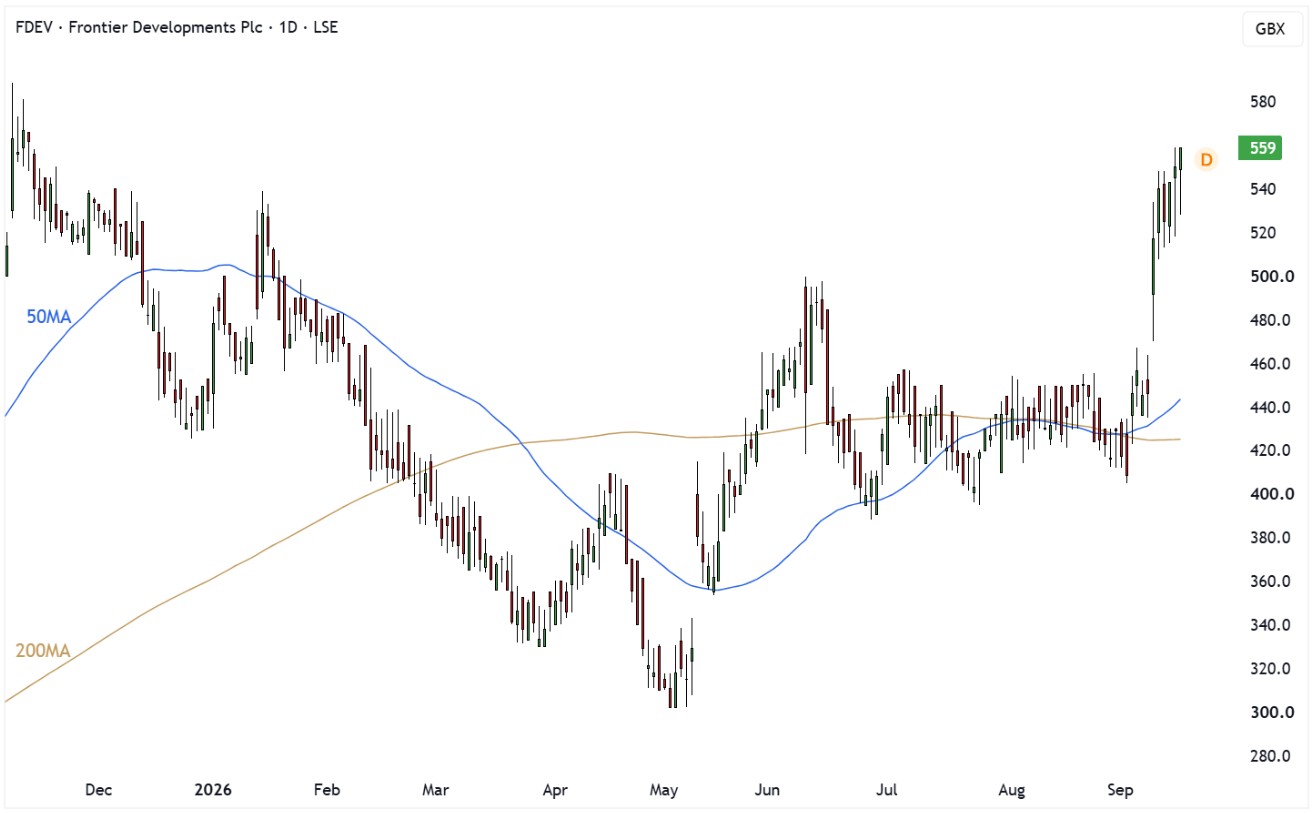
Frontier Developments (FDEV) has added a rather sizeable name to its development pipeline after agreeing to create and publish a new game using Disney’s portfolio of intellectual property. The game will be fully funded by Frontier and, importantly, will sit firmly within the Creative Management Simulation genre that now forms the centre of the company’s strategy. The shares moved higher following the announcement.
The timing looks particularly encouraging given the progress already being made within the existing portfolio. FY26 revenue increased 16% to £104.8m, while adjusted operating profit jumped 62% to a record £21.4m. Jurassic World Evolution 3 led the performance, supported by the continuing contribution from Planet Coaster and Planet Zoo, while Frontier finished May with £44m of cash. Excluding a non-recurring gain from the sale of publishing rights in the previous year, adjusted operating profit more than doubled.

The Disney agreement therefore looks less like a change of direction and more like an extension of a strategy that is already working. Frontier has deliberately refocused on a genre where it has established expertise, reusable development knowledge and a catalogue capable of generating revenues well beyond launch. Pairing that capability with Disney’s IP potentially gives the next franchise a sizeable audience from day one, although the economics will ultimately depend on execution and the terms attached to the licence. Management expects FY27 to remain in line with expectations while continuing to invest in the pipeline.
What we are watching next: Further detail on the Disney title and continued delivery from Frontier’s existing CMS portfolio as development spending on future releases increases.
Themes: Gaming | Disney IP | CMS Strategy
FDEV Daily Candle Chart
GlobalData: Investment Comes at a Cost
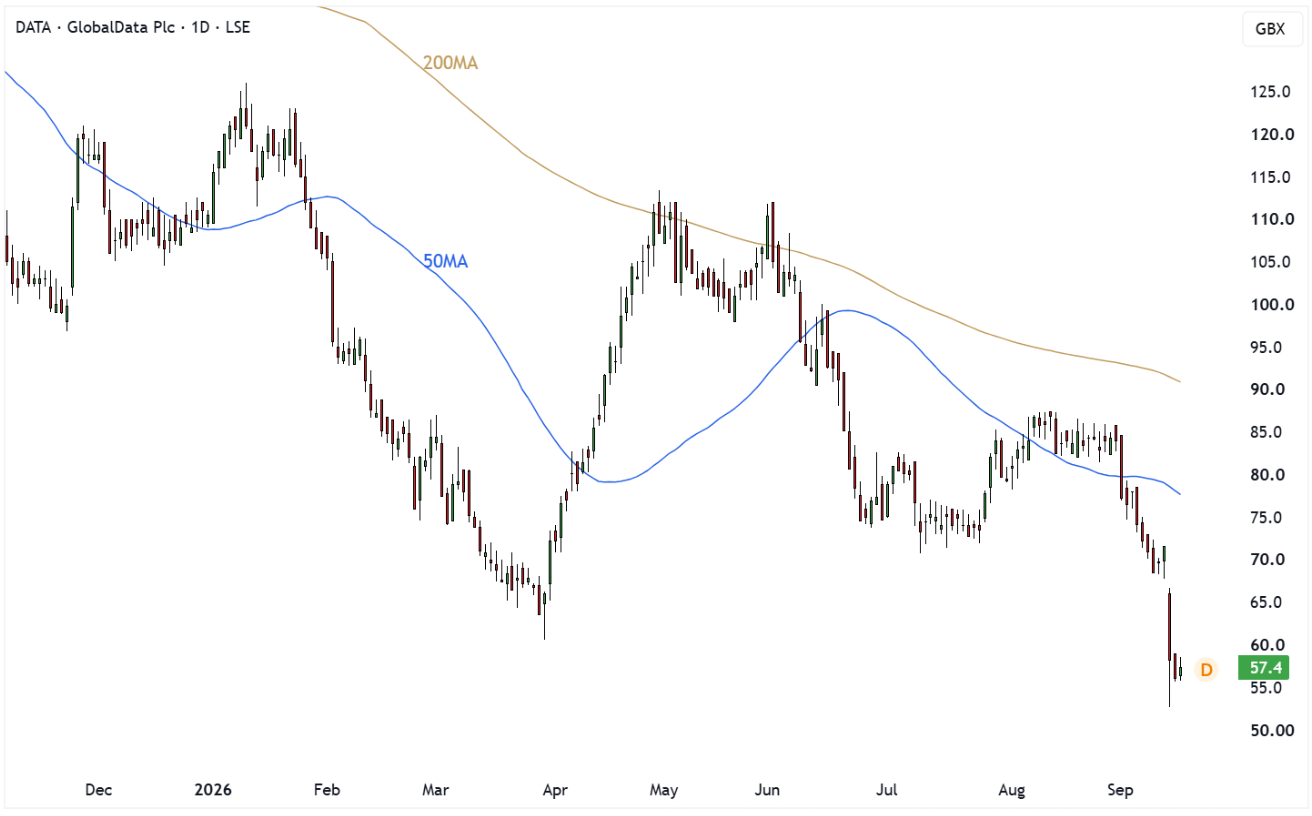
GlobalData (DATA) received a much cooler response to its half-year results after management lowered expectations for profitability. Reported revenue increased 4% to £162.9m and adjusted EBITDA rose 5% to £54.8m, but the underlying picture was considerably flatter. Organic revenue growth was just 1% and underlying adjusted EBITDA was broadly unchanged once currency and one-off effects were stripped out.
The issue for investors is what happens next. Full-year revenue is now expected towards the lower end of market expectations, while additional investment in AI-native workflows, proprietary data and the sales operation means adjusted EBITDA is expected to finish below the previous market range of £121m to £126.7m. Management has also adopted a more cautious view on the pace of margin recovery than previously indicated. That combination explains why the market looked beyond the superficially respectable headline numbers.

There are still strengths to work with. Subscription revenue increased 6%, accounts for 76% of group revenue and renewal rates remain robust, while Consumer delivered 7% underlying growth. The strategic argument is that spending more now should improve retention, revenue quality and ultimately organic growth, but investors will want to see evidence of that before giving management much credit for the promised benefits. For the moment, GlobalData is asking shareholders to accept weaker near-term profitability in exchange for stronger growth later.
What we are watching next: Signs that investment begins lifting organic revenue growth and renewal rates without requiring another reset to margin expectations.
Themes: Data & Analytics | AI Investment | Margin Pressure
DATA Daily Candle Chart
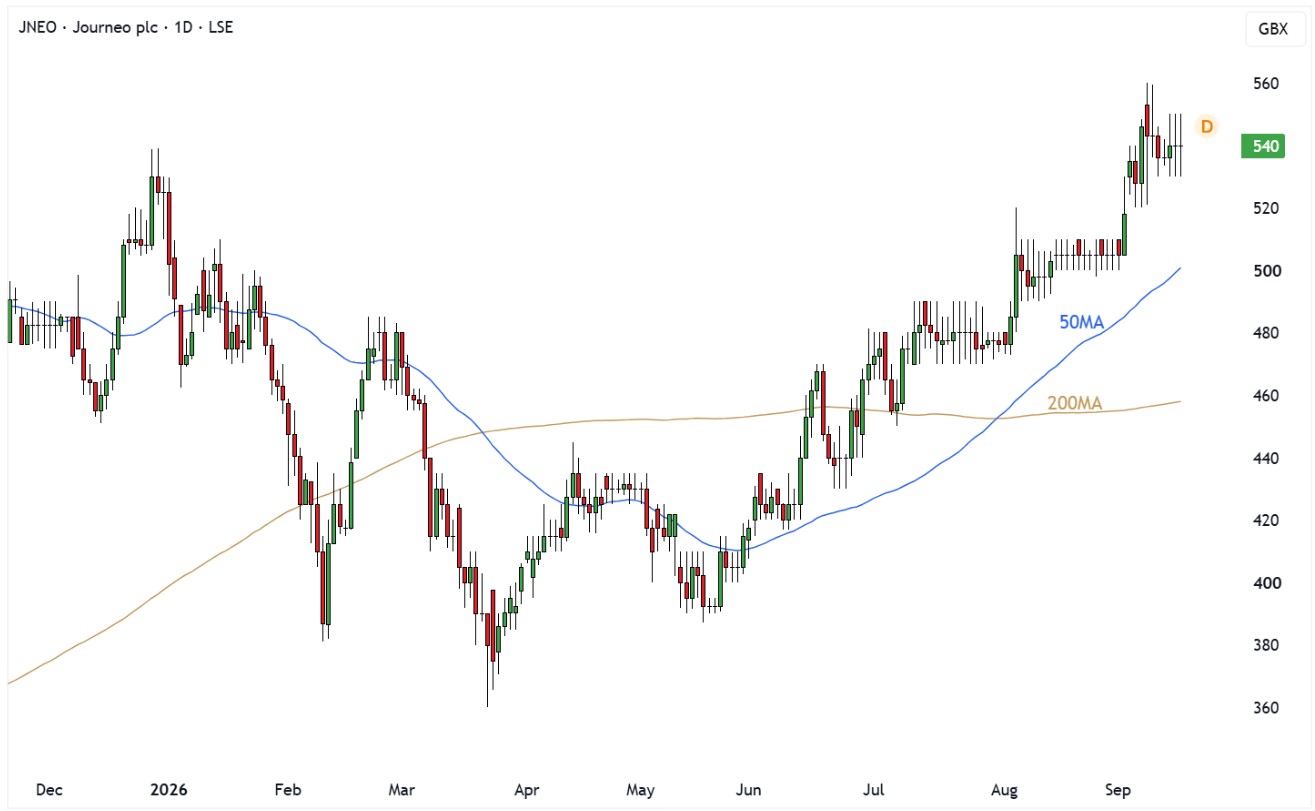
Journeo: The Pipeline Gets Bigger
Journeo (JNEO) produced another record first half, with revenue increasing 53% to £37.6m and gross profit rising 57% to £14.5m. Underlying profit increased 16% to £3m, while diluted earnings per share rose 9% to 13.60p. The figure that catches the eye, however, is the sales opportunity pipeline, which has grown from £80m a year ago to £200m today.
Part of the revenue growth reflects the acquisition of Crime and Fire Defence Systems, which has broadened Journeo into critical infrastructure protection, but there is organic progress elsewhere too. Information Systems revenue increased 40% to £13.9m, while the US opportunity continues to develop following orders for transport display systems in Boston. There were a few softer spots, including lower margins within Information Systems and a weaker first half from Integrated Services, but management expects both divisions to improve during H2.

The broader picture is becoming more interesting as Journeo develops beyond its original transport niche. Infrastructure Protection gives the group exposure to critical national infrastructure, international opportunities are opening for its proprietary tech and management now has a medium-term ambition to grow annual revenue beyond £150m through organic growth and selective acquisitions. That is some distance from today’s revenue base, but a £200m opportunity pipeline gives the ambition considerably more substance than it would otherwise have.
What we are watching next: Conversion of the £200m opportunity pipeline, particularly within US transport and Infrastructure Protection, alongside the expected H2 improvement in the established divisions.
Themes: Transport Tech | Critical Infrastructure | Growth Pipeline
JNEO Daily Candle Chart
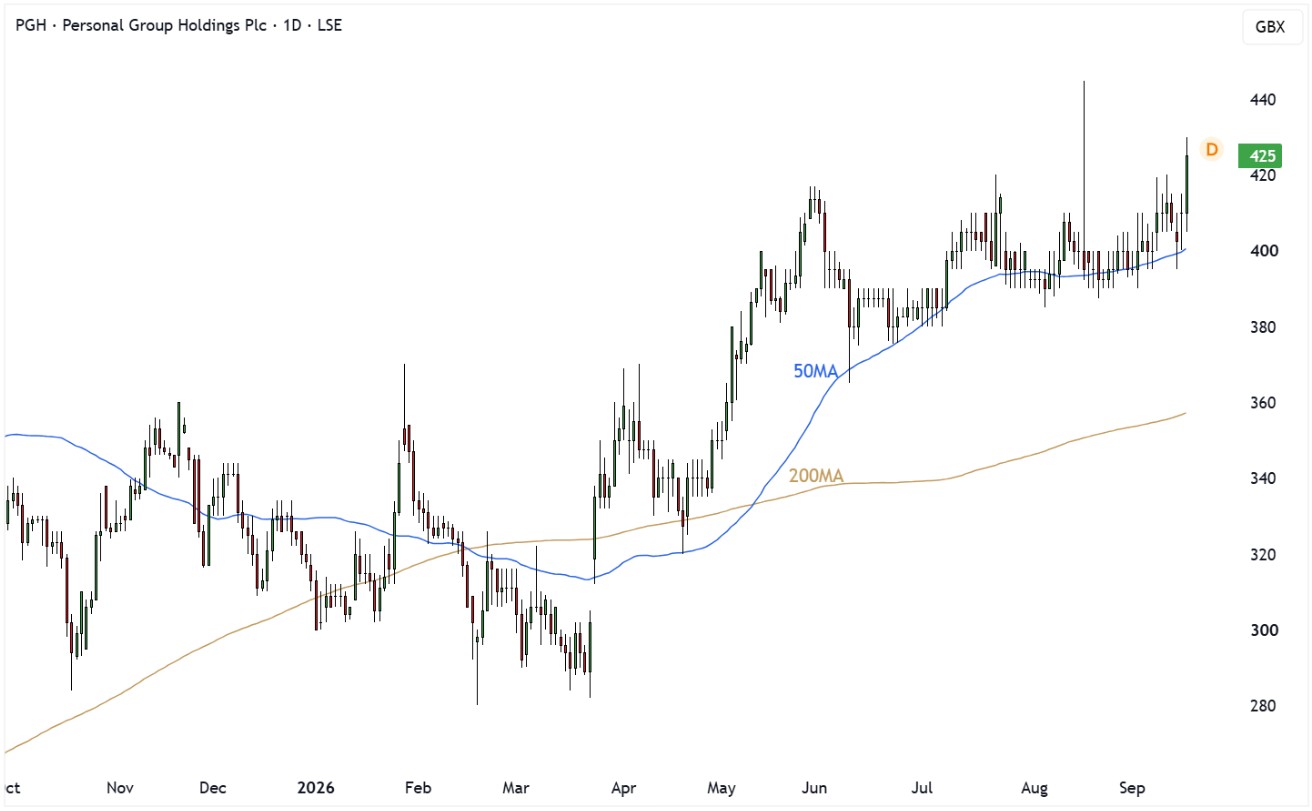
Personal Group: Operational Grip Shows Through
Personal Group (PGH) continues to turn steady operational improvement into stronger financial results. First-half revenue increased 10% to £25.7m, adjusted EBITDA rose 22% to £6.7m and profit before tax increased 21% to £4.6m. Basic earnings per share climbed 28% to 12.3p, while the interim dividend has been increased 10% to 9p. More than 90% of group revenue is now recurring, and the company remains debt-free with £29.4m of cash and deposits.
Insurance remains the main engine. Revenue increased 11% to £19.4m and new annualised insurance sales reached a first-half record of £8.1m, helped by greater sales activity and higher penetration of existing clients. Personal Group is also widening its addressable market through new partnerships with Santé and Simplyhealth. Benefits & Rewards was a little less spectacular, with ARR growth of 3% after slower-than-expected leads from the Sage partnership early in the year, although momentum improved during Q2 and into Q3 and net revenue retention increased to 97%.

What stands out is the degree of operating leverage beginning to appear. Revenue grew 10%, yet EBITDA increased more than twice as quickly, while the balance sheet remains unusually strong. Management is reinvesting some of that strength into expanding the insurance sales team and opening additional distribution channels. Trading since June has remained in line with expectations, so the next step is demonstrating that these investments can keep annualised sales moving higher without sacrificing the attractive economics already emerging from the model.
What we are watching next: Continued insurance sales growth, progress through the new distribution partnerships and a stronger contribution from the Sage relationship.
Themes: Insurance | Recurring Revenue | Dividend Growth
PGH Daily Candle Chart
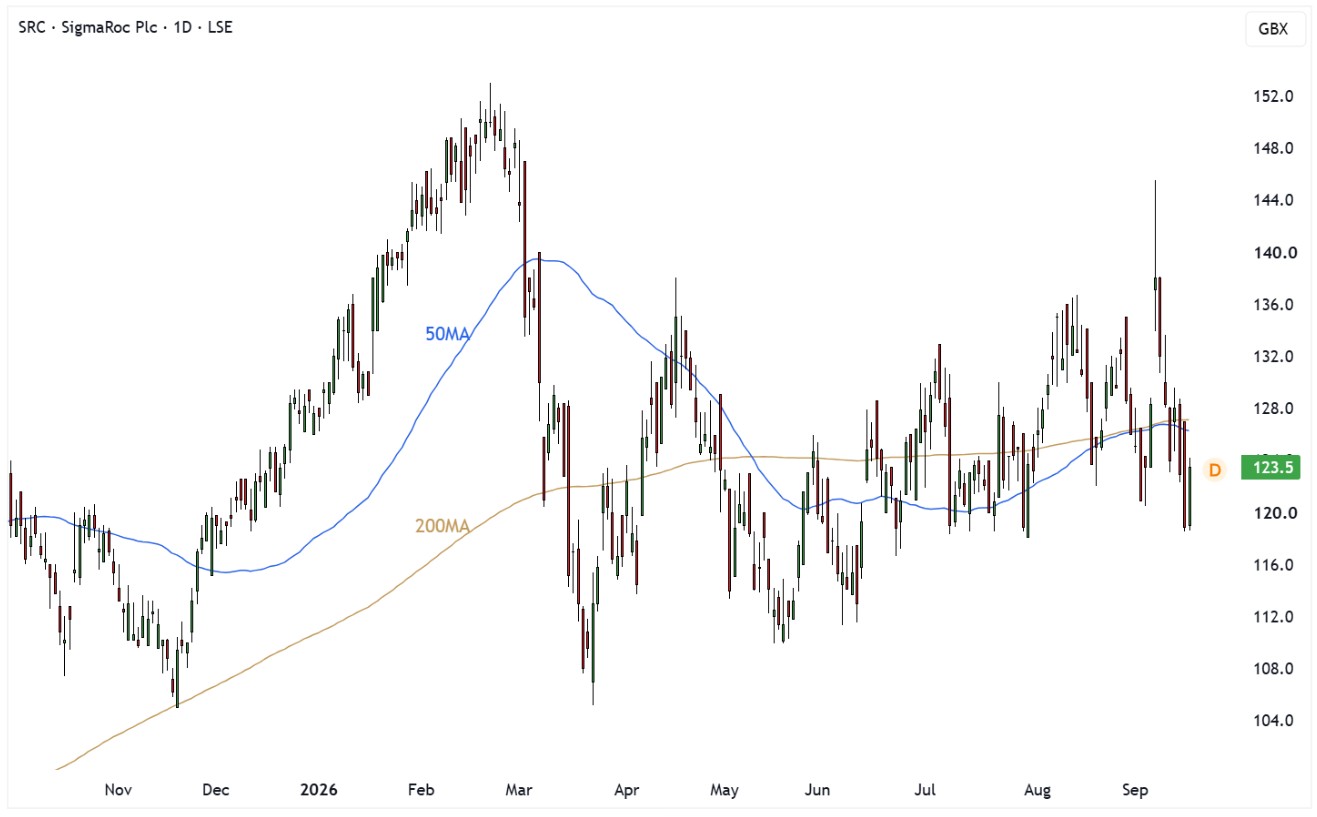
SigmaRoc: More Profit From Modest Growth
SigmaRoc (SRC) produced a strong first half despite only modest movement at the top line. Revenue increased 2.5% to £523.1m, but underlying EBITDA rose 11% to £131.2m and underlying profit before tax increased 11% to £75.1m. The underlying EBITDA margin improved by a chunky 200 basis points to 25.1%, while underlying earnings per share increased 12% to 5.23p.
That margin progression is doing much of the heavy lifting. Core volumes increased 1%, the first increase for three years, while pricing, cost control and the integration benefits from previous acquisitions helped profitability grow much faster than revenue. The balance sheet is moving in the right direction too, with net debt falling to £462.6m and covenant leverage declining from 2.04 times to 1.66 times. The €825m investment-grade facility, together with a €300m accordion, also gives SigmaRoc considerable flexibility for further acquisitions.

The next leg of the story does not necessarily require a dramatic recovery in construction. Management is already seeing support from European re-industrialisation, infrastructure, environmental markets and data-centre investment, while tentative improvements in residential permitting could provide an additional cyclical tailwind. Full-year expectations remain unchanged at revenue of £1.07bn and underlying EBITDA of £276m. With margins improving and leverage falling, even a relatively modest improvement in volumes could have an increasingly noticeable effect on earnings.
What we are watching next: Further volume improvement in H2, continued deleveraging and whether SigmaRoc uses its expanded financing capacity for another acquisition.
Themes: Minerals | Margin Expansion | Deleveraging
SRC Daily Candle Chart
Disclaimer:
All content is provided for general information only and should not be construed as any form of advice or personal recommendation. The provision of this content is not regulated by the Financial Conduct Authority.