


21st Oct 2026. 9.00am

Regency View:
Update
Regency View:
Update
Earnings season is now in full swing, with the latest announcements across the FTSE Investor portfolio giving us plenty to digest. There have been some impressive performances, particularly among businesses benefiting from structural growth or improving operational efficiency, alongside reminders that strong headline numbers do not always tell the whole story.
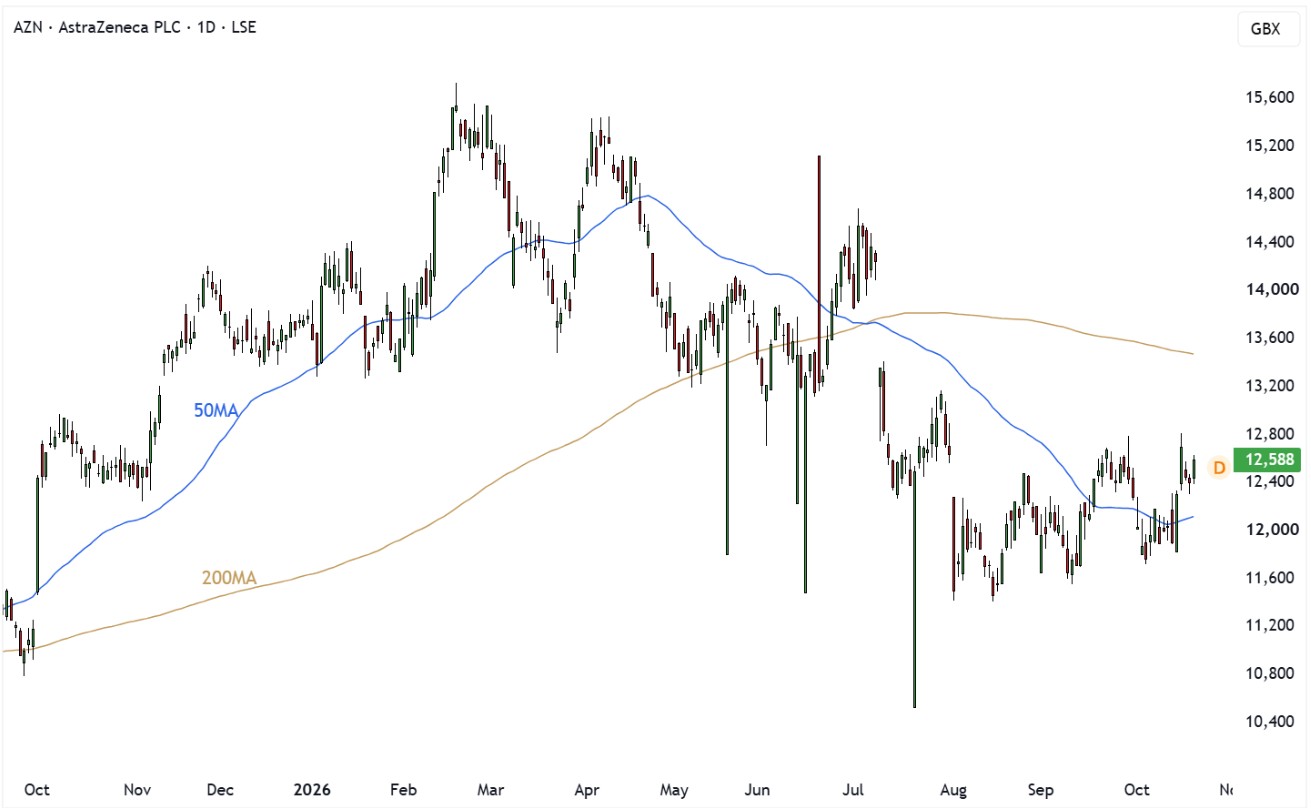
AstraZeneca: AI Takes a Bigger Role in Drug Discovery
AstraZeneca (AZN) has announced a new collaboration with US biotechnology company insitro, extending its use of artificial intelligence in drug discovery. The partnership focuses on cardiometabolic diseases, including MASH, a serious form of fatty liver disease, and cardiomyopathies. AstraZeneca will pay $40m upfront, with insitro eligible for up to $1.46bn in milestone payments, alongside royalties on potential future sales.
The attraction lies in insitro’s AI-powered Virtual Human platform, which combines biological datasets, experimental models and machine learning to identify promising drug targets. AstraZeneca will take responsibility for clinical development and commercialisation, potentially gaining access to treatments that might prove difficult to discover through more conventional research methods.

For a business of AstraZeneca’s scale, the agreement is unlikely to influence near-term earnings, but it illustrates the group’s continued investment in broadening its pipeline and improving research productivity. The potential is interesting, although considerable clinical development work lies between identifying promising targets and bringing commercially successful medicines to market.
What we are watching next: Progress advancing drug candidates through the insitro collaboration and evidence that AI-assisted research can improve development productivity.
Themes: Pharmaceuticals | AI | Drug Discovery
AZN Daily Candle Chart
BP: Refining Windfall Accelerates Balance Sheet Repair
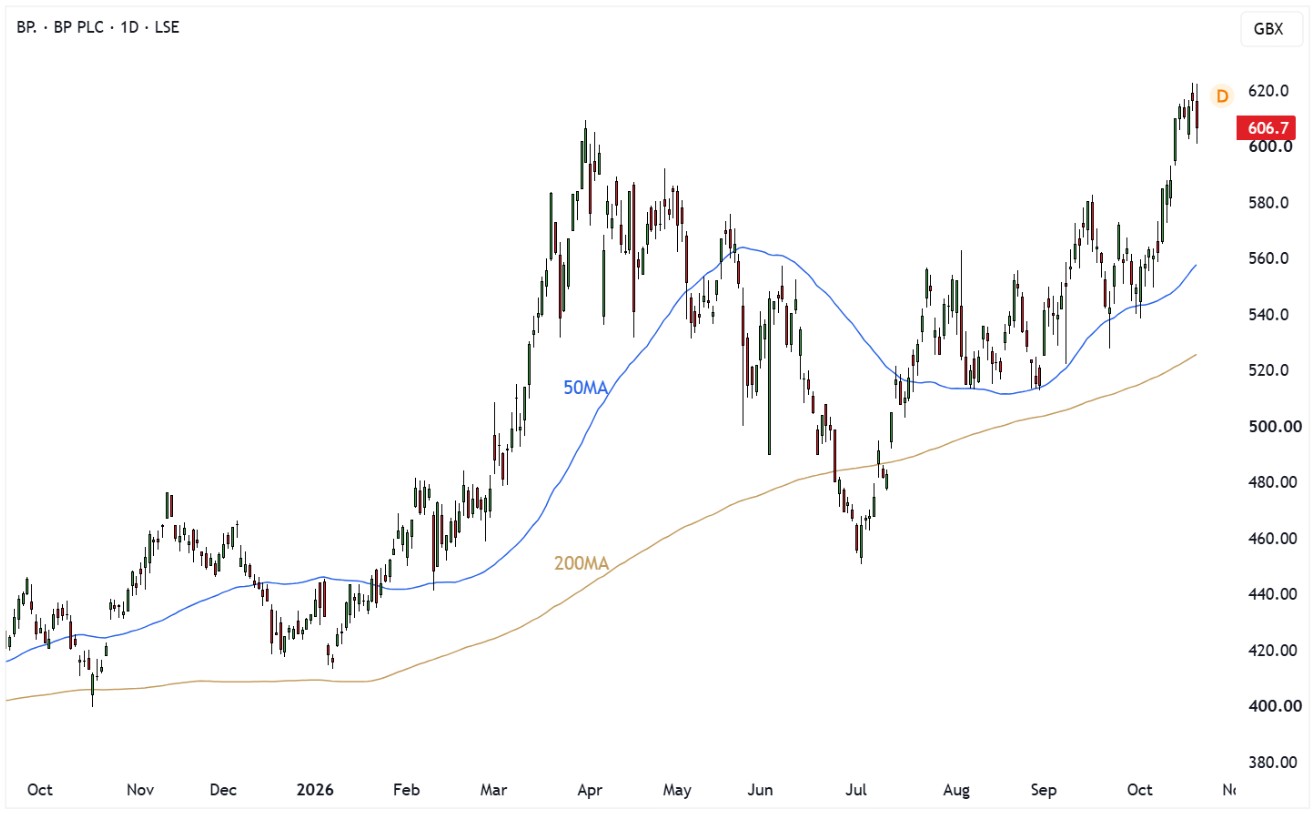
BP (BP.) has benefited from exceptionally strong refining conditions, with its third-quarter trading statement pointing towards a substantial uplift in profitability. The group’s refining indicator margin reached $46.7 per barrel, compared with $29.6 in the preceding quarter and $15.8 a year earlier. Gas marketing and trading performance is also expected to be strong, reflecting the unusually volatile energy market.
Perhaps more importantly, BP appears to have reached its net debt reduction target considerably earlier than anticipated. Net debt is expected to have fallen to approximately $13.5bn to $14.4bn, helped by strong trading, disposals and the suspension of share buybacks. However, management also flagged additional impairments of $3bn to $4.5bn, primarily relating to gas and low-carbon energy assets, highlighting the cost of previous investment decisions.

For us, the improving balance sheet is the most encouraging development, particularly given the importance of restoring financial flexibility. Elevated refining margins will not necessarily persist, making disciplined capital allocation essential. With chief executive Meg O’Neill expected to provide a strategic update in December, attention can increasingly turn towards whether BP can deliver more consistent returns through the commodity cycle.
What we are watching next: The full third-quarter results, further debt reduction, final impairment charges and the strategic update scheduled for 15 December.
Themes: Energy | Refining | Capital Allocation
BP. Daily Candle Chart
Bytes Technology: Strong Demand, but Costs Still Matter
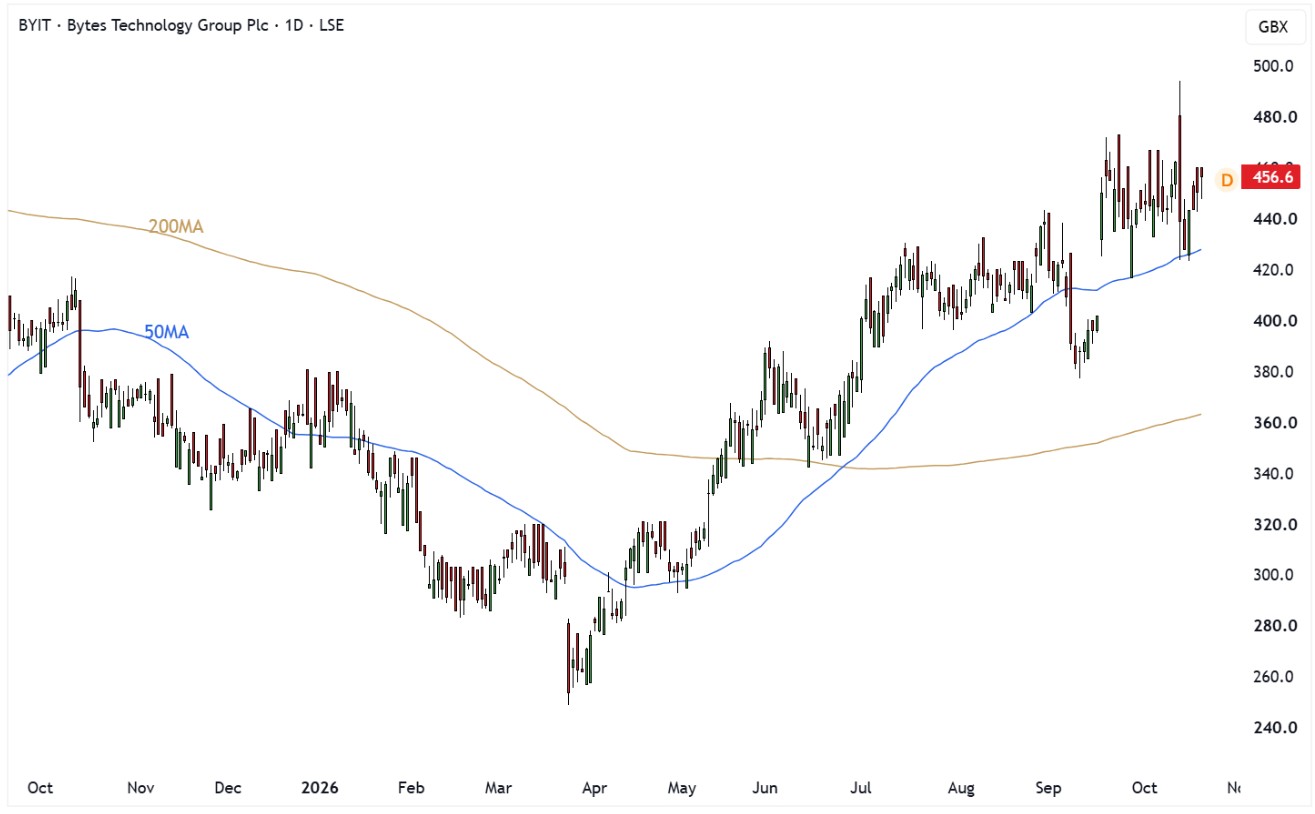
Bytes Technology (BYIT) delivered another period of strong growth, with interim gross invoiced income increasing 19.6% to £1.61bn and gross profit rising 17.8% to £97.1m. Revenue advanced 18.7% to £128.3m, supported by demand for software, cyber security, cloud infrastructure and AI-related services. Operating profit, however, increased by a more modest 6.6% to £35.3m, reflecting the additional costs of supporting that growth.
The results were accompanied by the acquisition of CyberOne, a UK cyber security specialist, for an initial £19.4m. The transaction strengthens Bytes’ managed security capabilities, including continuous monitoring and incident response, while adding a recurring revenue component. It also complements the group’s existing relationships with major technology vendors and enterprise customers.
The distinction between strong gross profit growth and slower operating earnings progression remains important. Bytes continues to demonstrate healthy demand, but converting that growth into proportionate profit improvement is the next challenge. Management has reiterated its upgraded full-year guidance, and we would like to see operating profit growth begin to catch up as recent investment starts delivering returns.
What we are watching next: Continued services growth, operating cost discipline, integration of CyberOne and stronger conversion of gross profit into operating earnings.
Themes: Technology | Cyber Security | AI
BYIT Daily Candle Chart
Norcros: Resilience Beneath the Headline Growth
Norcros (NXR) delivered a solid first-half trading update, with revenue increasing approximately 19% to £220m and underlying continuing operating profit expected to reach at least £24.6m, compared with £21.9m previously. The headline growth is encouraging given difficult conditions in the UK home improvement market, although much of the increase reflects the Fibo acquisition, with like-for-like constant currency growth of 1.5%.
Trading was mixed geographically, with the European business and South Africa performing well while UK demand softened during the second quarter. This suggests Norcros is benefiting from greater diversification and the contribution from Fibo rather than a broad recovery in its underlying markets. Cash conversion remained strong, with net debt expected to have fallen to approximately £55m from £65.8m at the April year end.

For us, improving profitability and debt reduction are particularly reassuring against a subdued consumer backdrop. Norcros is demonstrating that operational improvements and acquisitions can support progress without relying entirely on stronger UK demand. Nevertheless, the modest underlying sales growth deserves attention, and the interim results should provide a clearer picture of margins and Fibo’s contribution.
What we are watching next: The interim results on 19 November, underlying UK demand, Fibo’s contribution and continued debt reduction.
Themes: Consumer Goods | Acquisitions | Cash Generation
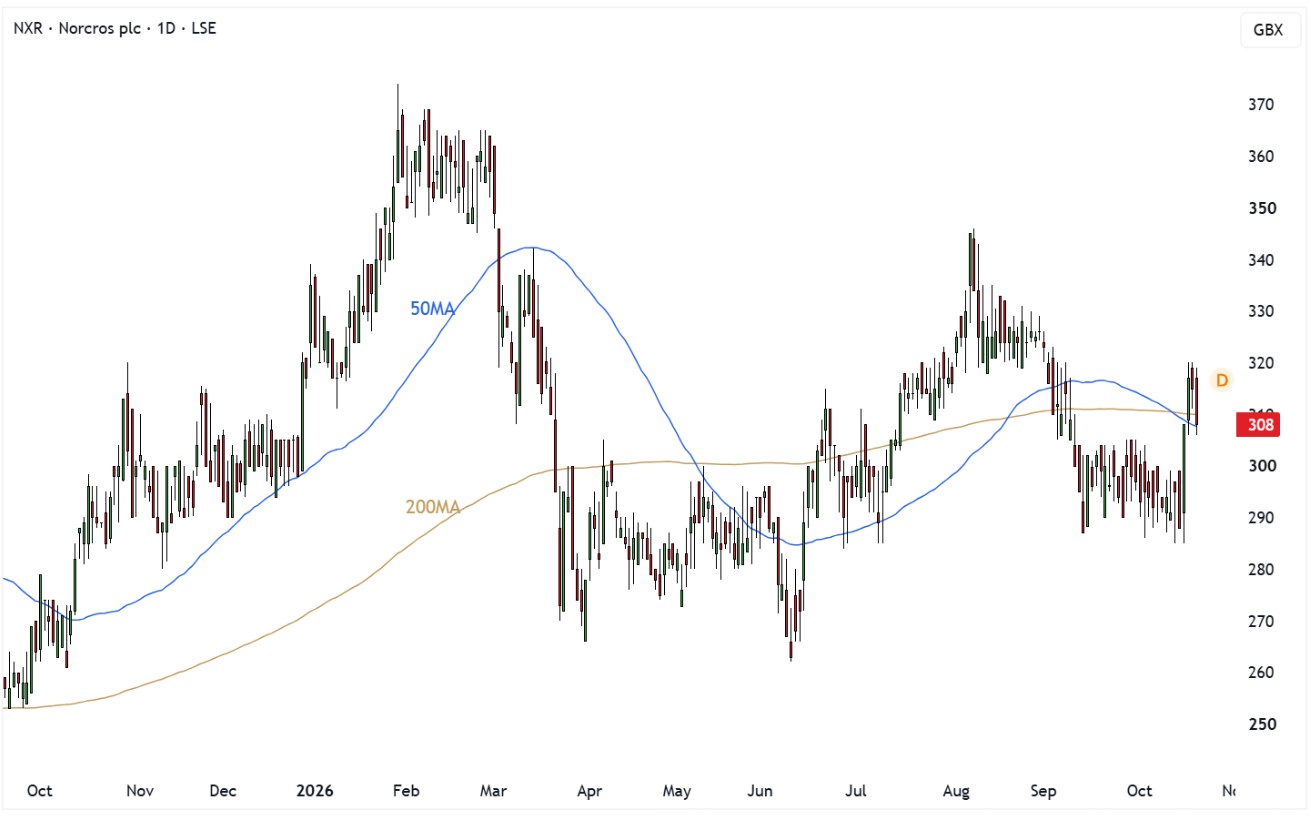
NXR Daily Candle Chart
Sabre Insurance: Premium Growth Continues as Pricing Discipline Holds
Sabre Insurance (SBRE) reported continued growth in its core motor business, with gross written premiums increasing 14.3% to £173.4m during the first nine months of 2026. Motor vehicle premiums rose 16.5%, while motorcycle premiums grew 52.9%, partly offset by a reduction in taxi business. Management expects full-year pre-tax profit to be slightly ahead of 2025.
The key issue remains the relationship between insurance pricing and claims inflation, which management estimates at approximately 6% to 7%. Sabre believes its pricing adequately covers these increases and continues to expect an undiscounted net insurance margin within its 18% to 22% target range. Its decision to reduce exposure in taxi insurance also demonstrates a willingness to prioritise underwriting returns over volume.

The latest update is encouraging because premium growth remains healthy without an apparent deterioration in pricing discipline. However, the ultimate quality of underwriting decisions only becomes clear as claims develop, making the anticipated second-half margin improvement important. We would also be cautious about extrapolating current growth rates given how quickly competition can intensify in motor insurance.
What we are watching next: Second-half insurance margins, claims inflation, competitive pricing and continued premium growth without weaker underwriting returns.
Themes: Insurance | Premium Growth | Underwriting
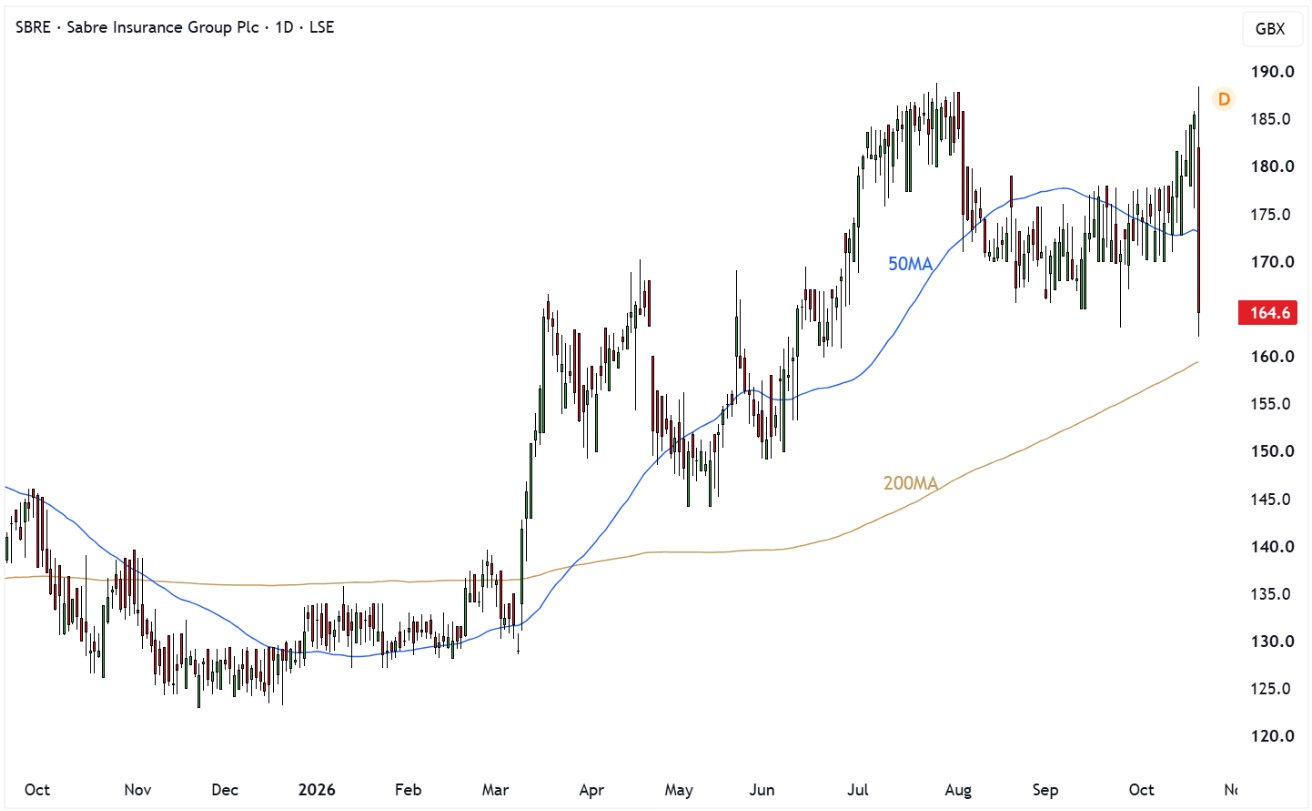
SBRE Daily Candle Chart
Softcat: Another Strong Year Ahead of a Major US Expansion
Softcat (SCT) delivered impressive full-year results, with gross invoiced income increasing 30.5% to £4.72bn and gross profit rising 24.7% to £616.3m. Underlying operating profit advanced 19.4% to £215.1m, reflecting continued demand for IT infrastructure, software and associated services. The results demonstrate that Softcat is still converting strong customer spending into meaningful earnings growth.
The more significant strategic development is the planned $1.05bn acquisition of US technology solutions provider GDT, announced in September. The transaction will establish a substantial US presence and broaden Softcat’s exposure to larger enterprise customers. It represents an ambitious expansion beyond the company’s established UK-focused model, with completion expected during the first quarter of calendar 2027.

The strong underlying performance provides a solid foundation for this next stage, although the acquisition introduces integration and financing risks. Investors will want reassurance that Softcat can preserve the commercial discipline and operating culture behind its success while expanding internationally. We continue to find its positioning attractive, but the ability to translate greater scale into sustainable returns will become increasingly important.
What we are watching next: Completion of the GDT acquisition, integration plans, continued gross profit growth and the impact of international expansion on margins.
Themes: IT Infrastructure | AI | International Expansion
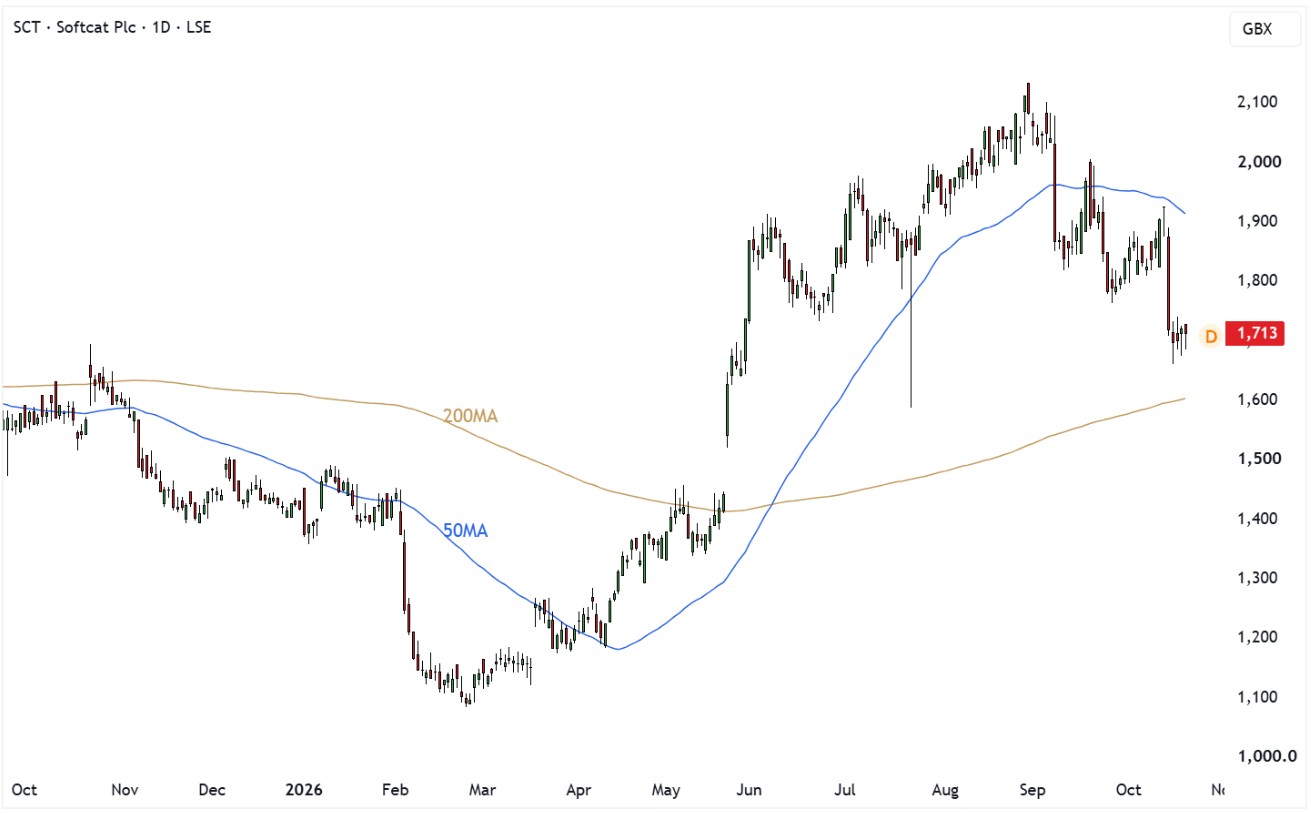
SCT Daily Candle Chart
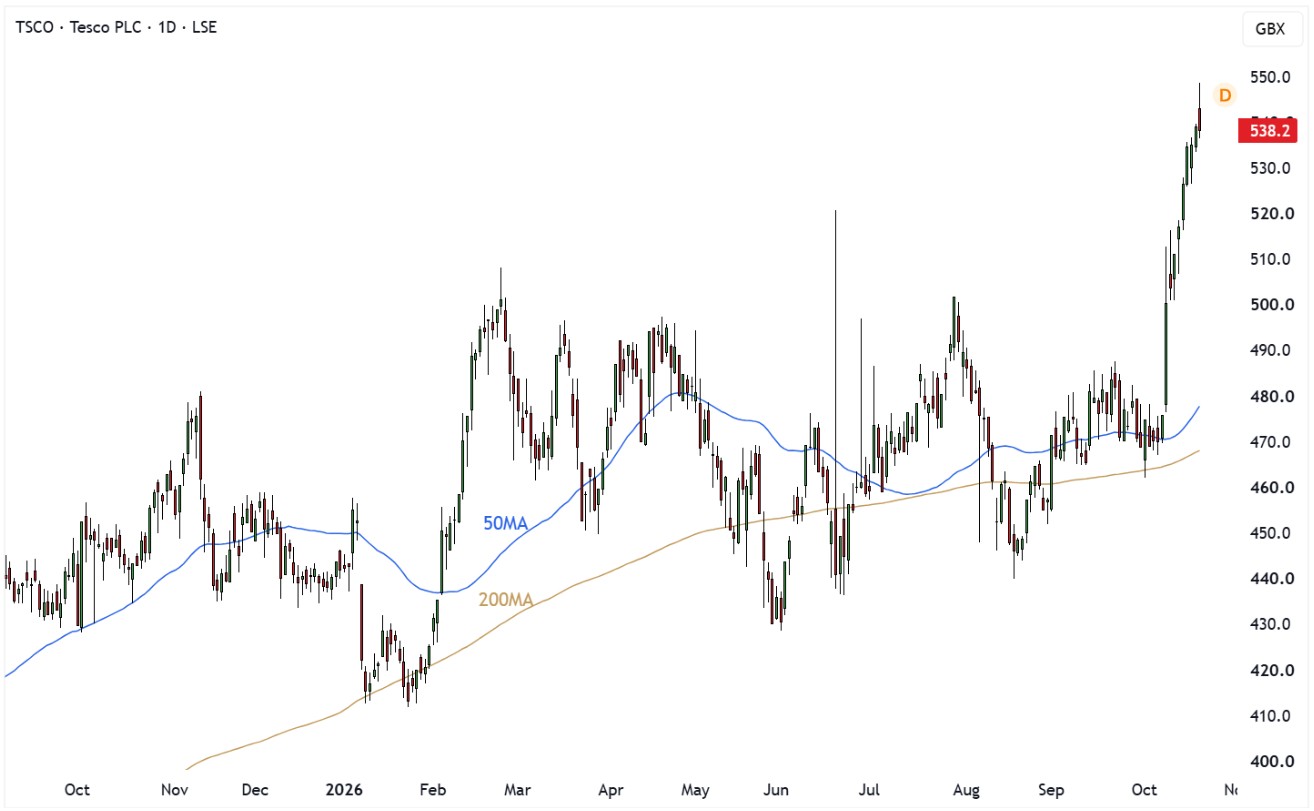
Tesco: Market Leadership Continues to Deliver
Tesco (TSCO) produced another strong set of interim results, with sales excluding fuel increasing 2% to £33.8bn and adjusted operating profit rising 6.5% to £1.78bn. Adjusted diluted earnings per share increased 12.2%, while free cash flow improved 21% to £1.57bn. Profit growth continues to outpace sales growth, suggesting Tesco is managing costs effectively while maintaining its competitive position.
Strong cash generation has given management room to increase shareholder returns, with the current buyback programme raised from £750m to £950m and the interim dividend increased 5.2%. Full-year adjusted operating profit guidance was also refined to £3.15bn to £3.30bn, lifting the lower end of the previous range. Capital expenditure guidance has increased to approximately £1.7bn, reflecting continued investment in the business.
For us, Tesco continues to demonstrate the benefits of scale, disciplined execution and a strong position in UK grocery retail. The combination of earnings growth, cash generation and shareholder returns remains attractive, although the shares’ strong performance means expectations are now higher. Maintaining market share and profitability amid competitive pricing pressures will therefore remain important.
What we are watching next: Market share, competitive pricing, food inflation and delivery against the upgraded full-year profit guidance.
Themes: Food Retail | Cash Flow | Shareholder Returns
TSCO Daily Candle Chart
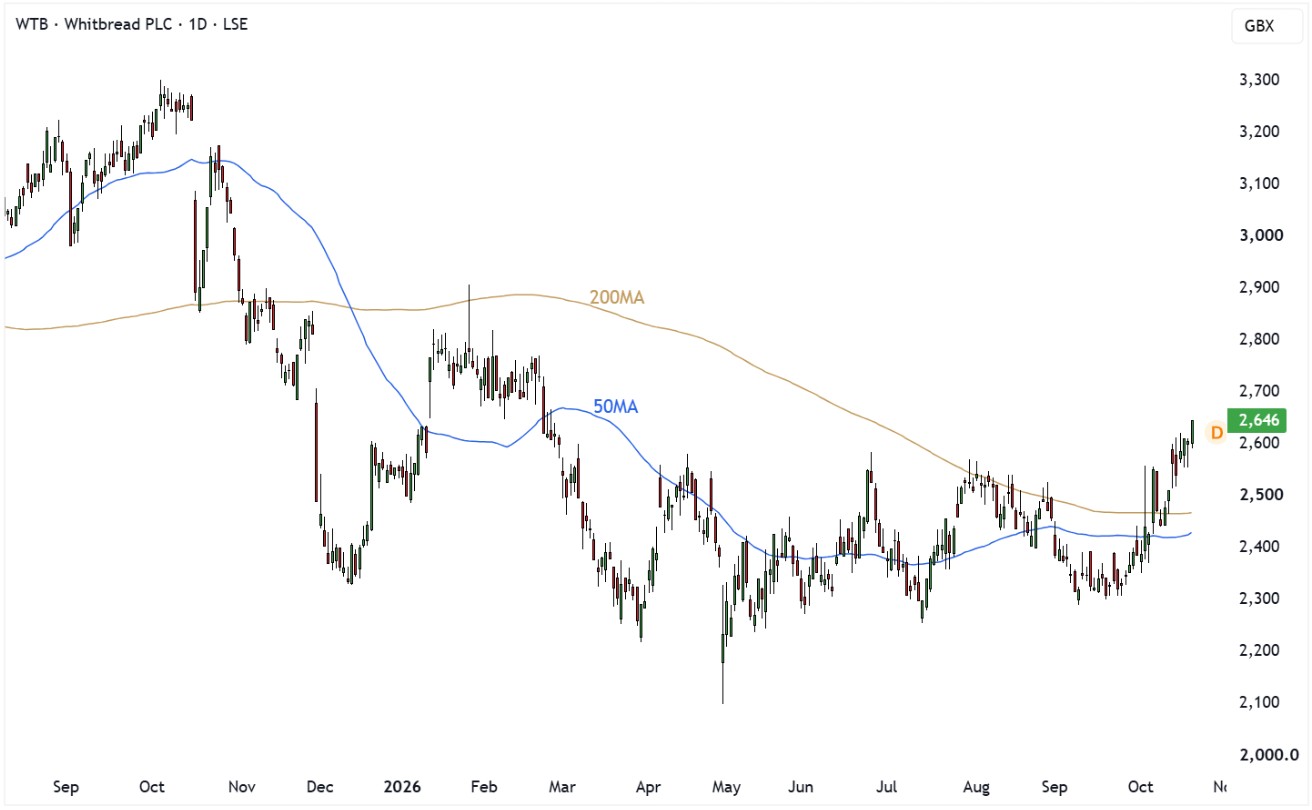
Whitbread: Improving Hotel Demand Meets Persistent Cost Pressure
Whitbread (WTB) reported mixed interim results, with revenue increasing 2% to £1.57bn as UK accommodation sales improved and German operations delivered double-digit growth. UK revenue per available room increased for a fifth consecutive quarter, suggesting demand is moving in the right direction. However, adjusted pre-tax profit fell 9% to £287m, while statutory profit declined more sharply amid exceptional restructuring charges.
The difficulty is that improving hotel demand has yet to translate into stronger bottom-line performance. Cost inflation and spending under the Accelerating Growth Plan continue to weigh on profitability as Whitbread restructures its food and beverage operations and expands in Germany. Management remains confident in its longer-term strategy, including plans to generate £2bn in shareholder returns by FY31.

For us, improving hotel trading is encouraging, particularly in Germany, where considerable investment has been committed. Nevertheless, the capital-intensive nature of the business makes returns on investment especially important, and shareholders are still waiting for clearer evidence that the restructuring will deliver stronger earnings. With activist investor Corvex also pressing for changes, management faces additional scrutiny over capital allocation.
What we are watching next: UK revenue per available room, German profitability, restructuring costs and progress towards stronger returns on capital.
Themes: Hotels | Restructuring | Profitability
WTB Daily Candle Chart
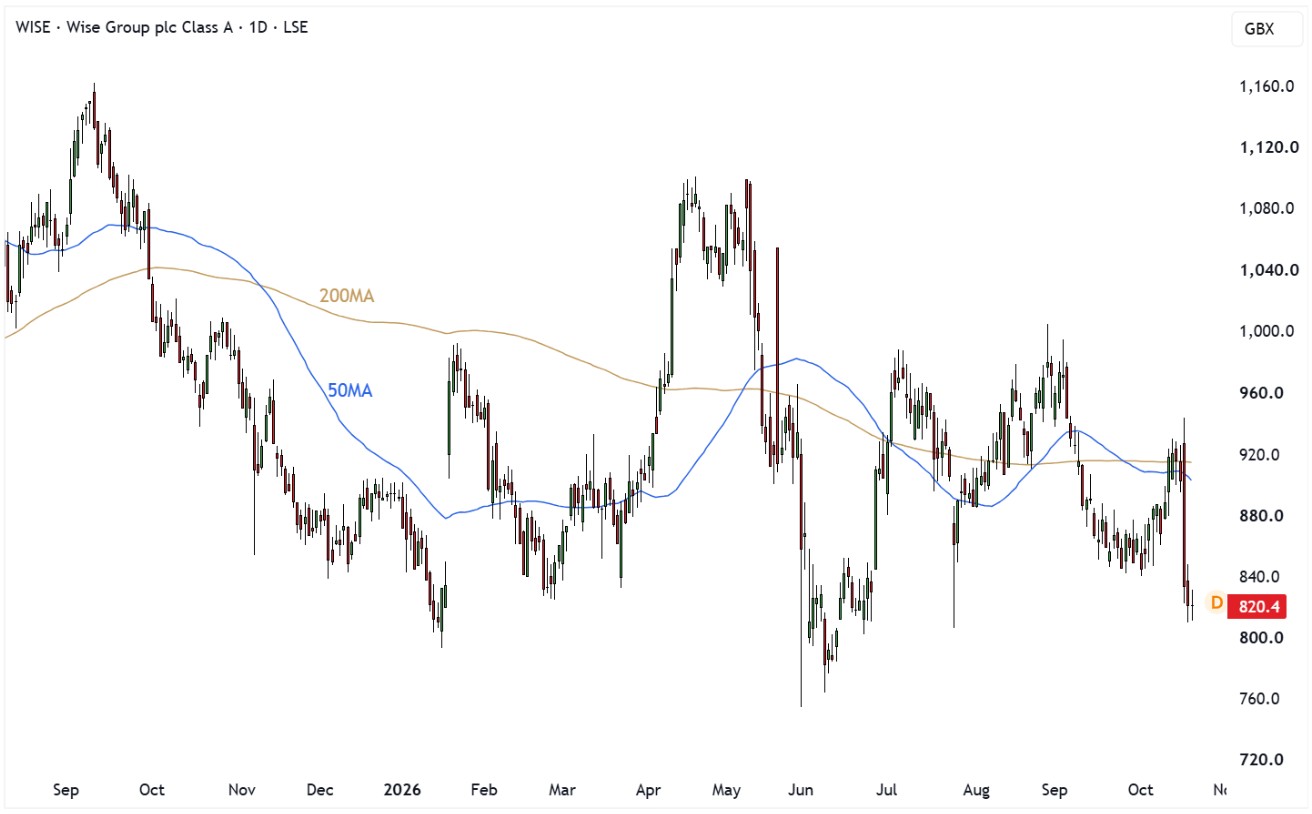
Wise: Customer Growth Pushes Expectations Higher
Wise (WISE) delivered another strong quarterly update, with active customers increasing 20% to 12.5 million and cross-border transaction volumes rising 22% to $71.7bn. Net revenue grew 21% to $739.1m, while customer holdings increased 28% to $43.5bn. The strength prompted management to improve its full-year outlook, with constant currency net revenue growth now expected in the upper half of its 15% to 20% target range.
Interestingly, Wise continues to grow while reducing the cost of international transfers, with its cross-border take rate falling from 0.52% to 0.49%. Strong customer and volume growth is more than compensating for lower pricing, while the proportion of instant transfers has increased to 78%. Management also expects its full-year income before tax margin to be around the top of its 20% to 25% target range.

For us, Wise remains an interesting example of a business using scale to strengthen its competitive position rather than simply maximise near-term margins. Lower prices and improving service quality are helping attract customers and deepen engagement, although maintaining this pace will become more demanding as the business grows. The combination of strong volumes, improving customer activity and higher earnings expectations remains encouraging.
What we are watching next: Active customer growth, transaction volumes, the impact of further price reductions and the sustainability of operating margins.
Themes: Fintech | Customer Growth | Operating Leverage
WISE Daily Candle Chart
Disclaimer:
All content is provided for general information only and should not be construed as any form of advice or personal recommendation. The provision of this content is not regulated by the Financial Conduct Authority.