


7th Oct 2026. 9.02am

Regency View:
Update
Regency View:
Update
It has been a relatively quiet fortnight for company earnings across the FTSE Investor portfolio, but certainly not for markets more broadly. A sharp sell-off in UK government bonds has created plenty of volatility beneath the surface, particularly across financials, while the prospect of further government intervention has given both the banking and housebuilding sectors something new to think about.
IG Group: Customer Growth Meets Weaker Trading Economics
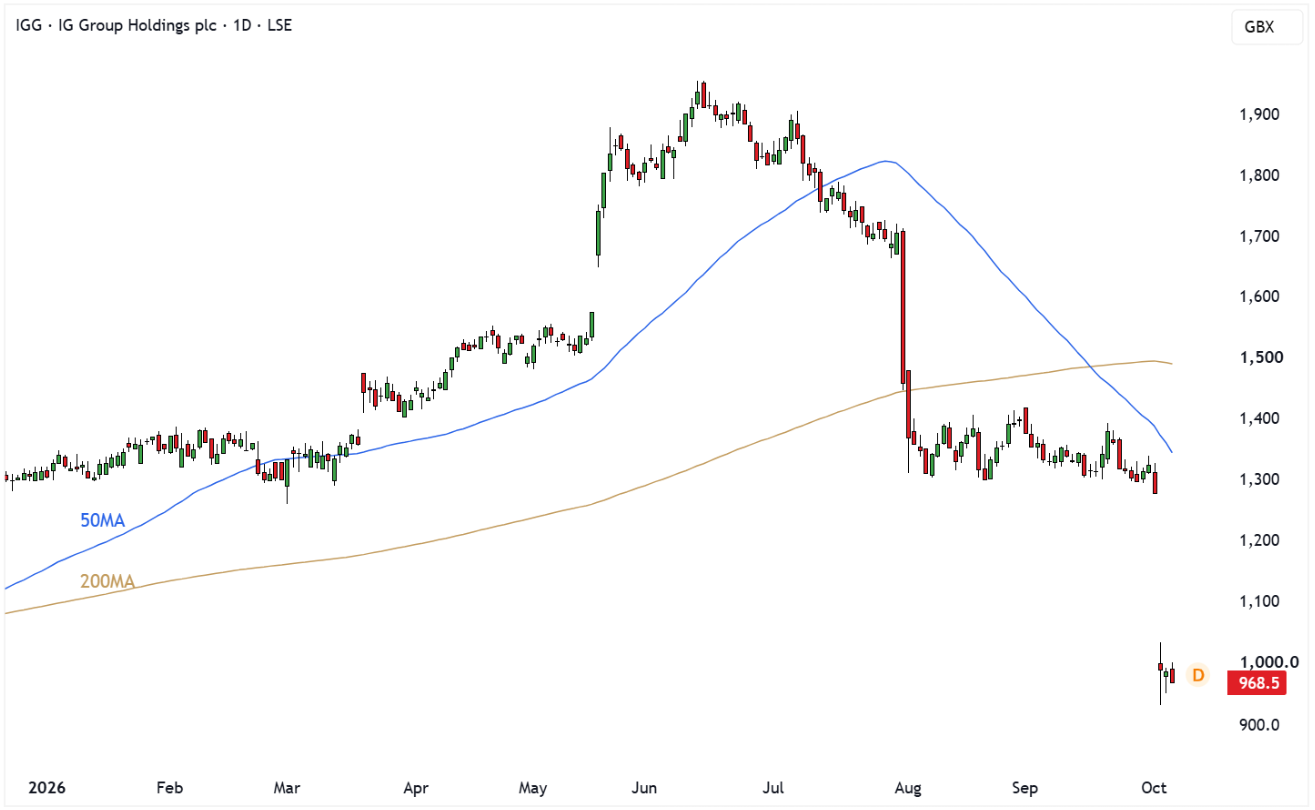
IG Group (IGG) fell sharply following its third-quarter trading update, with revenue expected to come in at approximately £240m, down around 14% from £280.1m a year earlier. The weakness came primarily from OTC derivatives, where revenue retention dropped to approximately 70%, compared with an average of around 80% since IG introduced its market-making optimisation measures. That has prompted management to lower its FY26 outlook, with total revenue growth now expected to be in the mid-single digits.
There is an important distinction to make here, however, because the underlying customer activity was considerably stronger than the headline revenue figure suggests. Organic first trades increased by more than 25% and organic active customers by around 17%, while OTC customer income actually grew by approximately 8%. Underdog also continues to perform strongly following its acquisition, with Q3 net revenue more than doubling to approximately $105m ahead of what is traditionally its most important quarter.

The problem is therefore not currently one of attracting or engaging customers, but how effectively that activity is being converted into revenue. Management continues to believe its market-making changes will structurally improve OTC revenue retention over the medium term, albeit with greater variability from quarter to quarter, and has maintained its longer-term guidance. The sharp reaction to the update shows that investors will want more evidence of that before giving IG the benefit of the doubt, making the strategy update on 22 October particularly important.
What we are watching next: The 22 October strategy update, whether OTC revenue retention begins to recover and continued momentum at Underdog.
Themes: Trading | Customer Growth
IGG Daily Candle Chart
NatWest: Bond Market Jitters Hit the Banks
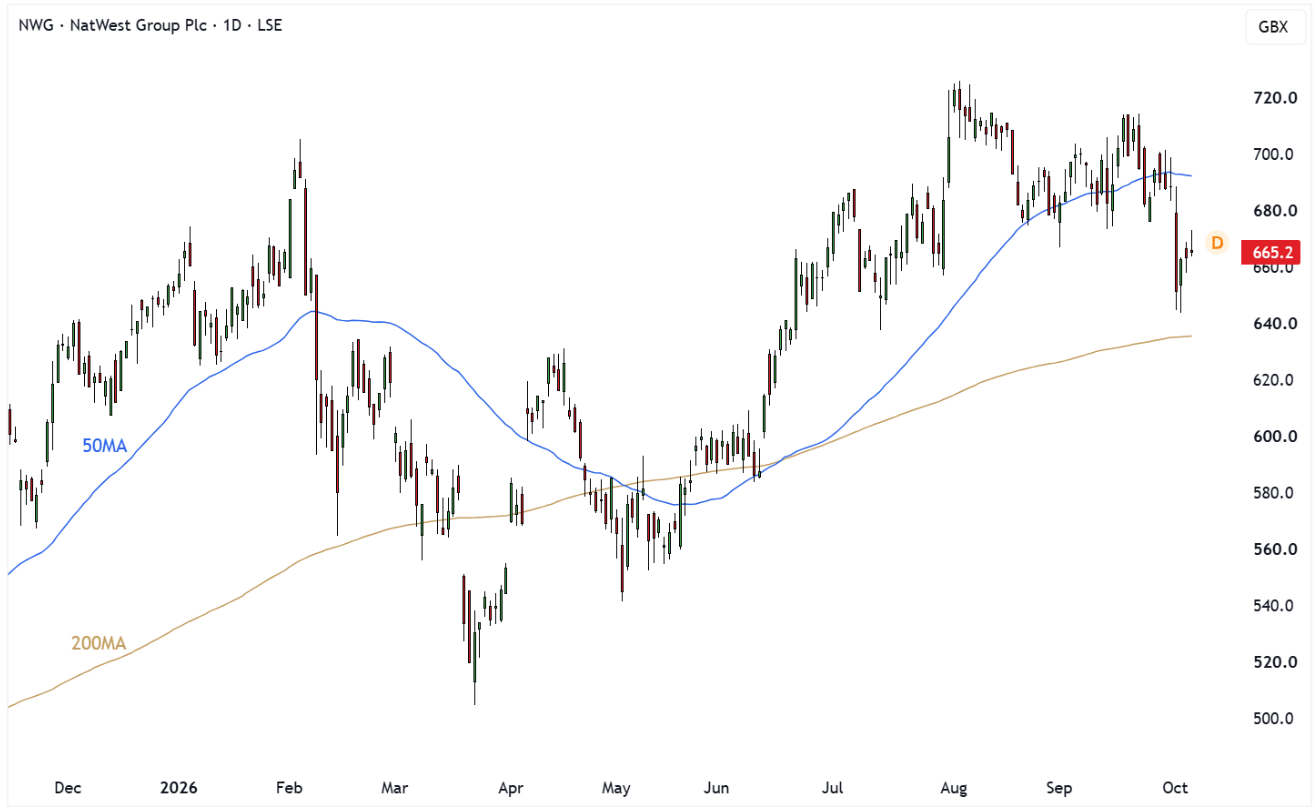
NatWest (NWG) came under heavy selling pressure last week, falling 5.2% during Thursday’s session as another sharp move in the UK government bond market weighed on the banking sector. Thirty-year UK borrowing costs reached their highest level since 1998 as investors became increasingly concerned about the UK’s fiscal position, inflation and the potential impact of higher oil prices. NatWest was far from alone, with Barclays, Lloyds and HSBC also falling sharply as the FTSE 350 Banks index dropped more than 4%.
The move gathered pace following reports that the heads of several of Britain’s largest lenders had been summoned to meet the government ahead of the Autumn Budget on 28 October. That inevitably raised speculation that the banking sector could face additional taxation as the government looks for ways to strengthen the public finances. At this stage that remains speculation, and the Treasury declined to comment, but markets rarely wait for certainty when there is a possibility of another policy headwind for the sector.

For NatWest, there has therefore been no company-specific deterioration behind the latest fall. The shares have instead been caught between a volatile bond market and renewed uncertainty over government policy towards the banks. Higher yields can have mixed implications for bank profitability, but disorderly moves driven by fiscal concerns are a different proposition, particularly when they arrive alongside the possibility of additional taxation. With the Budget now only a few weeks away, that political and macro backdrop is likely to remain an important influence on the shares.
What we are watching next: The 28 October Budget, any concrete proposals affecting bank taxation and whether conditions in the UK government bond market begin to settle.
Themes: Banking | Bonds | Budget
NWG Daily Candle Chart
Persimmon: First-Time Buyer Support Returns to the Agenda
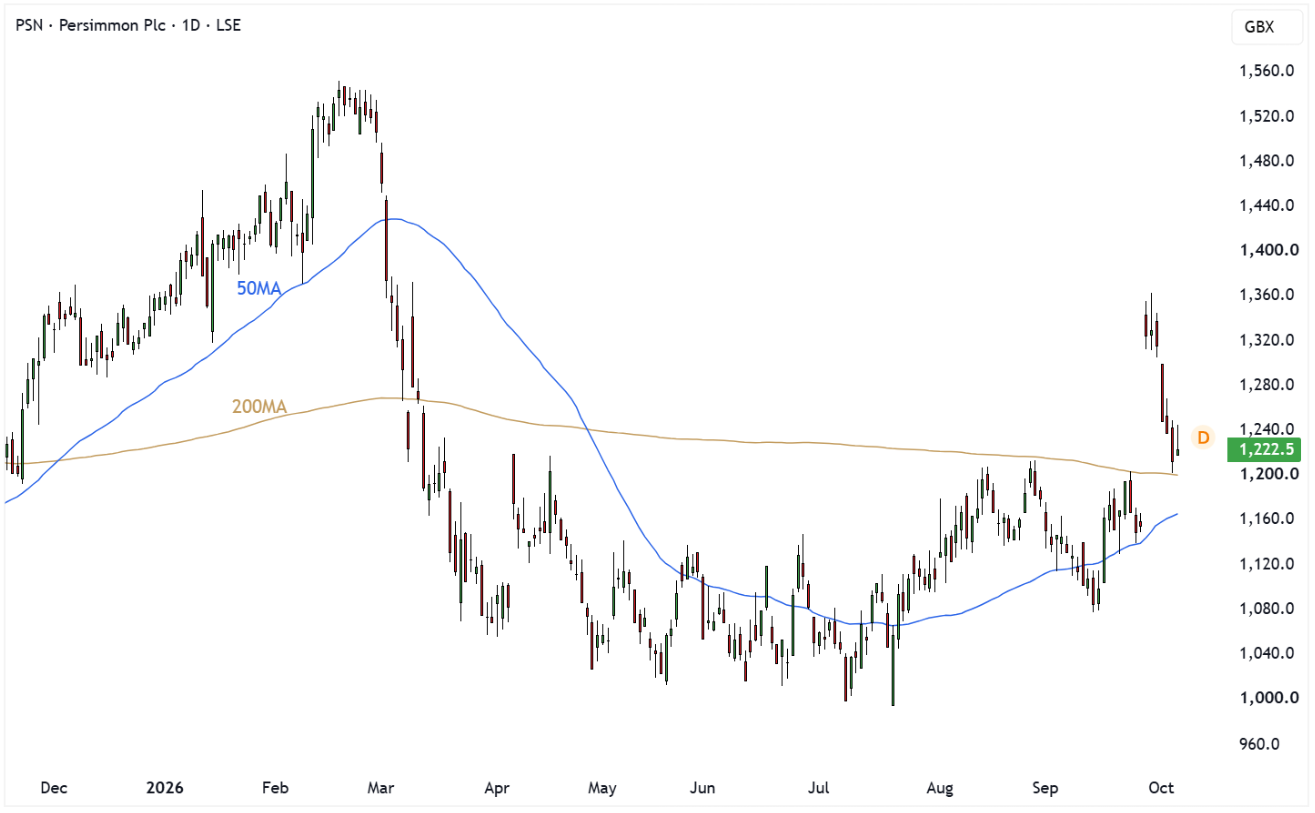
Persimmon (PSN) moved higher after the government unveiled plans for a new first-time buyer support scheme, potentially removing one of the affordability barriers that has weighed on the new-build market since Help to Buy ended in 2023. Under the proposed Your First Home programme, qualifying buyers would need a deposit of just 2.5%, with the government providing a loan worth up to 20% of the property value. That could allow buyers struggling to build a deposit while paying high rents to access mortgages that would otherwise remain out of reach.
Persimmon is particularly relevant because of its exposure to first-time buyers and its focus on relatively affordable homes, making it one of the housebuilders analysts have identified as a potential beneficiary. A successful scheme could help unlock pent-up demand and support higher sales volumes, which would be welcome after several years in which higher mortgage costs have restricted affordability. The absence of a government-backed buyer scheme since Help to Buy ended has also removed a demand lever that historically played an important role in the new-build market.

There is a fairly large caveat, though, because some of the most important details have yet to be announced. Income thresholds, regional property price caps and the financial contribution required from developers are all expected to be confirmed in the 28 October Budget, and those details will determine how widely the scheme can actually be used. The initial reaction is encouraging for Persimmon, but we would rather see the final structure before attempting to judge how meaningful the eventual boost to reservations and completions could be.
What we are watching next: The final terms of Your First Home in the 28 October Budget and, ultimately, whether the scheme translates into stronger reservation rates.
Themes: Housing | First-Time Buyers | Affordability
PSN Daily Candle Chart
Victrex: A Five-Year Plan to Rebuild Margins and Cash Returns
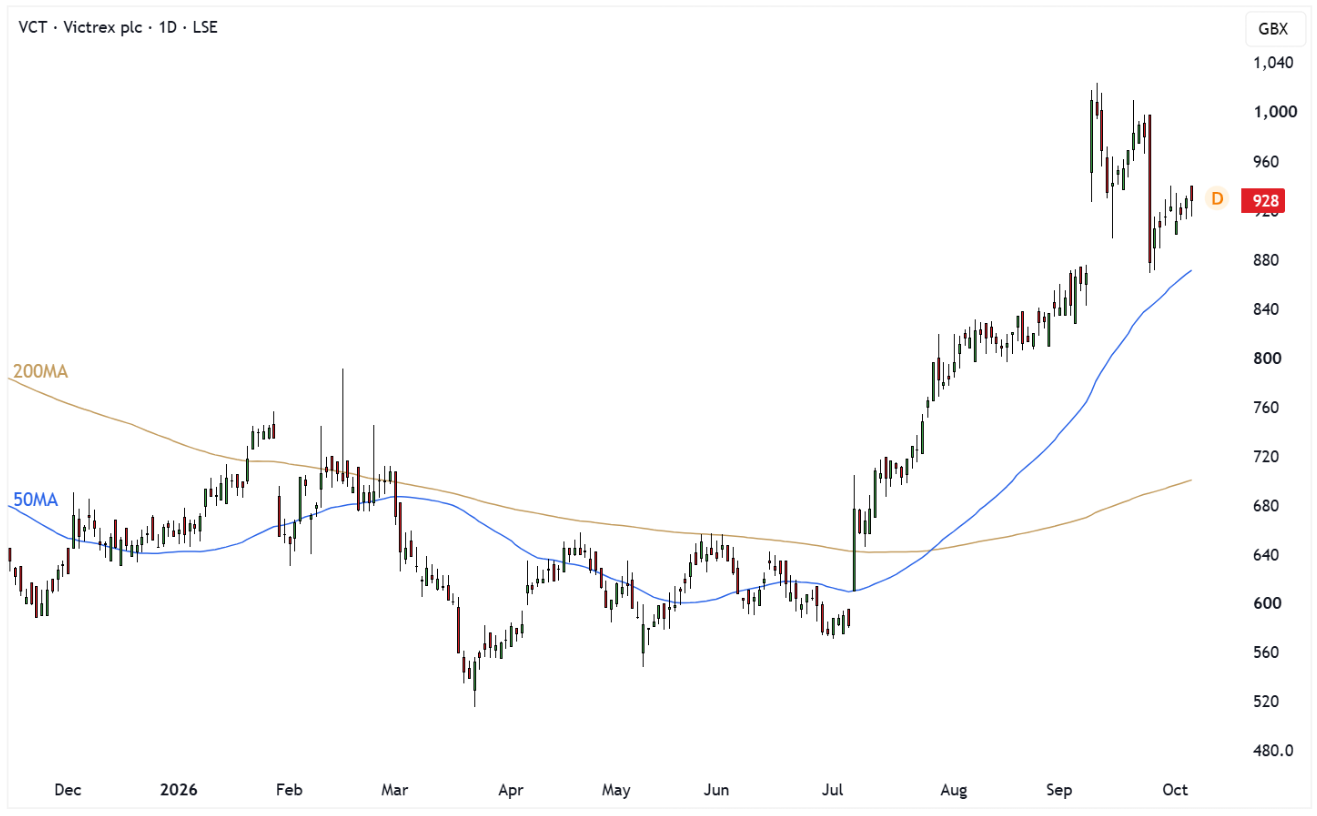
Victrex (VCT) has set out a new five-year financial framework covering FY27 to FY31, giving investors a much clearer picture of what management believes the business can deliver from here. The group is targeting mid-single-digit organic revenue growth over the period, alongside a recovery towards a gross margin of approximately 50% and an operating margin in the mid-20s by FY31. Importantly, management expects that margin improvement to come primarily from self-help measures rather than relying entirely on stronger end markets.
Cash generation and shareholder returns are also central to the plan. Victrex is targeting £250m of cumulative levered free cash flow over the five years and intends to return at least 75% of that to shareholders. For FY26, the ordinary dividend has been set at 30p per share, including a final dividend of 16.58p. That provides some immediate income while the longer-term plan puts a much greater emphasis on converting future operational improvement into cash.

For us, the margin targets are probably the most important part of the announcement. Victrex has faced a difficult combination of softer demand and pressure on profitability, so a path back towards a 50% gross margin and mid-20s operating margin would represent a meaningful improvement in the economics of the business. The fact that management sees self-help as the main driver gives Victrex more control over that recovery, but it also puts the emphasis firmly on execution. The targets are attractive on paper; the next task is demonstrating steady progress towards them.
What we are watching next: Evidence that self-help measures are lifting margins, progress towards the FY31 profitability targets and the pace at which free cash flow begins to support additional shareholder returns.
Themes: Margins | Cash Flow | Shareholder Returns
VCT Daily Candle Chart
Disclaimer:
All content is provided for general information only and should not be construed as any form of advice or personal recommendation. The provision of this content is not regulated by the Financial Conduct Authority.