


19th Jun 2026. 10.01am

Weekly Briefing – Friday 19th June
| Market | Movement this week (%)* |
|---|---|
| FTSE 100 | -0.62% |
| FTSE 250 | -0.20% |
| FTSE All-Share | -0.57% |
| AIM 100 | +1.46% |
| AIM All-Share | +1.38% |
* Price movement from Monday's open at 8am
Regency View:
Weekly Briefing – Friday 19th June
Market Overview
Dear Investor,
Over the past four months, investors have spent much of their time worrying about one question: would higher energy prices reignite inflation just as central banks appeared to be regaining control?
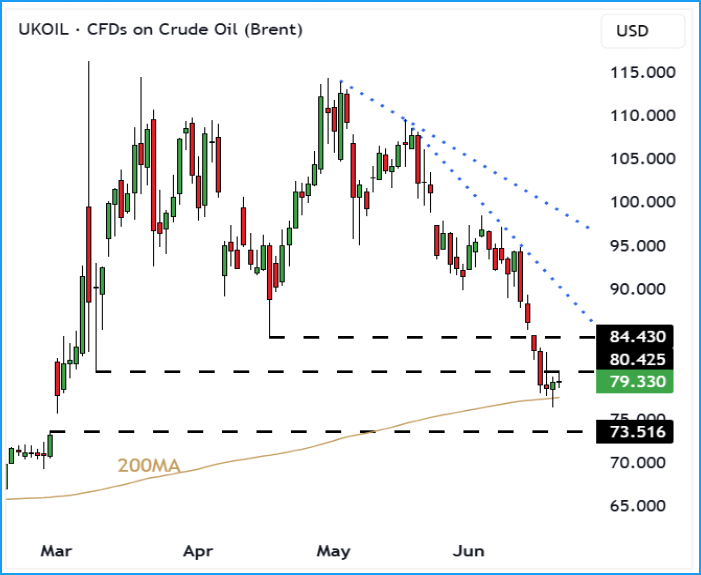
This week brought some tentative reassurance. The Bank of England left interest rates unchanged at 3.75%, wage growth slowed to its weakest pace in more than five years and oil prices continued to retreat following the ceasefire agreement between the US and Iran. None of these developments are dramatic in isolation, but together they suggest the inflation shock that dominated markets earlier this year may be starting to lose momentum.
That does not mean central bankers are relaxing. Two members of the Monetary Policy Committee still voted for a rate increase, arguing that elevated energy costs could yet feed through into wages and consumer prices. Inflation remains above target and policymakers are understandably wary after the painful lessons of recent years.
For investors, however, the direction of travel matters. Markets are increasingly shifting their attention away from fears of another inflation spiral and back towards the underlying health of the economy. Growth remains sluggish, hiring continues to soften and wage pressures are easing. In other words, the risks have not disappeared, but they are starting to look different from those that dominated the headlines just a few months ago.
Wishing you a great weekend,
Tom
Thomas Light – Chartered FCSI
Director of Research

Market Movers
On the rise: Rolls Royce (LSE:RR.) +% on the week
Rolls-Royce continued its impressive run this week after its small modular reactor division was selected by Swedish utility Vattenfall as the preferred technology partner for a major new nuclear project.
The agreement will see Rolls-Royce SMR supply three reactors capable of generating around 12 terawatt hours of electricity per year, equivalent to roughly 6% of Sweden’s annual power consumption. While the final contract terms have yet to be agreed, both the UK and Swedish governments have described the project as a multibillion-pound opportunity and a significant step forward for Europe’s next generation of nuclear power.

The news adds to growing momentum across several of Rolls-Royce’s key growth areas. Alongside progress in civil aviation, the group continues to benefit from rising defence spending and increasing government support for energy security projects. Investors also welcomed further developments in the UK-Japan Global Combat Air Programme, where Rolls-Royce remains a key partner in the development of a next-generation fighter jet.
Regency View: Rolls-Royce is not cheap, but great businesses rarely are. With the shares sitting close to record highs and fresh contract wins continuing to reinforce the long-term growth story, the market remains firmly in “don’t fight the trend” mode.
Shell moved lower this week as oil prices continued to retreat following the agreement between the US and Iran to end their conflict and reopen the Strait of Hormuz.
The energy major had been one of the beneficiaries of the surge in oil prices earlier this year as fears over supply disruptions pushed Brent crude sharply higher. However, with shipping flows gradually returning and traders becoming increasingly confident that the ceasefire will hold, much of that geopolitical risk premium has started to unwind. Brent crude fell heavily during the week, dragging the wider energy sector lower alongside it.

Importantly, there has been no deterioration in Shell’s underlying business. The weakness has largely been driven by changes in the oil price rather than company-specific developments. In fact, some analysts have cautioned that markets may be moving ahead of reality, noting that global inventories remain relatively low and that oil flows are unlikely to return to pre-conflict levels overnight.
Regency View: Sometimes a falling share price says more about the commodity than the company. Shell remains a high-quality cash-generative business trading on around 8 times forward earnings, but when oil catches a cold, energy investors rarely escape without a sniffle.
Sector Snapshot
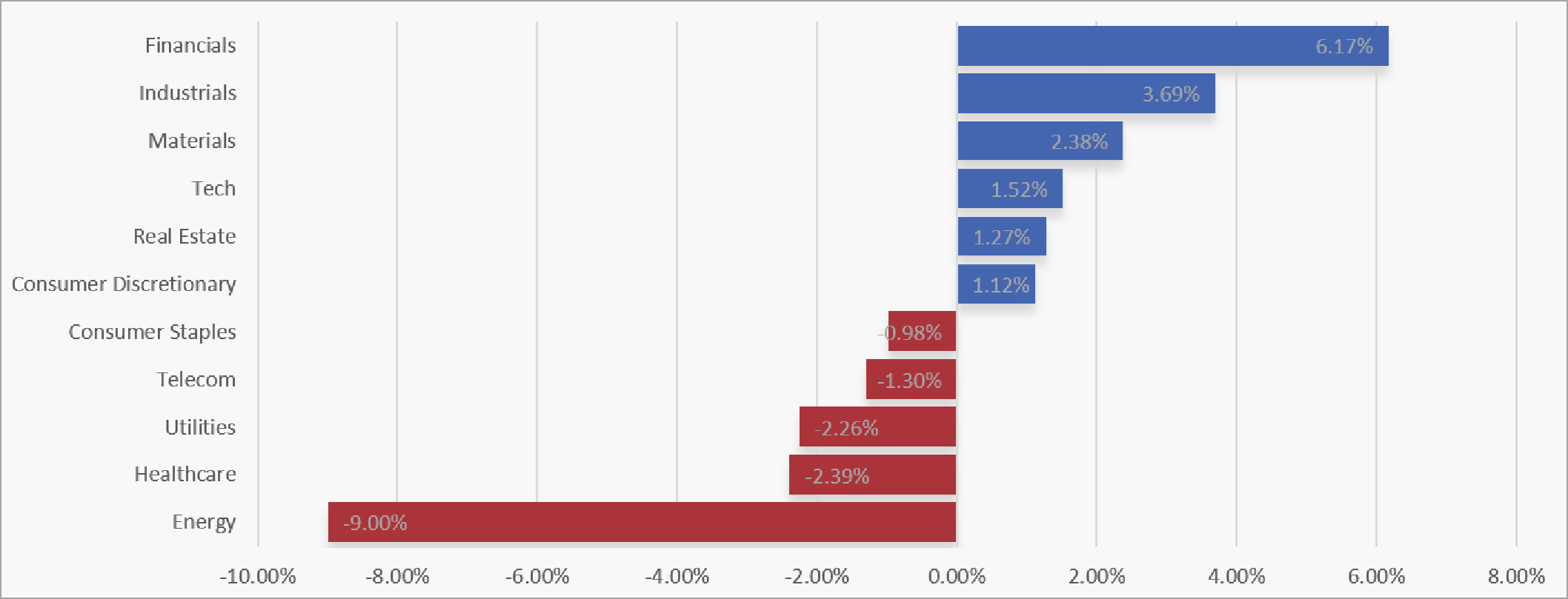
Financials surged to the top of the leaderboard this week, staging an impressive recovery after several softer weeks. Industrials and Materials also posted strong gains, while Tech, Real Estate and Consumer Discretionary moved higher, pointing to a clear improvement in appetite for cyclical and growth-oriented sectors. The breadth of participation suggests investors were willing to look beyond recent market turbulence and re-engage with areas linked to economic activity.
At the other end, Energy suffered a dramatic decline, finishing well adrift of every other sector as the recent strength in oil prices rapidly unwound. Healthcare, Utilities and Telecoms also struggled, while Consumer Staples slipped into negative territory. The contrast with recent weeks is striking, with leadership rotating away from defensives and commodities and back towards sectors that tend to benefit from improving sentiment and economic confidence.
UK Sector Performance (7-Days)
UK Price Action
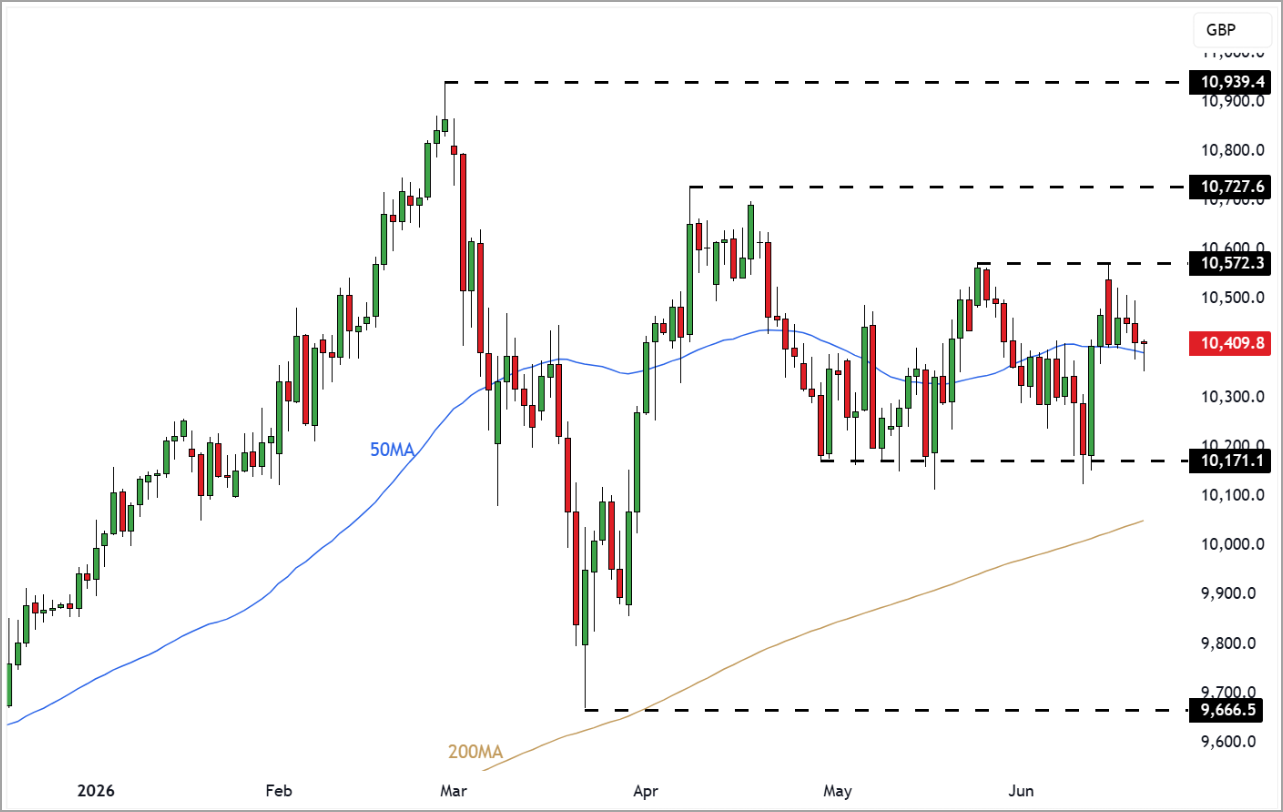
The FTSE’s recent rangebound price action continued this week. After rallying towards the top of the range last week, the market has drifted lower, once again reminding us that neither buyers nor sellers currently have a decisive advantage. Instead, prices continue to oscillate between well-defined support and resistance levels, creating plenty of noise but very little progress.
One feature that stands out is the way price has been whipsawing around the 50 day simple moving average. In a strong trend, the 50 day moving average often acts as a clear area of support or resistance. Here, however, the market is repeatedly crossing above and below it, which is typical of a consolidating market rather than one establishing a clear directional move. Until we see a convincing break from the current range, patience remains the order of the day. For now, the FTSE continues to mark time while investors wait for the next catalyst strong enough to tip the balance in either direction.
UK100 Daily Candle Chart
Disclaimer:
All content is provided for general information only and should not be construed as any form of advice or personal recommendation. The provision of this content is not regulated by the Financial Conduct Authority.