


13th Mar 2026. 11.09am

Weekly Briefing – Friday 13th March
| Market | Movement this week (%)* |
|---|---|
| FTSE 100 | +0.12% |
| FTSE 250 | -1.90% |
| FTSE All-Share | -0.13% |
| AIM 100 | -2.86% |
| AIM All-Share | -2.65% |
* Price movement from Monday's open at 8am
Regency View:
Weekly Briefing – Friday 13th March
Market Overview
Dear Investor,
As we approach the two-week mark of the conflict in Iran, it feels as though we are all having to become oil market experts. At the moment the price of crude is shaping the narrative for almost every other asset class.
That was evident when markets reopened after last weekend’s escalation. Oil gapped sharply higher and briefly traded into the mid-$110s as traders rushed to price in the risk of supply disruption. Moves of that speed and magnitude often carry the hallmarks of panic buying, and the price action quickly began to show the first signs of technical exhaustion as the initial surge faded.
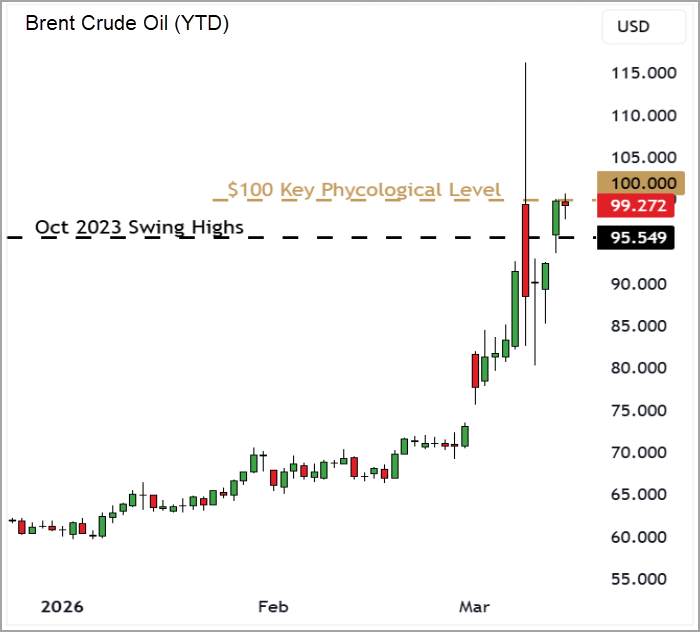
Part of that pullback was helped by policymakers stepping in. Governments coordinated the release of significant volumes from strategic petroleum reserves in an attempt to stabilise the market and reassure traders that emergency supply would be available if disruptions intensified. Those measures cooled the initial spike, but they did little to remove the underlying geopolitical risk premium that had suddenly been embedded into energy markets.
As the week has progressed that risk premium has begun to reassert itself. Continued strikes across the region and attacks on cargo vessels in the Gulf have reminded traders that the situation remains fluid, and crude has found renewed support back above the psychologically important $100 level. In other words, while the early panic buying may have faded, the market is still clearly pricing in the possibility of further disruption.
For investors, the oil market now sits at the centre of the macro story. Sustained strength in energy prices feeds directly into inflation expectations, which in turn influences bond yields, central bank policy and ultimately equity valuations. In that sense, the path of crude over the coming weeks may tell us as much about the broader market outlook as the headlines themselves.
Wishing you a great weekend,
Tom
Thomas Light – Chartered FCSI
Director of Research

Market Movers
On the rise: Costain (LSE:COST) +11.2% on the week
Costain moved higher this week after delivering another solid set of full-year results, underlining the steady progress the group has been making in recent years. The infrastructure engineering specialist reported improved profitability and strong cash generation, highlighting the benefits of a more disciplined approach to its contract portfolio.
The standout figure from the update was the company’s forward work position, which has climbed to a record £7bn. That represents almost seven times last year’s revenue and provides strong visibility over future activity. Costain continues to position itself in areas of long-term national investment, particularly across water, energy and transport infrastructure, where government and regulatory spending commitments remain substantial.

The company’s balance sheet also continues to strengthen, supported by improved free cash flow generation. That financial position has allowed management to increase shareholder returns through both a higher dividend and the launch of a new share buyback programme, reinforcing the sense that Costain is entering a more confident phase of its development.
Regency View: Costain is a good example of the kind of steady operational turnaround the market often rewards over time. With a record pipeline of work and exposure to long-term infrastructure spending, the group appears well placed to keep building momentum.
Capita shares fell sharply this week after the outsourcing group reported its full year results, with investors focusing less on the progress being made in the turnaround and more on the underlying challenges still facing the business. While management emphasised the group’s transformation towards becoming an AI-led business process outsourcer, the market response suggested investors remain cautious about the pace and reliability of that transition.
Revenue declined slightly over the year, with growth in the company’s public sector and pension administration divisions offset by continued weakness in its contact centre operations. The latter remains a significant drag on the group’s overall performance following earlier contract losses and reduced volumes from telecoms customers.

Although operating profits improved thanks largely to aggressive cost cutting, the broader financial picture remains complicated. The group reported a sizeable operating loss after restructuring costs and impairment charges, while net debt has increased and cash flow remains under pressure as Capita continues to invest in its turnaround strategy.
Regency View: Capita has spent several years attempting to rebuild credibility with investors, but results like these show the turnaround story still has a long way to run. Until revenue growth begins to stabilise and cash generation improves, the market is likely to remain cautious about the pace of the recovery.
Sector Snapshot
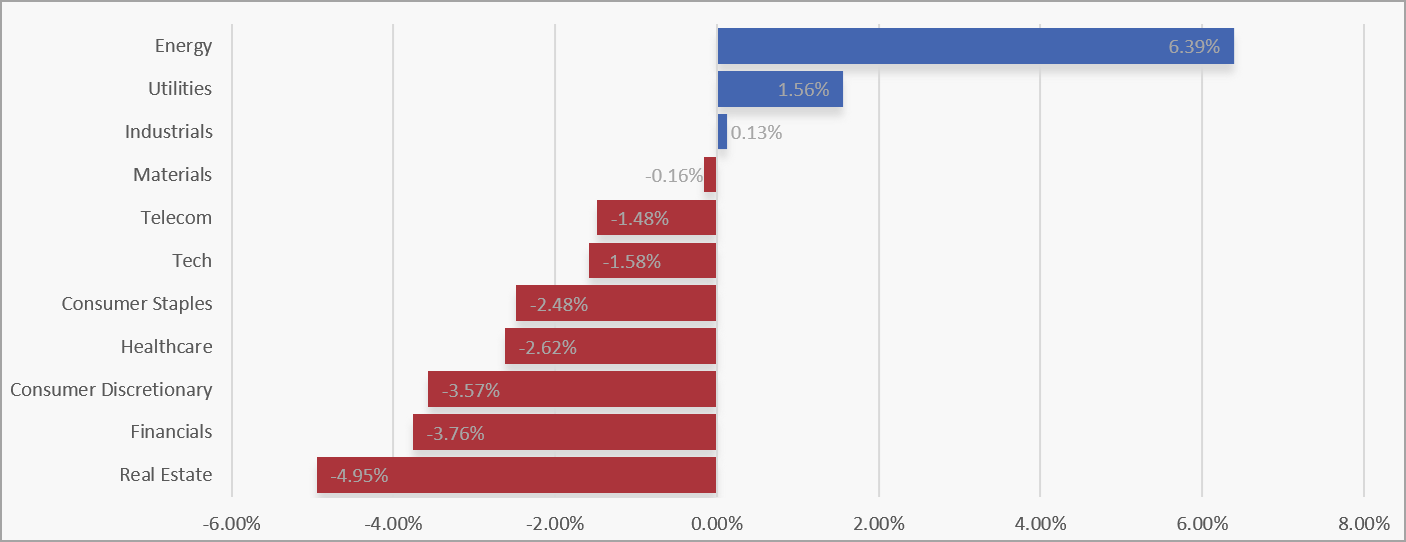
Energy once again topped the table this week, extending its run as higher oil prices continue to support the sector. Materials and Utilities also held up well, while Telecom and Financials managed small gains. The leadership mix suggests investors are still favouring sectors tied to tangible assets and income as the geopolitical backdrop remains uncertain. Rising energy prices have been a key feature of the conflict so far, with fears of disruption to supply routes and production keeping oil markets elevated.
Elsewhere the picture was weaker. Real Estate and Financials slipped sharply, while Consumer Discretionary and Tech also moved lower as appetite for growth remained subdued. Consumer Staples and Healthcare joined the laggards, reinforcing the sense that investors are still navigating a fragile environment where only a handful of sectors are providing leadership.
UK Sector Performance (7-Days)
UK Price Action
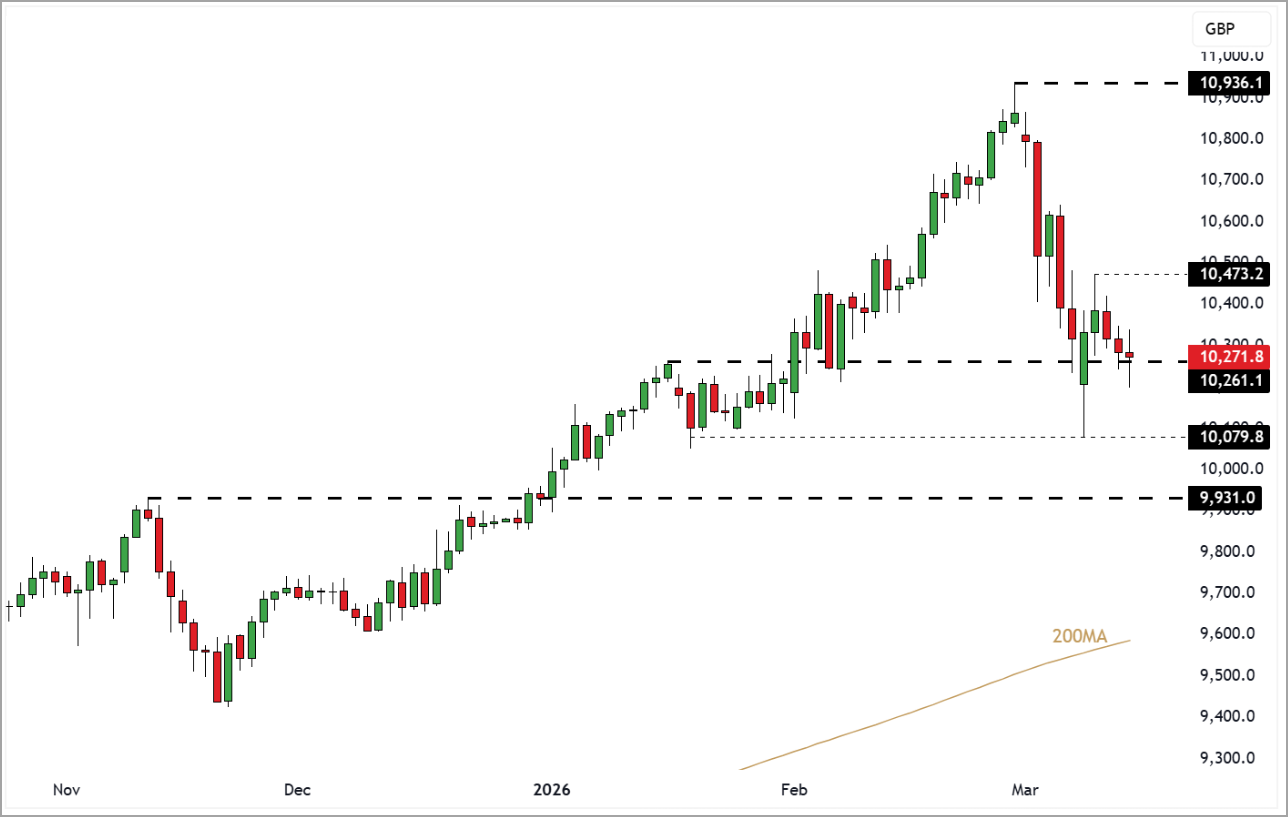
The FTSE’s conflict driven sell off took a pause this week, with buyers stepping in on Monday as oil finally began to show signs of exhaustion. Since then the market has largely moved sideways, carving out a series of minor swing highs as it attempts to stabilise after the sharp decline. However, the lack of a convincing rebound suggests buyers remain cautious, and that hesitation leaves the door open for another wave of selling pressure if sentiment deteriorates again.
FTSE 100 Rolling Futures (Daily Candle Chart)
Disclaimer:
All content is provided for general information only and should not be construed as any form of advice or personal recommendation. The provision of this content is not regulated by the Financial Conduct Authority.