


5th Nov 2025. 8.58am

Regency View:
Update
Regency View:
Update
We’re heading deeper into autumn earnings season, and the pace of updates is starting to pick up across the FTSE. It’s been a week of solid delivery rather than surprises, with BP, Glencore and HSBC all demonstrating strong cash generation and balance sheet resilience. Associated British Foods turned heads with talk of a potential demerger, while Auction Technology Group steadied expectations after a challenging year.
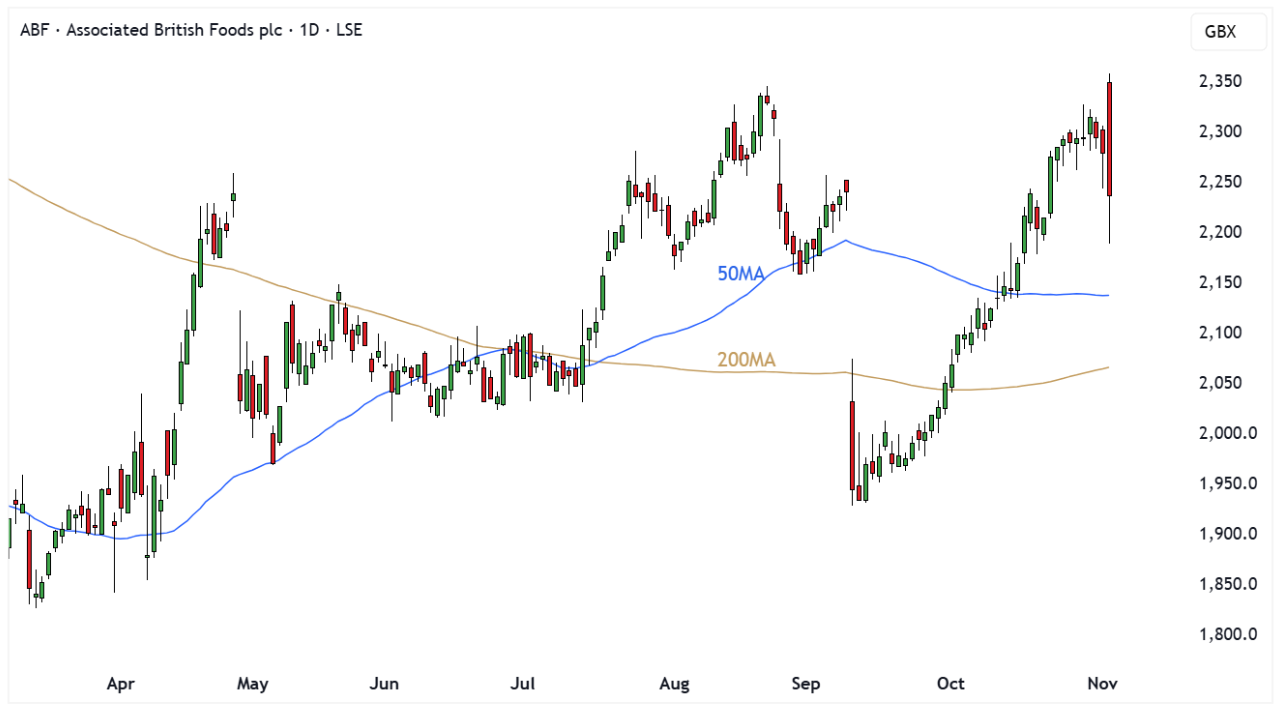
ABF weighs structural change amid steady performance
Associated British Foods (ABF) delivered a set of annual results that reflected both operational resilience and an intriguing strategic twist. Group revenue came in at £19.46bn, down 1% on a constant currency basis, while adjusted operating profit slipped 12% to £1.73bn. Primark performed well with sales growth of 1% and a margin of 11.9%, helping offset weakness in the Sugar division. A free cash flow figure of £648m underscored the group’s ability to keep generating cash even through a year of restructuring and headwinds in agriculture.
The real talking point, however, was the board’s review of the group structure, which could ultimately lead to a separation of Primark from the food businesses. Management emphasised the scale of both divisions and the need for clearer market recognition of their respective strengths. Analysts were quick to point out that a split could unlock substantial value, with Primark’s global retail footprint and the food arm’s stable cash generation both appealing in their own right.

For investors, ABF remains a story of steady fundamentals combined with an exciting optionality kicker. The potential demerger is likely to act as a valuation catalyst over the medium term, while the near-term focus will be on whether Primark can sustain its recent improvement in like-for-like sales across Europe and the US.
ABF Daily Candle Chart
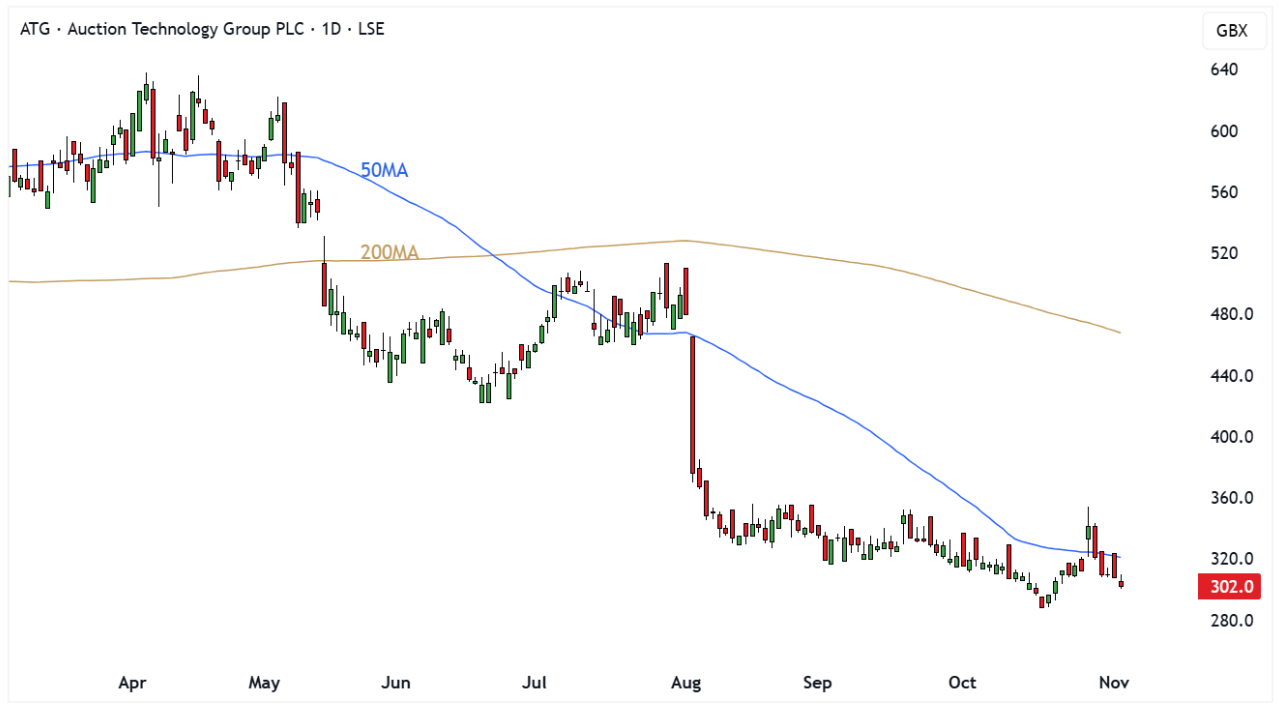
ATG rebuilds confidence after a difficult year
Auction Technology (ATG) provided a pre-close trading update confirming that full-year revenue and adjusted EBITDA are expected to be in line with revised market expectations. Revenue growth accelerated in the second half, leaving the full year up more than 4% excluding Chairish and around 9% including it. Progress on value-added services such as atgAMP, atgPay and atgShip helped support performance in a year that included the August profit warning and a shifting macro backdrop.
The company also flagged a non-cash goodwill impairment, reflecting higher discount rates and weaker sentiment, but crucially noted that underlying trading and cash generation remain sound. Adjusted EBITDA margin is expected to land between 42% and 43% excluding Chairish, a level that continues to demonstrate the scalability of the platform. Net leverage of 2.2x should fall below 2x next year, signalling room for reinvestment once sentiment stabilises.

ATG’s update won’t set pulses racing, but it does provide clarity after a difficult stretch. With revenue momentum improving and the balance sheet in reasonable shape, investors will now look to see whether the new financial year brings a return to earnings growth and a recovery in market confidence.
ATG Daily Candle Chart
BP delivers another quarter of solid cash generation
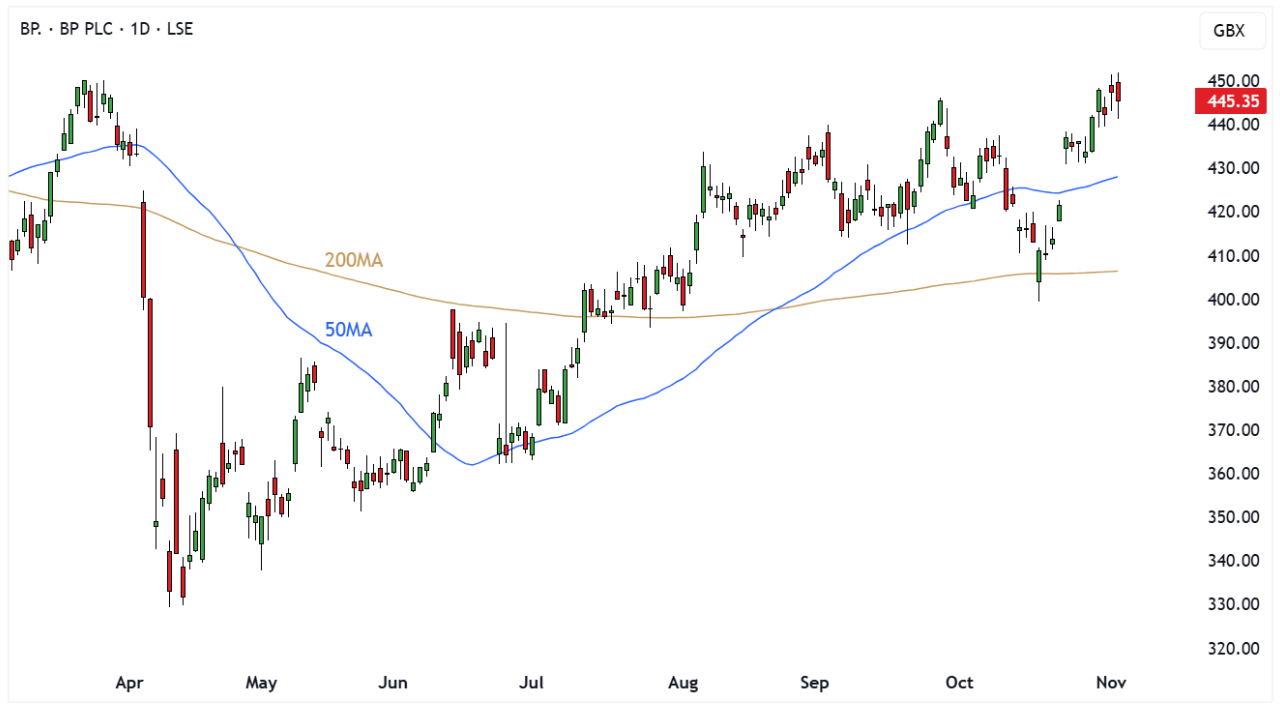
BP (BP.) reported third-quarter underlying replacement cost profit of $2.2bn, broadly flat on the prior year and supported by improved reliability in refining and stronger upstream output. Operating cash flow rose to $7.8bn, up from $6.3bn in the previous quarter, while net debt remained steady at $26.1bn. The quarter also included record earnings from the customers division and a meaningful contribution from refining, helped by higher margins and reduced turnaround activity.
The oil major is pressing ahead with a disciplined capital framework, maintaining annual capex guidance at around $14.5bn and reaffirming its commitment to total shareholder distributions of 30–40% of operating cash flow over time. A dividend of 8.32 cents per share and a $750m share buyback reinforce management’s focus on consistent returns even as it tightens its portfolio and reduces complexity.
For investors, BP’s results highlight a business still capable of generating substantial free cash flow in a mixed commodity environment. With six major projects brought online this year and net debt under control, the shares continue to offer an appealing yield and a credible self-help story as the company balances transition ambitions with shareholder discipline.
BP. Daily Candle Chart
Glencore’s production strength keeps guidance intact
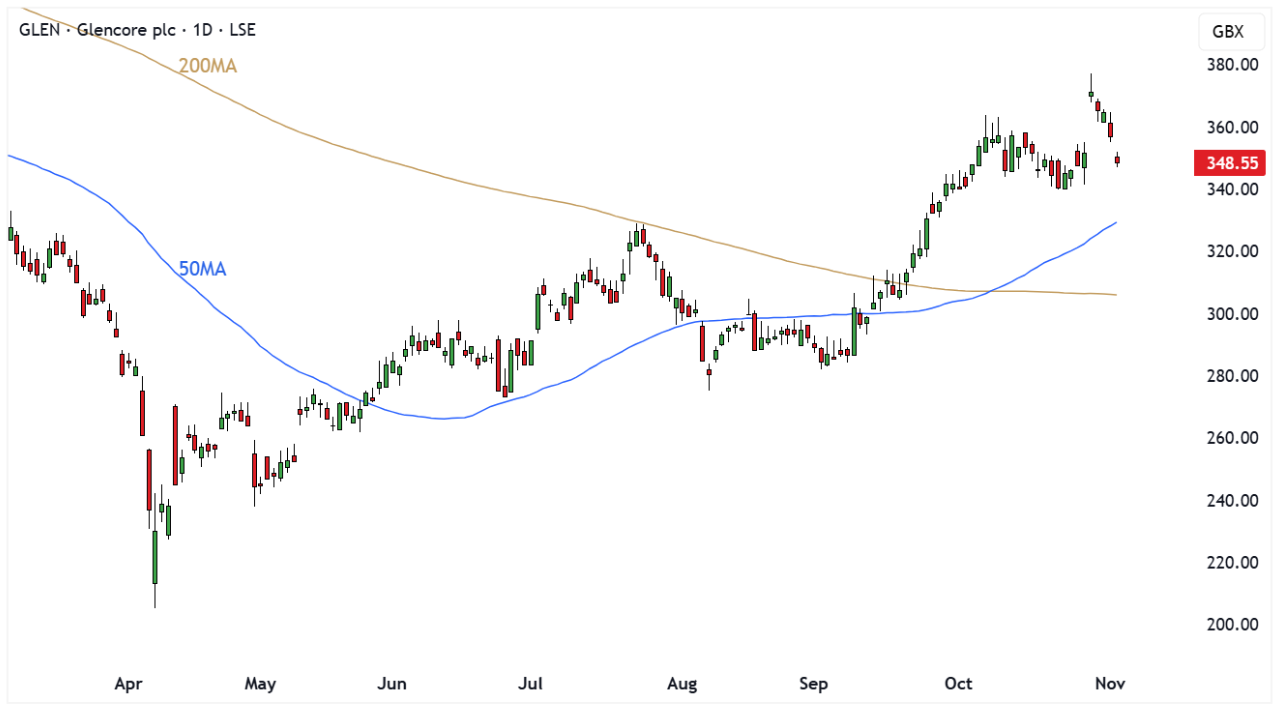
Glencore (GLEN) delivered a robust third-quarter production report, underpinned by strong operational performance across its copper and coal assets. Copper output jumped 36% quarter-on-quarter thanks to improved grades at key operations such as KCC, Mutanda and Antamina. Zinc production rose 10% year-to-date, while steelmaking and energy coal volumes are tracking toward the upper end of guidance. Management reaffirmed full-year production targets and expects marketing adjusted EBIT to land around the mid-point of its $2.3bn–$3.5bn range.
The update reflected a return to smoother execution following weather disruptions earlier in the year and marked progress on strategic initiatives, including the completion of the Pasar smelter sale and easing water constraints in Chile. The cobalt export quota in the DRC also provides visibility, with sufficient inventory to meet allocations through 2027.

Glencore’s operational delivery helps reinforce the group’s positioning as a diversified commodities play with high cash generation potential. Investors will watch Q4 output closely to confirm that the production rebound translates into stronger free cash flow before year-end, particularly given the softer backdrop for metals prices.
GLEN Daily Candle Chart
HSBC holds firm with profit and capital strength
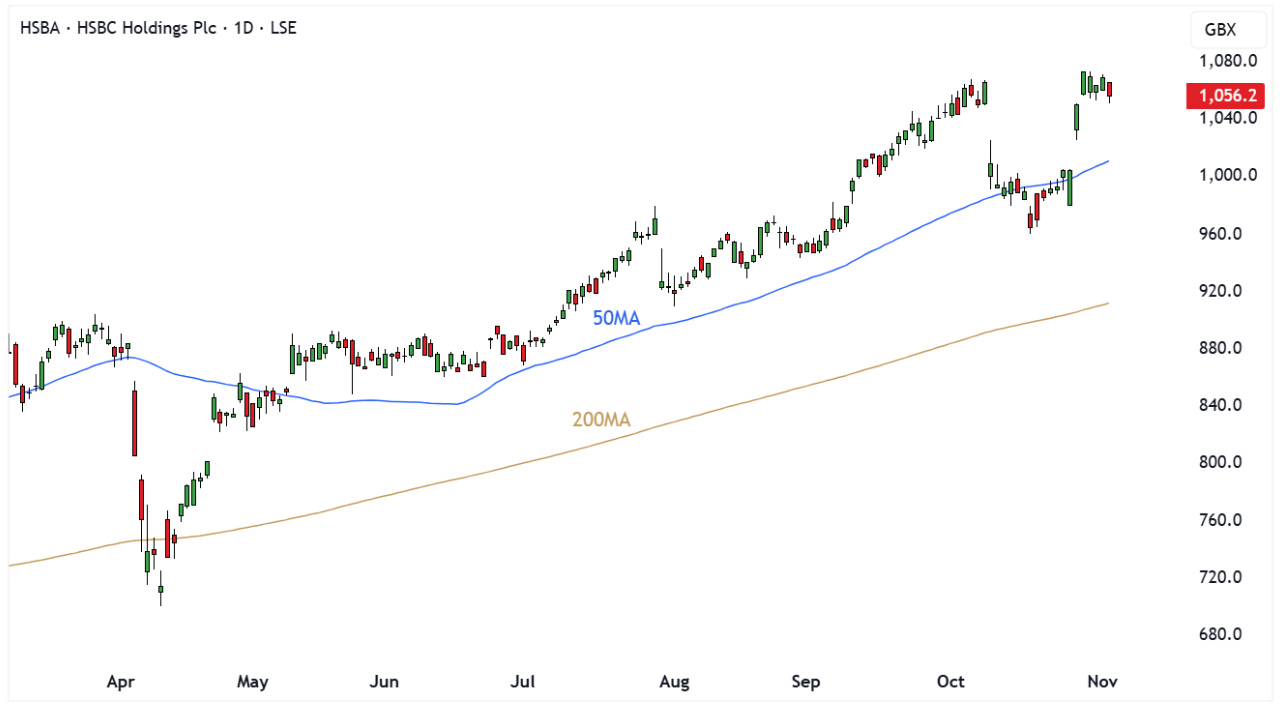
HSBC (HSBA) continued its strong run of performance with third-quarter pre-tax profit of $7.3bn and adjusted pre-tax profit of $9.1bn, reflecting robust income and tight cost control. Revenue rose to $17.8bn as higher net interest income and a solid contribution from trading offset margin compression. The CET1 capital ratio improved to 14.5%, while return on tangible equity remains on track for the mid-teens this year, excluding notable items.
The bank declared a third interim dividend of $0.10 per share but surprised investors by temporarily pausing share buybacks as it explores a proposal to privatise Hang Seng Bank. Management emphasised that capital levels will remain within the target range and that the decision on buybacks will be revisited once the transaction’s structure is clearer.

HSBC’s results reaffirm its reputation as one of the more dependable income names on the FTSE. With banking net interest income expected to exceed $43bn this year and capital generation healthy, the short-term focus will be on clarity around Hong Kong operations. For income investors, the dividend momentum remains firmly intact.
HSBC Daily Candle Chart
Disclaimer:
All content is provided for general information only and should not be construed as any form of advice or personal recommendation. The provision of this content is not regulated by the Financial Conduct Authority.